10 Reasons NOT to Give Up Red Meat

Email This Post Email this Post | Print This Post Print this Post | Share

1. Conjugated Linoleic Acid (CLA)

Found in the meat and milk of grass-fed ruminants, like cows, Conjugated Linoleic Acid or CLA is a potent nutrient. Researchers are just beginning to understand the mechanisms behind the potent and positive health effects traditional peoples have enjoyed since the days of hunting and gathering.   CLA is known as a potent antioxidant and anti-carcinogen.   CLA has shown promise in the treatment of various cancers.   Research conducted at the University of Alberta in Canada, Dartmouth Medical Center and elsewhere   indicates that CLA shows promise in the fight against breast cancer. [1. Lipids. 2009 Mar 6.], [2. Nutr Cancer. 2009;61(1):114-22]   Further, CLA even could be valuable in the treatment of brain cancer due to its ability to prevent the development of new malignant tumors as well as inhibit the growth of existing tumors. [3. Brain Res. 2008 Jun 5;1213:35-40. Epub 2008 Feb 16.]

2. Iron

Red meat is a rich source of iron; better yet, it’s a rich source of the most easily absorbed iron: heme iron.   Heme iron is very readily and easily absorbed.   Contrasted with red meat plant sources of iron, like lentils, offer non-heme iron which is poorly absorbed.   Iron is critical to health because, when properly absorbed, it assists the blood’s hemoglobin in carrying oxygen to the body’s cells.   Low iron may lead to fatigue, headaches and dizziness.   Women of child-bearing age, infants and children are most likely to be deficient due to their increased level of need for iron. Red meat should be considered especially important for women–particularly during and after menstruation when the loss of blood brings down iron levels.

3. Stearic Acid

Stearic acid is a saturated fat found in beef and other meats.   Despite the current and prevalent thought that saturated fats cause an elevation in cholesterol, research indicates that stearic acid actually lowers LDL cholesterol [4. Lipids. 2005 Dec;40(12):1201-5.]

4. Protein

Red meat is an easy source of complete protein.   Protein is essential to the human diet not only because it provides energy, but also because it is critical to the growth and repair of cells.   Every cell in the human body contains protein including the antibody cells of the immune system which protect the body against pathogens.   Red meat is an easy to prepare complete protein containing the full spectrum of amino acids.

5. Zinc

The mineral zinc plays an important role in human health.   It is essential for immune system function and can combat the effects of premature aging due to its anti-inflammatory properties. [5. Genes Nutr. 2008 Jul;3(2):61-75.]   Zinc also plays an important role in skin health, particularly in healing from afflictions like acne and eczema.   Zinc deficiency is linked to skin disorders like dermatitis. [6. Orv Hetil. 2004 May 9;145(19):1007-10.] Maternal intake of zinc is also critical to infant and child health.   Mothers with the highest intake of antioxidants like zinc during pregnancy decreased the risk that their children would suffer from wheezing disorders. [7. Am J Clin Nutr. 2006 Oct;84(4):903-11.]   Red meats, particularly beef and lamb, are rich in zinc and provide an easy way to access this vital nutrient in a whole-food form.

6. B Vitamins

Red meat is a potent source of B vitamins, particularly vitamin B12.   These nutrients are concentrated in the organ meats--particularly, the liver.   B vitamins are essential to cognitive and emotional function.   B vitamin deficiency is linked to depression.   Inadequate maternal intake of B vitamins during the months prior to pregnancy and during pregnancy itself are thought to contribute to poor infant growth, cognitive and social development in children.   Further, inadequate B12 status in mothers increases the risk of neural tube defects in offspring and increases the risk for pre-term labor. [7. Food Nutr Bull. 2008 Jun;29(2 Suppl):S126-31.]

7. Vitamin A

The suet and tallow of grass-fed animals is rich in vitamin A - including both retinol and beta-carotene.   Vitamin A is a fat-soluble vitamin noted for its positive effects on health.   Vitamin A promotes fertility, good vision and immunity.   Inadequate maternal intake of vitamin A prior to and during pregnancy has been linked to birth defects. Retinol or pre-formed vitamin A is essential to properly functioning immune and endocrine systems while beta-carotene is a potent anti-carcinogen due it is powerful antioxidant activity.   The fat from grass-fed cows, lambs and bison is rich in these nutrients--greatly more so than the fat of conventionally fed animals from concentration animal feed operations (CAFOs and feedlots).   The naturally occurring beta-carotene found in abundance among the wild grasses of pastures and plains feed the animals naturally.   Some of this beta-carotene is transformed into retinol in the fat, while some of it remains as beta-carotene.   Red meat and the fat of grass-grazing animals provides a good source of this powerful and essential nutrient.

8. EPA

Similarly, the fat from naturally fed cows and other ruminants contains significant amounts of EPA.   EPA is also found in oily, ocean-going fish.   This omega-3 fatty acid is essential for cognitive function and emotional health and is only naturally available from animal food sources.   EPA is known for its many health benefits including protection from cardiovascular disease, cognitive function and emotional well-being.   Intake of EPA has been proven effective time and time again in the treatment and prevention of heart disease, and regular, daily intake of EPA from diet alone "would be expected to significantly reduce deaths from coronary heart disease." [8. Curr Atheroscler Rep. 2008 Dec;10(6):503-9.] While DHA, another notable nutrient found naturally in combination with EPA, is known primarily for its positive effects on brain and cognitive development, EPA is known for its positive effects on mood and emotional well-being.   Combinations of these two omega-3 fatty acids have shown remarkable benefits in treating ADHD/ADD, schizophrenia, bipolar disorder, autism and even dyslexia. [9. Altern Med Rev. 2007 Sep;12(3):207-27.] Low levels of EPA have been linked with the development of Alzheimer's disease and dementia.   [10. Am J Clin Nutr. 2008 Sep;88(3):714-21.]   Grass-finished meat represents an excellent source for EPA due to its favorable omega 3 to omega 5 fatty acid ratio.   Grass-finished meat offers an omega 3 to omega 6 ratio of approximately 1 part omega-3 fatty acids to 2 parts omega-6 fatty acids; by contrast, conventionally fed cows produce meat with a much less favorable ratio and are lacking in the vital nutrient EPA.

9. Mono-unsaturated Fat

Beef fat is comprised of approximately 35% monounsaturated fat.   The consumption of monounsaturated fats are linked to a reduction in LDL cholesterol and an increase in HDL cholesterol (good cholesterol)--particularly among insulin-resistant individuals. [11. J Am Coll Nutr. 2007 Oct;26(5):434-44.]

10. Tradition

Traditionally, red meat has comprised an important element of the human diet.   Consider the venison that nourished Europeans, the bison that nourished the Native Americans or the lamb and mutton that provided sustenance for the nomads of the Middle East: all of these foods provide value to the diet including wholesome fats, vital protein, minerals and vitamins.   Red meat has been part of the human diet for millennia - yet the people who consumed it didn't suffer from cancers or heart disease or other diseases of industrialization; rather, they benefited from its many positive and essential nutrients.   If it nourished your ancestors, it can nourish you too.   Take care to purchase only grass-finished meats which offer the very best nutritional profile.

Shop Real Food

  • fermented veggies
  • buy supplements online
  • buy water kefir
  • buy grassfed butter and ghee online
  • buy yogurt online

Learn to Cook Real Food

Keep up to date on the latest from Nourished Kitchen: Recipes, Tutorials, Real Food News.

Enter your email address:


nourished kitchen subscribe chicletSubscribe in a reader

Twitter | Facebook | Flickr

Comments

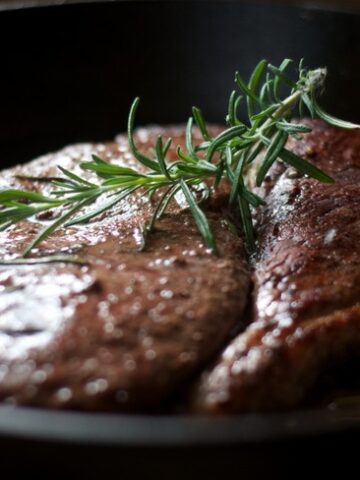
  1. I wish I could like meat again, I feel like my body would greatly value from it. But after being sick for so long ad unable to eat it (or much of anything) I have completely and totally lost my taste for meat- and that picture of the raw steak isn’t helping me get it back :)

    Check out Meghan at Making Love In The Kitchen’s last post: Guess The Ingredient List #3.

  2. Bekki says:

    I love it! Excellent and well-timed article. With so many people saying to eat less meat to save money, it’s refreshing to read some good advice.

    And Meghan, have you looked into whether you have a copper imbalance? Here is a very interesting and informative link: http://www.westonaprice.org/moderndiseases/copper-zinc-imbalance.html

  3. Rosy says:

    I agree, me and beef didn’t get along for such a long time, I can’t even stand the taste of it. I want to try grass-fed, but I am afraid I might not like it or it makes me sick too.

  4. Stacey says:

    After many years of vegetarianism (sometimes veganism), the only meat that I really enjoy is red meat. I dug myself out of a bout with fibromyalgia a few years back by returning to omnivory, and I think red meat especially is essential to good health. I’m also easily anemic, so if I don’t eat it every few days, I start feeling a bit weak.

    Check out Stacey’s last post: Menu Plan: Week of April 6, 2009.

  5. Kelli says:

    I went through a period where I wouldn’t eat red meat. Then, I wouldn’t eat any meat (for 5 years). Next, I started breastfeeding. With breastfeeding came a craving for meat so bad that I went straight from vegetarian to meat eater, no in between. I didn’t crave chicken. I craved steak and pot roast. I like all meats now, and alternate between them in our diets. This post is really helpful in seeing why I’m loving especially red meat right now. Oh, and it’s got me thinking about venison.

    Check out Kelli’s last post: So, What Ticks You Off About the Food and Diet Industry?.

  6. Dana says:

    Unfortunately I don’t hold the purse strings for our grocery spending, or we’d be on grass-fed already, but I won’t give up meat just because of that. There are days I *crave* red meat, and when I’m low-carbing and get a lot of beef I feel really good. Not good like when I’ve just had junk food and caught a buzz, but good like healthy.

  7. Wow. Good article, came across an study the other day,from Britain warning of the nutritional defeciencies of a vegetarian diet; and there are babies with birth defects, as a result of the deficiencies, namely b12,and some others. People who have been flying the vegan flag for too long are hurting themselves,but also others that they are swaying into the vegan movement. A well balanced diet,from all four food groups, combined with regalar exercise, is the key. Rose or Red Veal may be an excellent choice of meat for anyone wanting to cut some calories and saturated fat, yet still eat red meat.

  8. I have never held to the belief that eating red meat was totally bad for anyone. Vegetarians aren’t always aas healthy as one would like to think they are! Many of them look very gaunt and thin, not healthy at all. Excellent article – one I will be sharing with friends.

    Belinda
    Cooking with Kids

  9. Chris says:

    We would benefit a great deal understanding human biochemical individuality and that we are not designed to be vegetarians and that natural beef is what our ancestors survived on.

  10. Josh says:

    Bruce,

    Vegetarian and vegan diets are perfectly healthy when done right. The problem, is that most people who adopt a vegetarian diet don’t understand the key word (vegetables) and instead eat similarly as to how they ate as a meat eater but replaced good quality meats with processed soy fake-meats. Vegetarians can get Vitamin B12 naturally from fermented foods, yeasts, and algae. The idea that vegetarian or vegan diets are unhealthy is as ludicrous as saying that a meat eating diet is unhealthy. Both feed into long-standing nutritional myths and the “my way is the best way” mentality. Some people thrive on such diets, and others don’t; it’s all about understanding bioindividuality and proper nutrition.

  11. Patricia Bowman says:

    Just discovered possible iron deficiency, red blood cells a little below normal 3.9 Heard red meat was excellent source of good iron. But where can you get good grass fed beef in Delaware,Maryland area??
    any info on this would be appreciated. Thanks

  12. Stijn Bruers says:

    One of the most serious problems with red meat is that it is a violation of the basic right of sentient beings. Ruminants are sentient beings, they have a consciousness, and therefore they have just like humans the basic right not to be used as merely means to our ends. A plant based (vegan) diet is much more respectful and compassionate towards all sentient beings. Now, the good news is that the biggest dietary organisations, like the American Dietatic Association, clearly state that a well-planned vegan diet is sufficiently healthful and provides enough of all essential nutrients (like zinc, iron, calcium, omega-3, vitamins, essential amino acids…), even for pregnant women, babies, children, athletes,… So, that is why we should strive towards veganism.
    Another serious problem of red meat, is the high ecological impact compared to plant-based alternatives. Meat has a much much higher (3 top 17 times higher) ecological, water and carbon footprint than vegan alternatives. Meat production is highly inefficient: you need lots of input (surface, water, fossil fuels, animal feed, medicins), for a tiny bit of beneficial output (proteins) and a lot of waste output (greenhouse gas emissions, manure, ammonia, polluted water,…).

  13. Darienne says:

    Great article, thanks so much.

    My name is ______ and I am a meat eater…and I’m gonna stay that way! :-)

    In response to a few of the commetns above,here are a few things to consider:

    First, if you are a vegetarian admit that there are some nutriants which can not be obtained from any source but animal products (see reason #8 in the article) and vow to suppliment for your uptimum health.

    Second, if you’ve been a veg for a while and are having difficulty reintroducing meat make sure you eat 100% grass-fed You may actually be reacting to the growth hormones, antibiotics and/or grain residue in commercially produced meat and by-products.

    Finally, and this goes for everyone, do yourself a huge favor and try grass-fed goat meat. It is far superior to beef in taste—uber ddelicious—and even “blood typers” may be able to tolerate it.

    Happy meating!

  14. Josh, there are no long lived vegan cultures because there simply are no vegan traditional cultures.All traditional cultures ate some form of animal protien.

    As a reformed raw vegan who had serious health issues after the “honeymoon” period I can tell you that even ascetic and obsessive focus on healthy vegan foods will not make you healthy. B12 from vegetable and bacterial sources will not prevent neurological issues. Find me a healthy vegan who has been eating that way for more than 10 years without an lapses and I will be extremely surprised. Even Jon Robbins who went out in search of a truly vegetarian culture in his book “Healthy at 100″ had to concede that for true health and longevity, animal products are essential. Folks may not want to believe that, but it is a fact.

    Jenny, great article~ Grass fed all the way, and frankly, with outlets like trader joes and costco selling grass fed beef, a more national availablity is not far in the future! Local farmers are a great choice and if you shop wisely and use meat as a condiment you can still eat great grass fed meat on a frugal budget!

Trackbacks

  1. [...] because they must be supplied in the diet. Red meat from cattle is a complete-protein food, meaning meat provides all 22 amino acids that our bodies [...]

  2. [...] risk of infecton.  In short, healthy animals produce healthy meat, and . (Learn more about why you should eat red meat.) If you can’t source grass-fed beef locally, you can always order it online (see sources for [...]

  3. [...] and of course, the religion called vegetarianism. There is always something good cooking in the Nourished Kitchen, and in this article Jenny McGruther sums up the nutritional values in red meat quite [...]

  4. [...] Most commercial livestock are fed grain-based diets which are far removed from what is traditionally found in nature. It’s certainly more convenient and cost effective to feed animals in this manner but it flies in the face of what they’ve eaten for millennia. And ultimately, what they’re exposed to and what they eat ends up in our food supply. The healthier they are, the healthier we’ll be. (4,5,6) [...]

Speak Your Mind

*