Soaking Grains: Top 5 Reader Questions Answered

Print Friendly and PDF

soaking grains

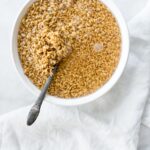
Soaking grains, beans, legumes, nuts and seeds is a traditional practice that can positively impact the nutritional qualities of these foods for those who consume them. Grains, beans, legumes, nuts and seeds can all add great value and variety to the diet, yet they contain antinutrients – particularly phytates and enzyme inhibitors – which detract from their nutritive value.  Traditional recipes for oatmeal porridge, cakes and even breads call for soaking grains or flour ahead of time, as do recipes for bean- and legume-based dishes.  These foods should be prepared in a manner that maximizes nutrient density by mitigating the effects of these antinutrients.  Soaking grains overnight seems to be an effective, traditional method of enhancing the nutrient profile of these foods, and it is one method consistently used among peoples who adhered to time-honored, traditional methods of preparing native, unprocessed foods.

Focusing exclusively on traditional foods, all of the recipes featuring grains, beans and legumes at Nourished Kitchen call for either souring, soaking or sprouting. A few recipes consistently pop up.  How do you effectively use the process of soaking grains, beans and legumes?  Do you need to soak almond flour? How do you find time to soak grains? Does phytic acid fight cancer?  Do you need to rinse your grains after soaking? Home cooks who wish to treat their family to healthier foods are left to stumble their way through the process of soaking grains, nuts, beans and seeds, so here are some of the most frequently asked questions on the subject of soaking grains that Nourished Kitchen readers submit.

Grains and legumes do not fit into an optimal diet for everyone; indeed many, and some might say most, people thrive on a grain-free diet.  If you choose to consume them, you must master the practice of soaking grains, nuts, beans, seeds and legumes.

1. I want to start soaking grains.  How do I do it?

Grains, beans and legumes contain phytic acid – an antinutrient which binds up minerals preventing your body from fully absorbing them. Phytic acid can be effectively mitigated through three different traditional processes: 1) sprouting, 2) soaking and 3) souring.  To effectively begin soaking grains, beans and legumes you need four components: 1) liquid, 2) acidity, 3) warmth and 4) time.  Each different grain, legume and bean contains a different level of phytic acid, and also a different level of phytase (an enzyme that neutralizes phytic acid), for this reason they all require different amounts of soaking time; however, I don’t believe that cooking ought to be scientific or painstakingly methodical and, instead, believe that simple methods should suffice in most kitchens and for most people.

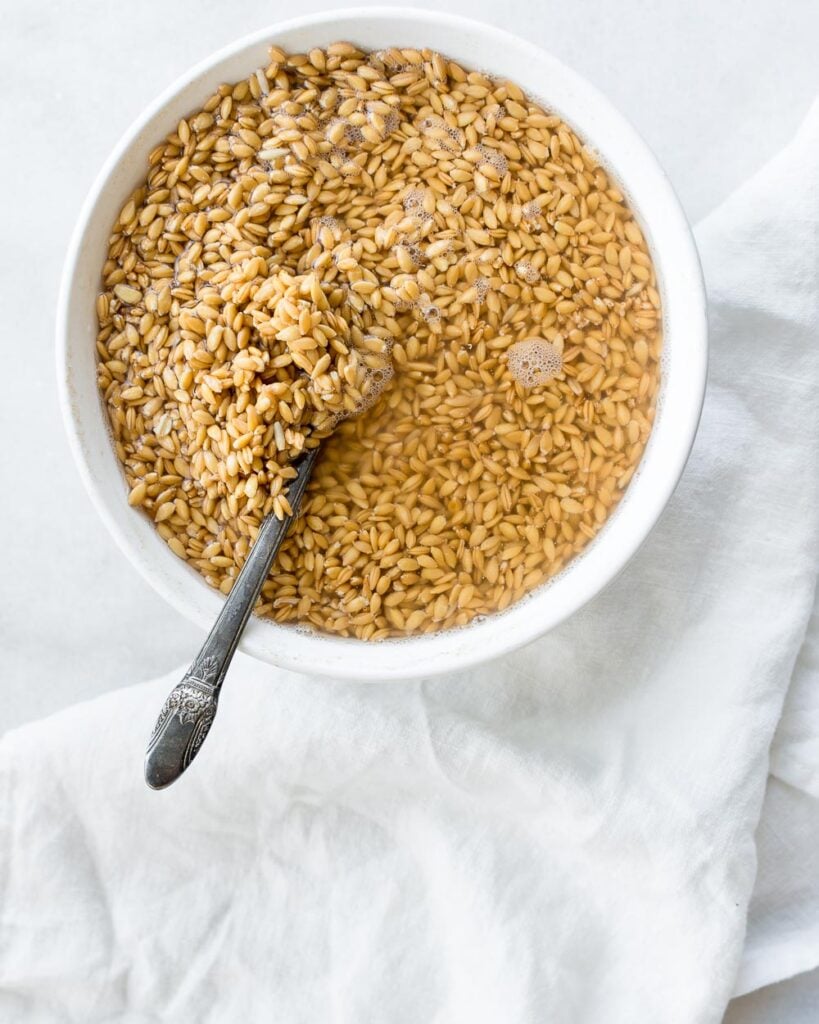
In our kitchen, when we begin soaking grains for porridge or other dishes, I simply combine a tablespoon or two of yogurt, buttermilk or kefir with filtered warm water and pour this mixture over whole grains.  After combining the whole grain with warm water and an acidic medium, I place this combination into our dehydrator or another warm space in our kitchen.  For soaking flour, we combine an acidic medium such as buttermilk, yogurt or kefir with flour, cover it well and set it aside to soak in a warm spot in the kitchen overnight.

Some research indicates that beans and legumes are best prepared when soaked in very warm water (about 140° Fahrenheit) for at least overnight, or longer.  In our home, we soak beans and legumes for upwards of 48 hours, changing the soaking water frequently as the beans begin to ferment.  Similarly, some beans are better soaked in a slightly alkaline solution rather than an acid one.

2. I’ve been soaking grains, but do I need to rinse them prior to cooking?

Not necessarily.   Soaking grains degrades phytic acid, meaning that your soaking water should not contain an overly large amount of phytates.  If you’ve soaked your grains overnight in an acidic solution to help mitigate the effects of phytic acid, an antinutrient which binds up minerals preventing your body from fully absorbing them, you do not need to discard the soaking liquid or rinse your grains; however, I recommend doing so because I find that rinsing grains, beans and legumes after the soaking process improves their flavor.  Similarly, the Weston A Price Foundation, a nonprofit dedicated to nutrient-dense diets and founded on the principles of Weston A Price, recommends that if you’ve finished soaking grains, you rinse them well.

Beans, however, are another story: in order to maximize the nutrient value and the digestibility of beans, they’re best when soaked, drained, rinsed and soaked again repetitively for upwards of a day or two.  T

3. I’ve been soaking grains, but have recently become grain-free. Do  I need to soak almond flour?

No.  Blanched almond flour, the kind most widely available, does not need to be soaked prior to using it in the kitchen, there is an element of disagreement on this matter, but soaking almond flour does not appear to offer the same effects as soaking grains.  Enzyme inhibitors and tannins are found in the papery brown skin surrounding the nutmeat of the almond.  The process of blanching and grinding almonds into almond flour necessitates the removal of this papery skin, and with its removal the almond flour has been effectively “pre-treated” thus eliminating the need to soak the almond flour.  If you are not using blanched almond flour, and are just using plain ground almonds, you will first need to mitigate the effects of antinutrients, including enzyme inhibitors, found in the almonds by soaking them overnight in slightly salty water, dehydrating them and then grinding them into flour.

Blanched almond flour is easy to work with, low in carbohydrates and rich in vitamin E; moreover, it has traditionally been used for confections and sweets for some time.  Many historical cookbooks may include almond flour in cake recipes as well as other confections, but do not call for soaking it as they do for flour- and grain-based dishes.  (Check out the recipe for Portugal Cake in my 18th Century Menu.)

4. If soaking grains degrades phytic acid, should I bother? Doesn’t phytic acid fight cancer?

There’s some evidence that food phytates may be beneficial under certain circumstances – and the evidence is mounting that food phytates may act as antioxidants and help the body to fight cancer.  It is their very nature – their ability to prevent your body from fully absorbing minerals (the very reason traditional people practiced soaking grains, nuts and legumes) – that may also play a role in the fight against cancers.  But while phytates deprive cancer cells of minerals they need to survive, they also deprive non-cancerous cells of the very minerals they need to thrive.  In our home, we prefer to adhere to time-honored traditions in preparing our foods – and that means maximizing nutrient density by soaking our grains when we consume them.  As for eating with a mindful eye toward the fight against cancer, we choose to consume foods rich in conjugate linoleic acid, vitamins, food enzymes and nutritive antioxidants  – components of food found in meats, milk, fruits and vegetables.

5. Okay. I understand the value of soaking grains, but what about all that time?

At first glance, soaking grains to make porridge and flour to make bread seems time-consuming; however, good food takes good time – and it’s worth it.  Either you value the nourishment achieved through traditional, real food and you’ll take the time to make it happen, or you don’t. Soaking flour for bread, as in the famous no-knead bread made popular in the New York Times, requires about five minutes of active time.  Similarly, soaked oatmeal porridge requires about two to three minutes of preparation and only about five minutes of cook time.  While preparing soaked flour recipes requires forethought and planning, it does not require greater time constraints or effort.  Learn to plan your meals ahead of time in that you must begin preparing foods the night before you plan to eat them, or earlier, they do not, as a rule, require greater amount of cooking time.

For Further Study on Soaking Grains, Nuts, Beans and Legumes:

Do you have a question about traditional foods?  Contact me or subscribe to get daily updates and tips for preparing traditional foods.

Enter your email address below:
 

What people are saying

  1. Kim says:

    I always get confused as what to do so I don’t do anything…which doens’t work. So this post is very helpful! Thanks.

  2. I’ve always wondered if removing the skin from almonds makes them ok unsoaked can you do that for other nuts like hazelnuts? I’m not fond of the crispy nuts.

  3. Erin says:

    I have the same question as Molly…soaking flour for my bread recipe. I worked for months with trial and error to get a nice bread recipe. Now that I have one I love I want to begin soaking the flour but am not sure how to change up my recipe. I do grind my own flour right before making it but want to add this crucial step too. Any suggestions?

  4. I never think i have the time to soak beans, either, but then I do it and they taste so much better. Totally worth it!

    • Oscar says:

      Thank you for this comment, I also think beans MUST be soaked. This is simply how we always made beans at home and it has proven to be the right thing for me too. I’m a vegetarian and eat tons of beans and lentils.

  5. My question in about infants and soaked grains. After I read about their health benefits, I fed my infant oatmeal made from soaked oats. He had eaten oatmeal before without any issues, but when he ate the soaked oats, he threw them up. Do you know why this is? Should infants not be fed any soaked grains?

  6. Sarah says:

    Interesting…

    I am puzzled about the blanched almond flour, however. In my own (albeit highly unscientific, difficult to verify) personal experience, I found that I seemed to digest the bread I made after soaking blanched almond flour FAR better than the batch I made with unsoaked.

    I wonder why that would be, if it is true that all of the anti-nutrients are contained in the skin?

  7. denise says:

    I have the same question. Do you need to change a bread recipe when using soaked flour?

  8. This was a great post Jenny. I know when I use conventional bread recipes, I just use the liquid amount in the bread recipe to soak the flour – that way, I am not having an issue with too much liquid. I also compensate for the 2 TBS of either kefir, buttermilk or whey. So if a recipe calls for 5 cups of water, I will use 2 TBS of kefir, buttermilk, whey or yogurt, and make up the difference with warm water to get to 5 cups. Hope that makes sense. This method has worked for me with every bread recipe I have tried.

  9. CarrieK says:

    Thanks for the great article. I’ve been soaking beans (black and pinto), oatmeal and flour for bread for almost a year now. I’ll never go back! I’ve been rinsing my beans before adding clean water to cook them in, my question is, should I save the rinse water and use it in my vegetable garden? Would there be any added benefits?

  10. Jeanie says:

    Seems like an awful lot of work for limited nutrition. Plus, grains raise blood sugar. I’m better off without them.

  11. Melissa K. says:

    I’d like to add some information. I was having a terrible time with soaking flours, etc., because the resulting products had a definite sourness that my children did not like. My solution: sprouted, dehydrated grains, which I grind into flour!
    The grains are also available as flour, if you don’t have a grinder.
    I don’t have a dehydrator, so at this time, sprouting my own grains and then dehydrating them is not an option (my oven is too hot).
    I will tell you where I get these things:

    http://www.organicwheatproducts.com/ This company, owned and operated by Rhonda Schnacky has been great. She has the following organic sprouted and dehydrated grains and flours: bread wheat, white wheat, pastry wheat, spelt, rye, and durum wheat.

    http://www.truroots.com/ A new company, which has the following products: organic sprouted dehydrated quinoa, golden rose brown rice (they call it germinated brown rice); mung beans and green lentils

    I am not affiliated with these companies, so this is NOT an advertisement.

    The availability of these products has changed my life!

    I sprout all my beans and legumes before cooking them, since I don’t need them to be dehydrated before cooking with them. So, again, there is no problem with sourness.

    Hope this helps!

  12. Tina~ says:

    Does anyone know if you need to rinse soaked almonds before you dehydrate them?

    The directions are very vague on each site I’ve found so I just wanted to be sure.
    Thanks!

  13. Meagan says:

    This was a great article! I still have questions. If you are soaking your oatmeal, why wouldn’t you want to discard the water? Does it not have all the phytates you DON’T want, so before cooking it you should remove the liquid and replace it fresh?

  14. Meagan says:

    Also, do you need to soak canned beans? They probably cannot be sprouted since they are not raw, and are heated some in the canning process. But I’ve always wondered if it is appropriate to soak them straight from the can, or if they are ok to cook right away.

  15. liberty says:

    I put my beans to soak yesterday after reading your article using 140 degree water and rising a couple times. By the time I was ready to use them this evening they smelled horrible! Almost like vomit. Is this normal? Thanks.

    Liberty

  16. Vandy says:

    No need to soak canned beans. They will not get any healthier. High temps and pressures during canning reduce the phytate content, but the canning process also overdenatures proteins and other nutrients at the same time. – from Nourishing Traditions

  17. Sarah says:

    I love my soaked oatmeal porridge. I buy good quality, full fat unhomogenized milk yogurt, strain it, and add a tablespoon or so of the whey to whatever I’m soaking in place of the regular yogurt or buttermilk. I store the strained yogurt and whey in glass jars in the fridge.

  18. Jenny says:

    Vandy -

    Thanks for bringing up the issue about canned beans.  I do not recommend anyone use them. 

    Blessings -

    Jenny

  19. Jenny says:

    Liberty -

    Beans frequently smell funky after they’ve been soaked optimally and this is because soaking helps to ferment the beans, and fermentation *always* smells a little funky.  I just give the beans a thorough rinsing first before cooking them and haven’t encountered any problems.

    - Jenny

  20. Jenny says:

    Meagan -

    You do not need to soak canned beans; that said, I would definitely not encourage their use at all.  They tend to be denatured by the extreme heat needed to make them shelf-stable. 

    - Jenny

  21. Kass says:

    Hi Jenny,

    I noticed a couple of comments about sourness after soaking. Is that what the end result is supposed to be? I tried a prolonged soaking of black beans this time and they are definitely slightly sour even after thourougly rinsing before cooking. Also, I noticed you listed yogurt, kefir or buttermilk as the acidic mediums that you normally choose -do you find a difference in results/taste then say ACV or lemon juice?
    Thanks!

  22. Ruth says:

    Thanks for the informative post.

    You mentioned the no knead bread. I made it a couple times before I discovered Weston Price and made dietary changes. It tasted heavenly, but I’m not making it anymore because it is made with white flour. (I can easily get artisnal sourdough wholewheat or rye bread at the local bakery, so I go with that, but basically eat very minimal amounts of bread. However, there is nothing like the smell of fresh baked bread.

    Do you consider an occasional loaf of no knead bread a healthy option even though it’s white flour? Have you used this recipe successfully with wholewheat or spelt? I tried a wholewheat variation and it was a flop.

    Ruth

    P.S. Most info on soaking lumps catagories together (beans, grains) but there are some differences within each category. Is there some comprehansive list or table somewhere with all the various types of beans, legumes, and grains and how best to deal with each one (to which should you add flour, which need higher temps and rinsing, which need an alkaline solution)? The information is all out there in books and on the internet, but in 50 different places. Would you like to put together such a table? :)

    • Jenny says:

      I think the no-knead bread is an excellent recipe, but wouldn’t encourage anyone to make it with white flour. Just because the original recipe calls for white flour, doesn’t mean you can’t substitute whole grain flour. Soft white wheat flour works well in that recipe. Just be prepared for a denser loaf.

      I’m working on a comprehensive table, but I tend to take a more relaxed approach to my cooking.

      • Ruth says:

        I agree. The point of the table isn’t to get it exactly right. The table is to have all the info at collected in one place.

        The whole wheat no knead loaf I made simply wasn’t tasty and crunchy. I have stone ground fresh spelt. I wonder if that would work…

  23. Elena says:

    Hi,

    Very helpful overview.
    What about corn? I read that soaking only neutralizes 20% of the phytates, is there any way to neutralize them fully? thanks

    • Jenny says:

      Corn should be treated with lime – I tend to not use it much and purchase organic masa on the rare occasion we use it.

  24. Beth says:

    Jenny,
    I know rice tends to be lower in phytic acid but can still benefit from soaking. I generally use brown rice and soak it, however my one exception is when I use arborio for risotto. Risotto preparation (and good results) relies heavily on the slow addition of liquid during cooking, so I would worry that soaking would impede that and drastically change the texture.

    What are your thoughts/experience on this? Am I just naiive to think that I won’t have to give up my beloved risotto to adhere to a traditional diet?

  25. Laura says:

    Any suggestions for soaking flours for gluten free bread? I use a mixture of oat, brown rice, tapioca and almond flour. I’d love to soak the oat and brown rice prior to the preparation.

    thanks!
    Laura

    • Jenny says:

      Neither oat nor rice are good sources of phytase, the enzyme that (when activated) helps to degrade phytic acid, so soaking doesn’t really do much to improve the nutritive value of gluten-free flours. Buckwheat is a decent source of phytase, so you might add that into the mix or start sprouting your oats and rice, too.

      • Laura says:

        Thanks Jenny! If I used just 1 cup of buckwheat in a GF mix, how could I prepare it and then add it too the “batter”? I’d probably switch to a buttermilk GF bread. Could I soak buckwheat ground into flour into
        the 1 cup of milk, then start with that in the morning? Thanks for any suggestions! We’re consider buying
        a sprouting system I saw on the web – guess that would make things healthier!

  26. Ok, so how do you rinse soaked grains so that they don’t get washed away? Is that a dumb question?

    • Erika says:

      Hi Becky.. What I do is re-use the spaghetti (mason) jars ( ***toss the lid*** ), and used a steel wool scrubber to quickly scrape off the label under running water in the sink. After it dries, I use separate jars I’ve saved to soak my rice, and beans. The easiest/cheapest way I’ve found to rinse out the grains/legumes is I use rubber bands and cheese cloth. I buy unbleached cheesecloth @ Bed Bath & Beyond for about $4 (maybe two large sheets that I cut down into a ton of approx 4″ x 4″ squares -not precise but enough) to somewhat overlap the round rim of the jar. I secure it by adding a rubber band (sometimes I get them while shopping at Whole Foods and they usually put a rubber band to secure a carton of eggs that you buy so the lid doesn’t pop open).

      I so I have the rubber band wrap around the edges of the cheesecloth that hang low from the rim and secure it twice around the rim (push down past the ridges that the lid was secured on-the lines running along the rim. It’s like when you make a ponytail.. you put it on and then you twist it and pull your hair through it a second time.

      It drains/airs out wonderfully. I secure the cloth on the jar first (after adding the rice or beans) then I add water to rinse out (what I’m going to soak) then shake.. drain and refill and soak.. drain after appropriate soaking time and rinse every so often as whatever you’re soaking requires.

      I’ve never had a problem re-using the little squares of cloth after rinsing them thoroughly along with the rubber band.. gently ringing out the cloth and lying it flat on a clean surface to dry and use again. So I get many months of use before I toss each cloth :) I get lazy so I only sometimes cut a few squares off of the long sheets and put the rest away instead of cutting it all up at once.

      BTW: if using an acid medium.. I think it’s best to add it and the water before putting the cloth on the jar.. I’m not sure.. but I think the acid medium might wear out the cloth material faster than the cloth would through normal use.

      I hope this helps :)

  27. bonnie says:

    It’s my understanding that the awakened plant enzymes in soaked grains and nuts are there for the plants, not us, and that they instantly killed in stomach acid. I will have to find the reference, but it came from someone deeply involved with nutrition.

    Comments?

    • Jenny says:

      It doesn’t matter if they’re killed by stomach acid or not – they’d be killed by cooking anyway since grains should be consumed cooked. What soaking does is activate the enzymes which then degrade antinutrients like food phytate and enzyme inhibitors so that, once soaked you’re not consuming antinutrients.

  28. Jaybird says:

    Would adding a high phytase grain like Buckwheat to beans help reduce the beans toxins even more?

  29. Debbie says:

    I’m confused on whether or not to add whey to beans when they soak. In Nourishing Traditions, page 496, it says to only add whey to black beans, implying that others don’t need it. Then in the “Mashed Beans” recipe at the bottom of that page, the instructions include soaking white beans in water and whey. So, what about pintos, kidneys, great northern, etc? Please clarify. I would so appreciate it! Thanks.

  30. Adrien says:

    Hey everyone:

    Can anyone recommend some sort of food warmer or device to soak my beans and maintain a temperature for 140 degrees? I am really happy to learn all of this material but I can’t find a crock pot or a food warmer/server that will maintain a 140 degree setting. Seems unfortunate that I am having trouble. I’d like to adhere as best as possible for optimal results. I change the water when possible (when I’m home) but the hottest water I can get from the tap is only 120 degrees.

    Any suggestions?

    Thank you!

  31. Question: Can folks who are sensitive to dairy use ACV or lemon juice or something similar as the acid medium instead of buttermilk/whey/kefir?

    Thanks for your great article!

Trackbacks

  1. [...] breads, cookies and cakes in a way that sourdoughs and soaked flours are not.  (Learn more about soaking grains, beans and legumes.) For those who do not wish to take the time or effort to sprout grain or mill flour at home, you [...]

  2. [...] It is also recommended to add a small amount of acidic medium, such as yogurt or kefir, while soaking grains. Jenny of the Nourished Kitchen has a great post with that and other tips here: http://nourishedkitchen.com/soaking-grains-nuts-legumes/ [...]

  3. [...] First, you need to soak your beans a day or two. One day is enough, but two or three is ideal. This is done for a few reasons. One, it softens the beans so they cook more quickly and are easier to digest when eaten (reduces the gas factor). Two, it helps to increase the nutritional value of the beans. You can read more about soaking beans and other foods here. [...]

  4. [...] In a plant-based, vegetarian or vegan diet you miss out on animal foods as a dense source of minerals, for this reason you can do your body a favor by making sure to properly prepare grains, nuts, beans, seeds and legumes to maximize the availability of iron, zinc, magnesium and other minerals. Read more about soaking grains, beans and legumes. [...]

  5. [...] In a plant-based, vegetarian or vegan diet you miss out on animal foods as a dense source of minerals, for this reason you can do your body a favor by making sure to properly prepare grains, nuts, beans, seeds and legumes to maximize the availability of iron, zinc, magnesium and other minerals. Read more about soaking grains, beans and legumes. [...]

  6. [...] Soaking Grains, Beans and Legumes: Top 5 Reader Questions Answered at the Nourished Kitchen. [...]

  7. [...] black beans, oats and brown rice. If i have no reaction to these, I’ll start eating again but sprouted [...]

  8. [...] grains is a way to reduce their content of phytic acid. There are many other blogs out there that address this issue in much more detail that I will in this post, but in short, [...]

  9. [...] Not familiar with why you should soak grains, nuts, seeds, beans & legumes?  Here’s a great post about it: http://nourishedkitchen.com/soaking-grains-nuts-legumes/ [...]

  10. Shady Creek Farm and Nursery » Blog Archive » Chicken Chili Recipe says:

    [...] Soaking Grains: Top 5 Reader Questions Answered – Nourished Kitchen [...]

  11. How Eating Local, Pasture-raised Meats Just Got a Whole Lot Easier for Our Family! — Mama Seasons says:

    [...] back around to that topic some other time, or you can read a bit about it yourself — try here or [...]

  12. [...] difficult to digest. Our pals over at the Nourished Kitchen have an excellent post about why you should soak your grains. So with a little ingenuity and blending of some high-quality fats and we made a batch of [...]

  13. [...] here.Or here.That being said, we have had to find some new recipes to make our old favorites!  Not only are [...]

  14. [...] keep some grains around for emergency supplies and have the confidence that eating them, after proper preparation, won’t necessarily make us feel [...]

  15. [...] Soaking Grains, Nuts and Legumes: http://nourishedkitchen.com/soaking-grains-nuts-legumes/ [...]

  16. [...] Growing your own sprouts or microgreens in the fall and winter is an excellent way to ensure a continual supply of greens when fresh options are limited. Some people consider them to be a superfood. Others claim they are a great survival food. I would simply say, sprouts are nutritious and contain none of the harmful things found in processed food, making them a good choice to incorporate into a whole foods diet. Sprouts grown at home retain their nutrients better than produce that has traveled long distances and sat on a shelf, waiting to be purchased. Sprouting or soaking grains and legumes, greatly increases their nutritional value and digestibility… [...]

  17. [...] Nuts: Pecans, walnuts, pumpkin seeds (Kids must be given soaked nuts which are much easier to digest and soaking removes enzyme inhibitors and phytates which interfere [...]

  18. [...] 1 cup dried red kidney beans, soaked overnight in filtered water with a tablespoon of whey or apple cider vinegar [...]

  19. [...] the help of my cousin over at Born in the Wrong Century, reading this blog post over at Nourished Kitchen, and my Nourishing Traditions cookbook, I have recently learned a little [...]

  20. [...] cup dry adzuki beans, soaked overnight in an acidic medium (discard water in the [...]

  21. [...] 2 cups sprouted whole wheat flour, soaked overnight in filtered water [...]

  22. [...] 1/2 cup of dried organic pinto beans, soaked overnight in an acidic medium [...]

  23. [...] in order to glean as much nutritional benefit as possible from it. The barley should also be soaked overnight in an acidic medium (filtered water with a few tablespoons of liquid whey will do) – in order to make it more [...]

  24. [...] make Banana Nut Oatmeal (with Strawberries!) (serves 2): 1 cup old fashioned organic rolled oats, soaked overnight in filtered water and a tablespoon of liquid whey 1 cup water 3/4 to 1 cup organic whole milk (preferably raw), or unsweetened coconut milk pinch of [...]

  25. [...] cups dried organic cannellini beans, soaked for 24 hours in an acidic medium - change the water a few times [...]

  26. [...] lb of dried fava beans, soaked overnight (I bought the Ziyad brand from the local Middle-Eastern store – they don’t have the [...]

  27. [...] cups dry chickpeas (or garbanzo beans, they’re one and the same), soaked overnight in filtered water with a tablespoon of apple cider vinegar, liquid whey or lemon [...]

  28. [...] been reading up on the importance of soaking legumes, grains, nuts and seeds to make them more digestible. In many traditional cultures, grains and legumes were soaked in an [...]

  29. [...] up minerals in the digestive tract preventing their full absorption.  You can learn more about soaking grains here. How to Store It: Grains should be stored at room temperature, out of light, heat and moisture [...]

  30. [...] *Beans , nuts, and seeds – Beans and nuts can be difficult to digest if not prepared properly.  Soak beans and nuts before consumption to make them easier to digest and allow our bodies to absorb their nutrients better. More info here. [...]

  31. Fort Worth Inside Scoop - says:

    [...] have just started soaking grains and beans for the health benefits (see more on linked article from Nourished Kitchen. But that is not what this is all about…this is about Yummy. Make this now. It is good hot [...]

  32. Fort Worth Inside Scoop - says:

    [...] have just started soaking grains and beans for the health benefits (see more on linked article from Nourished Kitchen). But that is not what this is all about…this is about Yummy. Make this now. It is good hot [...]

  33. [...] I have trouble with some grains.  Mostly just quinoa, unfortunately, because I love it!  I tried soaking it overnight in apple cider vinegar to make it more digestible, but I’d still end up so bloated I looked [...]

  34. [...] grain-based flours, it doesn’t require soaking (wondering about why you should soak grains? Click here).  In this recipe, its soft cake-like texture and faint coconut flavor complements the pineapple [...]

  35. [...] to keep up with the demand for granola!) the only question I had about its preparation was this: to soak or not to soak. I had been learning about soaking oatmeal, and some folks thought eating granola, which is only [...]

  36. [...] grass-fed beef and lamb, pasture-raised lard, mineral-rich bone broths, fermented foods,  soaked whole grainsand coconut oil.  These guidelines are based on the traditional practices of healthy native peoples [...]

  37. [...] flours in kefir overnight (optional, but here’s why). Mix everything together and cook in waffle maker per usual. Top with butter, real maple syrup, [...]

  38. [...] usually always eat a bowl of steel cut oatmeal (soaked overnight… why soak?) topped with coconut oil, some sort of fruit, cinnamon, and almond milk. The following two recipes [...]

  39. [...] To learn more about soaking grains check out this link: Nourished Kitchen [...]

  40. [...] We usually always eat a bowl of steel cut oatmeal (soaked overnight… why soak?) topped with coconut oil, some sort of fruit, cinnamon, and almond milk. 2. Lacto-Fermented [...]

  41. [...] We usually always eat a bowl of steel cut oatmeal (soaked overnight… why soak?) topped with coconut oil, some sort of fruit, cinnamon, and almond milk. 2. Back to my morning [...]

  42. [...] Nourished Kitchen: Soaking Grains – Top 5 Reader Questions Answered [...]

Join the conversation.

Got a question? Want to provide a tip or other input? We love comments! Post them here, but remember to adhere to the comment policy. In short: keep it respectful, upbeat and don't spam us.

*