

Election Cake is a yeast-leavened spiced cake made famous in colonial America. Communities would make giant cakes to celebrate elections, but you can make a smaller version for your family. That way, no matter who wins, you still have cake.
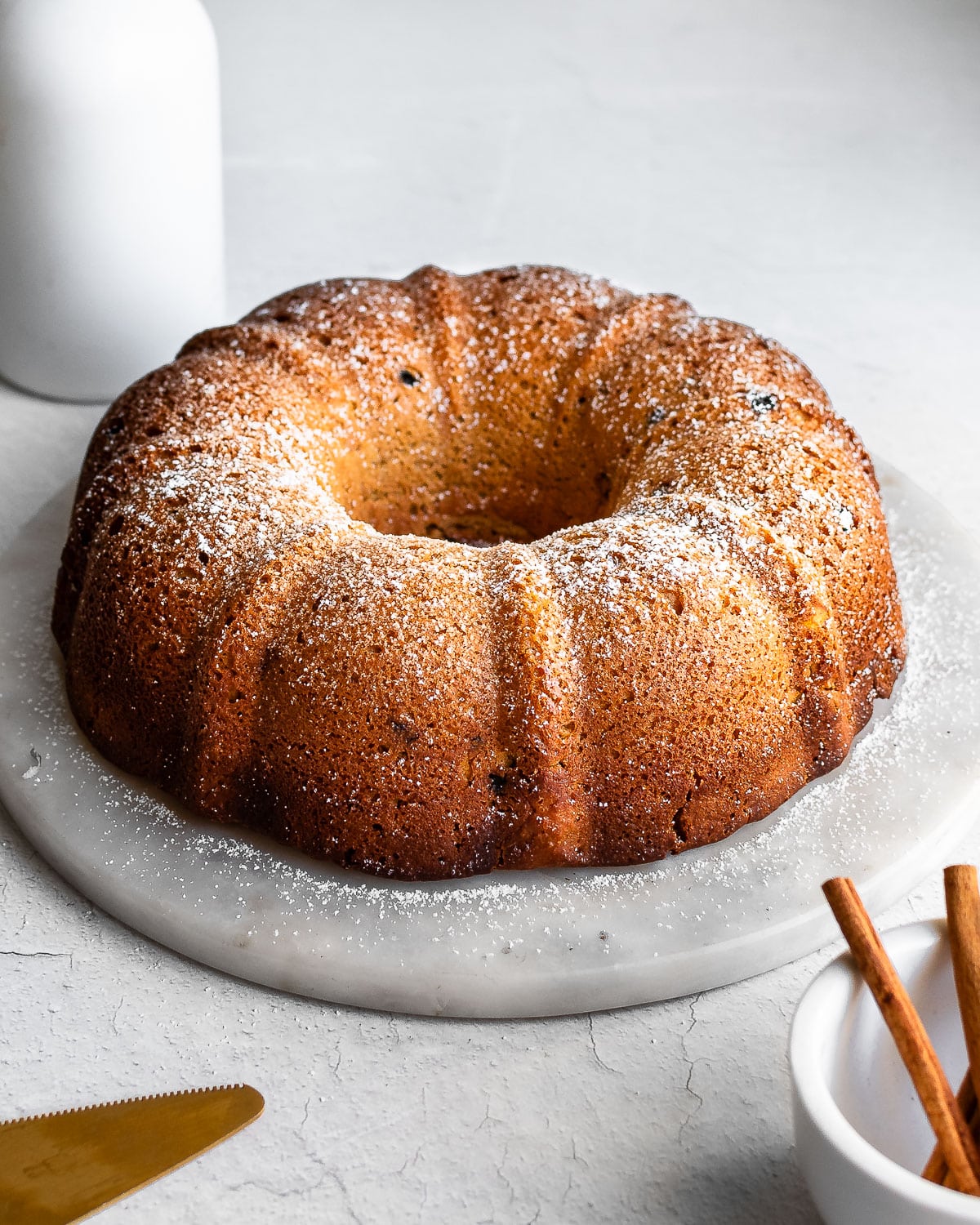
Every November, we make election cake. It's a boozy, spiced sourdough cake studded with dried fruit.
It starts with a mix of flour, buttermilk, and sourdough starter that you allow to rise overnight before you beat the remaining ingredients into the batter. After adding eggs, sugar, molasses, spices, and plenty of booze, you let the cake rise again before baking.
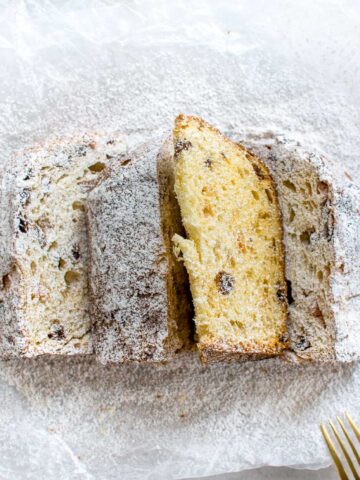
It tastes a bit like a cross between cinnamon-raisin bread and spice cake. The crumb is tender and soft with a delicious touch of tartness thanks to the inclusion of sourdough starter.
The History
In early America, elections were festive community events. Families traveled to town centers to enjoy a holiday with neighbors-dancing, drinking, and mustering for the local militia. During this time, spiced cakes known as "muster cakes" became a tradition.
After the Revolution, while mustering ended, the celebrations continued, and these cakes were renamed "election cakes." Often massive and expensive, they were baked to feed entire voting communities. However, by the mid-19th century, the cakes shifted from symbols of unity to tools for political influence, with slices used to sway votes for certain candidates.
Ingredients + Substitutions
Flour gives the cake its bulk and structure. White whole-wheat pastry flour is a great choice as it adds fiber and a lot of flavor. Another option is all-purpose einkorn flour.
Buttermilk adds moisture. You can also use milk kefir if you do not have buttermilk.
Sourdough starter makes the bread rise. Make sure your starter is active and bubbly. If you don't keep a starter, you can substitute packaged baker's yeast. You can also use wild yeast (yeast water) to make the cake rise.
Sugar and molasses give the cake flavor and add sweetness. I recommend using a minimally processed sugar such as rapadura or sucanat. Coconut sugar and maple sugar are good substitutes.
Brandy and white wine are traditionally used in early American election cake recipes, notably the recipe by Hannah Glass, which calls for a full quart of brandy. They give the cake flavor. If you don't cook with alcohol, you can substitute sweet apple cider for brandy and wine.
Spices include coriander, nutmeg, allspice, and cinnamon. They give the cake its flavor and help increase its shelf life. If you don't keep individual spices in your cupboard, you can substitute an equivalent amount of pumpkin pie spice.
Tips for Making Election Cake
Use an active and bubbly sourdough starter. This cake relies on yeast to rise instead of baking powder or baking soda which are common in modern cake recipes. You'll need an active (proofed) starter or baker's yeast to make it work.
Allow plenty of time. Because this is a slow-rise sourdough recipe, you need to plan ahead. That means starting the evening before and finishing the cake in the morning.
Love this recipe? There's more.
Join Nourished Kitchen+ for ad-free browsing, nourishing monthly meal plans, live workshops, and access to all our premium downloads.
Try these sourdough recipes next
Recipe Questions
Some readers have had luck baking the cake in a springform pan instead of a Bundt pan.
A proofed or active starter should double (or triple) within 6 to 8 hours. You can test your starter by dropping a spoonful into water. If the starter floats, it's ready.
.
Reina says
This was SO good.
Dorrie says
We tried this as a homeschool lesson, and it came out great. We used raisins because I couldn't find currants. My eight year old loved it.
Barbara Acree says
Thanks for sharing such a fascinating recipe! I’m anxious to try it. Reading the historical aspects of the election cake, it strikes me that the baker must have had some pretty strong”guns” to hand mix that huge monster! Looking forward to reading more on this site, Barbara.
Paul Lazaras says
Your history of the Election Cake not only brings us back to a simpler time, but I think to a time when candidate dart throwing was more subdued. Bravo to days gone by and hoping the future tames the great divide. I'll eat to that !!!
naleśniki says
Yum!!!! Made it tonight.
Melinda says
Could you make this without the fruit? None of us here particularly like fruit cake, but the rest sounds delicious.
Sarah says
Made this cake for Election Day with a rye sourdough starter, used slightly over half soft whole wheat and most of the remainder was millet flour. Whether it was the low gluten content or the strength of my starter, I had no rise at all, but a very lovely cake nonetheless. I also subbed 3/4 c honey for the cane sugar and omitted the white wine. Cake took a little longer to bake and cracked a little but still tastes wonderful! I would say it easily serves 10-12. Great with coffee ... Definitely having a bit at breakfast!
Jolee Burger says
Thank you for the recipe - and the research and knowledge behind it!