
Labneh - a yogurt cheese from Lebanon - is remarkably versatile and very easy to make at home. Preparing this labneh recipe at home requires little more than fresh yogurt and a swath of cheesecloth. If cheese-making piques your interest, labneh is a very good cheese for beginners due to the little amount of expertise it requires, its minimal effort, and its very high rate of success.
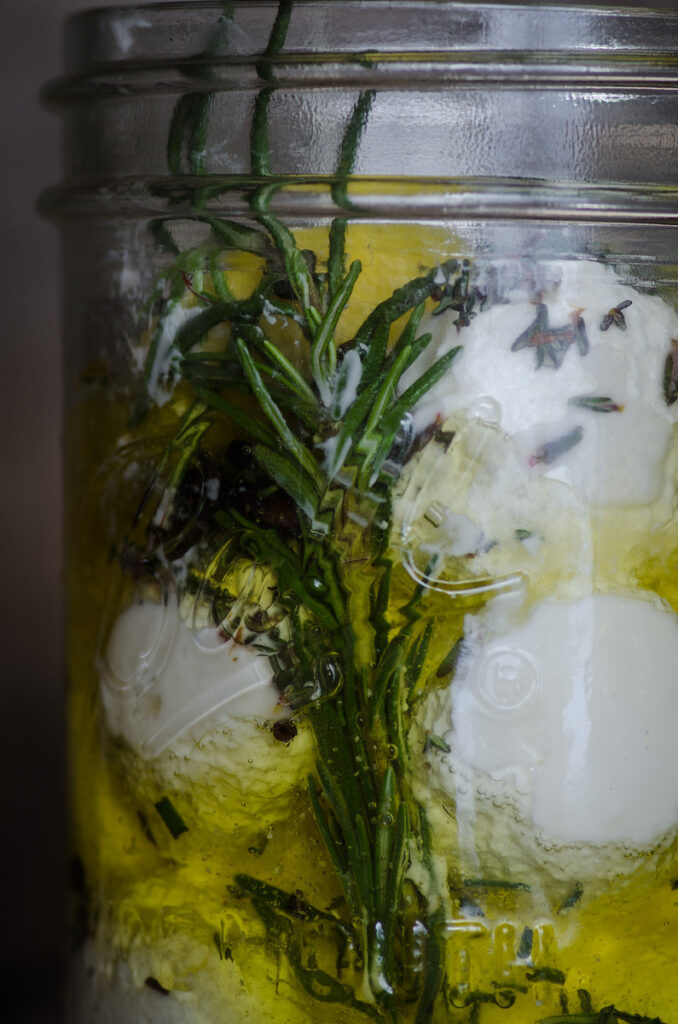
Labneh is versatile in its application in the kitchen. In our home we often substitute labneh for regular cream cheese or for neufchâtel or even sour cream when none is available. Mixing labneh with olive oil and fresh herbs such as parsley, dill or marjoram makes a dip for vegetables and breads that is charming and elegant in its simplicity. Simple food is often the best food.
For your labneh, you'll want to choose a good fresh yogurt. In preparing my labneh, I prefer a raw milk yogurt. Matsoni (pronounced madzoon) is room temperature or mesophilic yogurt culture that is particularly well-suited to making labneh. Its flavor is mildly sour and quite pleasant.
Labneh, like all cultured dairy foods is rich in beneficial bacteria. As a probiotic food, labneh carries with it all the benefits of yogurt. Foods rich in beneficial bacteria support proper immune system function, and the process of lactic acid fermentation increases the vitamin content of many foods.

Hibber says
I want to make labneh, but I don't know whether to make with homemade raw yogurt or homemade raw kefir. I would imagine that x amount of kefir would make much less labneh than x amount of yogurt since kefir is so watery. Also, it seems that it's traditional to make labneh with yogurt not kefir, since kefir doesn't come from the Middle East; yogurt is eaten in the Middle East. What do you think?
Jenny says
To be strict, linen is only made with yogurt, not with kefir.
Annette says
Can I use labne as a yogurt starter?
Jenny says
Labneh often has salt, herbs and oil added, so I wouldn't recommend it unless you're positive it's just milk and starter culture that went into making it.
Sunny says
Jenny, I love your cookbook and your blog, but you use the phrase "remarkably versatile" WAYYYY too much! It's in every recipe I've read by you and it's in your cookbook a million times!
Jenny says
Holy cow! You're right. I just ran a search on that keyword for the site, and there's loads of results for it. Talk about lazy writing. I knowi Kwan on"little" too often, too. Better run a search on the manuscript I just turned in.
Bethany says
Hello, Jenny!
You mentioned using mission olive oil for this recipe. Would an extra-virgin olive oil, such as Jovial, be just as suitable for this recipe?
Thank you!
Miriam Tony says
While living in Beirut for five years, I was fortunate to discover secrets of the very nutritious and delicious Lebanese and Palestinian cuisines. One cookbook I would recommend for describing the labneh making process is Lebanese Mountain Cookery by Mary Laird Hamady.
Lena says
I have been scouring the internet for a recipe (in English) for homemade Labneh...so grateful!!! Thank you
Amanda says
This looks amazing! I can't wait to make it myself. My dad makes this every year for his Easter basket. Which herbs taste best in labneh? I'm thinking basil or green onions and chives...
Shar says
Everyone is writing about the great photos, but I see none 🙁
Any help with the photos?
have been playing with yogurt, kefir, and draining whey off of lots of stuff.....so would love to see the photos, particularly since everyone states they look so yummy !
Thanks!!
Kellianne says
Hi, I am very keen to make my own labneh! During the draining process do you keep the yogurt in the fridge or at room temperature?
Jenny says
Room temperature.
sa'ada says
the labna balls can also be rolled in zatar or other spice mixes before being stored in oil.
javier says
hi there, thanks first of all to the moderator of this web page, all very usefull information
i wanted to ask something:, i find my self in Northern India right now high in the mounantains, living with a family that supply raw fresh milk every day, yesterday i mixed a bit o what was left from the day before with the new arrival raw milk of the day.... today mornig just wake up and i found a sour creamie fat in the jar, i didn't do any of the precesses for preparing it, i did not warm it up or anything like this i just non intentional mixed the new milk with a 1 day older milk in a jar.
it looks good but im not sure about using it for breakfast.....what should i do, how can i test if its a safe yogurt or something similar?..... cows here feeds with super good green grass at high alttitude 2000 mts. good enviroment
i hope i could explain it well, thanks again
Javier
Erica says
Hi Jenny,
I'm Lebanese and I used to eat labneh as a child all the time.
Jenny says
Hi Tammy -
I don't believe that salt affects the action of the whey to any great degrees; that is, I've never had a problem using whey from salted cheese or yogurt cheese before. I guess, as with everything, it likely depends on time, amount used and environment.
- Jenny
Tammy says
I was just wondering if the salt effects the whey in any way. I have a jar with about 1 1/4 cup of whey already started that I use for fermenting but that is just from straining plain yogurt (no salt added to it) Is it ok to pour the salted whey from this recipe into mine or should I start a seperate jar?
Jenn AKA The Leftover Queen says
This is a great post, and reminds me that I really need to make labneh again! Your photos are great!
Jenny says
Thanks guys for catching the laban mix up! From what I understand, the labneh should keep fine at room temperature since they're acidic and the olive oil creates an anaerobic environment. I just keep mine in the fridge because that's where I keep all my cheese - it's easier.
Thank you all for your comments!
Kelly A. says
My best friend in elementary school was from Iraq and her parents called the yogurt itself Laban also. We can get Lebneh in many stores here in Metro Detroit but I need to make it myself from my homemade yogurt sometime. Lovely photos.
Daily Diner says
Gosh that looks good!
Jen says
I've done this and mixed in honey and chopped walnuts to use as a spread for homemade bagels... YUM! I'm going to try a miso dip with some soon, and I definitely love the idea of fresh herbs and sea salt. Thanks for the idea.
Jenn says
What a coincidence -- I just made yogurt cheese this week to bring with my lunch. I put sea salt and herbes de Province in it and I've been eating it on cucumbers. Definitely going to start using it instead of cream cheese in the near future! I might use it instead of cream to make a creamy dressing for my salad next week.
Nicole D says
This is bit pedantic I guess, but leban and lebneh are not precisely the same thing. At least, in my Lebanese family, we've always referred to leban when speaking of the yogurt and lebneh when speaking of the yogurt-cheese. (The vagueries of Arabic dialects being what they are, it's possible other regions use them interchangeably, I guess I only really know what the Lebanese/Palestinians say.)
Our Saturday family breakfasts include lebneh with fresh mint and olive oil, fool (a sort of porridge of fava beans and garlic with olive oil), fresh whole scallions, sliced ripe tomatoes with salt, warm pita bread, fig jam, whipped butter, Halloum and Ashawayn cheeses, and hard-boiled eggs with allspice, pepper, and salt. I'm not sure my father had much more than "yum" in mind when he set all that out, but I was a pretty healthy spread. 🙂
It makes me happy that you've been successfully using the Motsoni culture for lebneh, since I recently bought some hoping from the description that it would suit itself to lebneh. (I haven't found a store-bought yogurt yet that I like for lebneh.)
christin says
Where does it say what kind of culture to use for the yogurt?
@Nicole-did you pile all that on the pita bread or a bit of each in different combos? Did they make the fig jam? Did they sprinkle allspice on the eggs? Ok, one more question...how did your family make fool?
Thanks for letting me pick your brain! =)
Wardeh @ gnowfglins.com says
Hi, Jenny! I too am happy that you referred to the Motsoni culture as being particularly suited to lebneh. I haven't yet got in the habit of making my own raw yogurt - I tend to do kefir and kefir cheese, as the culturing requires less steps.
I was also going to point out, as Nicole did, that leban is the yogurt and lebani is the cheese. 🙂 Lebani is my absolute favorite food, and growing up we had it all the time. My mom always kept us in supply, which speaks highly of her, as she worked hard to provide my dad with his traditional heritage foods (he's Arabic). So of course I and my siblings learned to love it from an early age!
The photo of the lebani balls in olive oil is beautiful. My Arabic aunts would always keep huge jars of these packed in olive oil. They were too big for the fridge, so I imagine they kept them in cool storage. But I don't know for sure.
christin says
Oh and I forgot to ask...can we use raw milk yogurt to make this? And can tell me about the culture you are guys are speaking of? Thanks!