

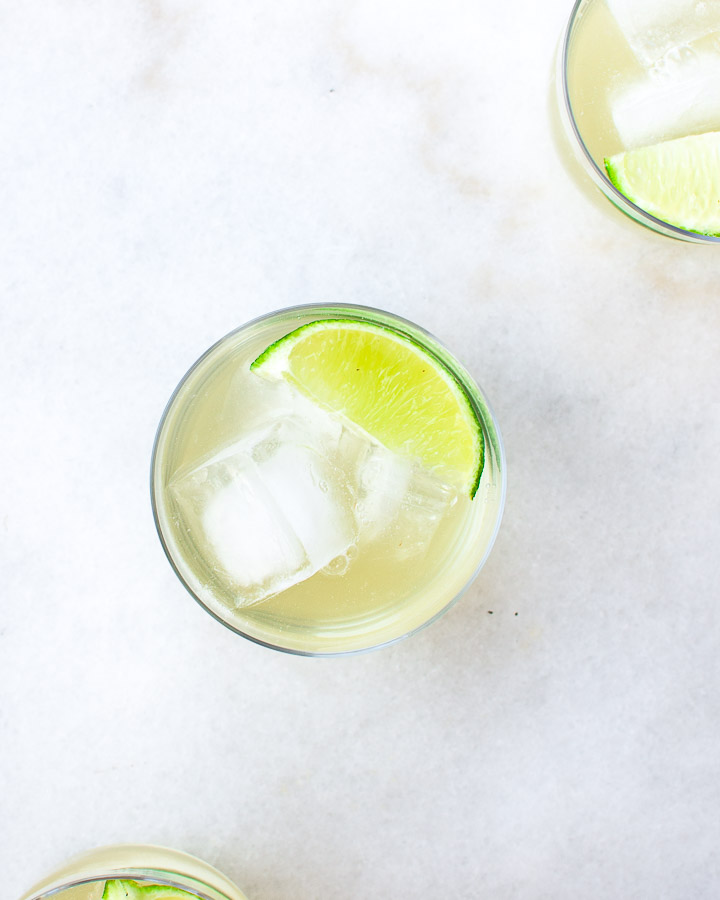
Sweet, tart, and delightfully effervescent, water kefir (also known as tibicos) is a naturally fermented drink that's rich in beneficial bacteria. Its delicate flavor and natural fizziness make it an excellent substitute for sodas and soft drinks. You can make it at home with a few easy steps.
What is it?
Water kefir, or tibicos, is a traditional fermented drink made by culturing water, sugar, and fruit with a starter culture. The starter culture contains various beneficial bacteria and yeasts that produce a slightly tart, fizzy drink.
While its specific origin is unclear, researchers suspect that water kefir originated in pre-Columbian Mexico. It is still used in Mexico today in some preparations of tepache - which is a lightly fermented drink often made from corn or pineapple.
It's made using water kefir grains, a starter culture that contains a wide variety of beneficial microorganisms living in symbiosis. These tiny, crystal-like grains can form naturally beneath the skin of prickly pear cactus fruits (1). Further, it's likely that early brewers captured tibicos from the wild and then cultivated the culture through domestic brewing.
Why this recipe works
- Water kefir acts like a homemade soda. Only, it's lower in sugar and rich in gut-friendly beneficial bacteria.
- It's an easy recipe. All you need to do is dissolve a little sugar in water, add your starter culture and other ingredients and wait.
- The addition of lime helps to both provide a boost of nutrients for the tibicos grains.
- The citrus fruit also helps lower the PH of the sugar water, so there's a lower risk of contamination by stray microbes.
- The dried figs are rich in minerals which helps keep your water kefir grains healthy.
- The dried fruit will also plump up with carbon dioxide during fermentation and should float to the surface, helping you to know when it's ready.
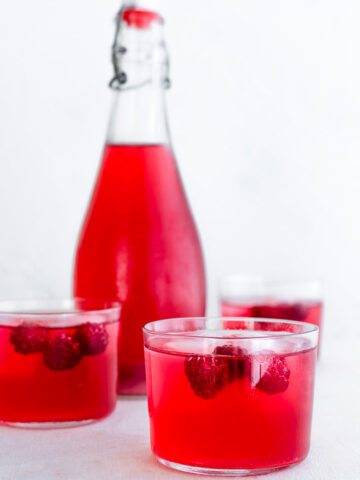
- Fruit juice added during the secondary fermentation gives your water kefir flavor - like a homemade soda or bubbly tonic water.
- It's an excellent source of probiotics for people who eat a dairy-free diet and can't consume yogurt or milk kefir.
What's in it?
Like kombucha and milk kefir, you need a SCOBY or symbiotic culture of bacteria and yeast to culture water kefir properly. The bacteria present in this culture produce small, gelatinous crystals called water kefir grains or tibicos.
In addition to these crystal-like grains, you'll also need sugar. Salt, dried fruit, and citrus fruits are all common additions. Fruit juice works well during the second ferment.
- Water kefir grains (also called tibicos) are small, gelatinous structures that contain a variety of bacteria and yeast. These grains are the source of beneficial microorganisms that will transform sugar water into a bubbly, probiotic drink.
- Water should be dechlorinated as the chlorine added to municipal water may negatively affect the fragile cultures in the grains. Many water filters will dechlorinate your water.
- Sugar is the food that nourishes the microbes in your grains. The good bacteria will eat the sugar and release acids, which is why your water kefir turns from sweet to tart.
- Dried fruit such as raisins or figs is a good addition as it can help give a boost of minerals that help nourish the grains and keep them healthy. Additionally, when it's finished brewing, the dried fruit should float to the top of the jar, giving you a good indicator of doneness.
- Citrus fruit gives water kefir flavor during the primary fermentation. It also helps to acidulate the water, keeping it safe during the early stages of fermentation. Both lemons and lime work well.
- Fruit juice is an excellent choice for flavoring your water kefir during secondary fermentation.
Where to Buy Water Kefir Grains
To brew water kefir, you'll need to pick up a starter culture. And the easiest place to find them is online at Cultures for Health.
Is it good for you?
Water kefir, like most fermented foods, supports gut health and systemic wellness. Researchers have studied the microbial composition of water kefir since the late 19th century(2).
Like many fermented drinks, it's considered a functional food - meaning that you receive benefits beyond nutrition alone. Most of these benefits can be attributed to the drink's rich array of beneficial bacteria.
While it's lower in sugar than soft drinks, fermented vegetables or beet kvass may be a better choice if you're struggling with metabolic health or blood sugar balance.
- Water kefir is an excellent source of gut-friendly probiotics. It contains about 60 strains of lactobacillus bacteria, yeasts, and other microbes (3). The composition of each culture varies slightly, as brewing techniques and the environment influence it.
- Some research shows that water kefir supports healthy cells and may have anti-carcinogenic properties (4).
- Fermented drinks may help to support oral health, too (5).
- While water kefir is not sugar-free, fermentation does reduce its sugar content, and it serves as a promising low-sugar beverage (6).
- Beneficial bacteria in probiotic-rich foods and drinks support immune system health (7).
- It provides excellent hydration, especially on hot days. In addition to being a water-based beverage, you'll also get loads of probiotics as well as some electrolytes and B vitamins.
Brewing Tips
To make water kefir, you'll need to mix sugar and water together and then cool it to room temperature before adding your grains. Drop in some dried fruit for minerals, and allow it to culture for at least 24 and up to 48 hours before straining and bottling.
Once you get the hang of brewing your water kefir, there are a few things you can do to make sure you have a consistently good drink every time. But there are a few tips you'll want to keep in mind.
- Filtered water works best. Chlorine is strongly antibacterial. And so it can damage your tibicos grains over time.
- Pay attention to temperature. Excessive heat can damage the live cultures, so make sure your sugar water has cooled to room temperature before adding the grains.
- Use unrefined cane sugar like jaggery, panela, or rapadura. Water kefir thrives in a mineral-rich environment, and unrefined sugars are rich in minerals. White sugar, however, produces the cleanest flavor and a clear appearance.
- Use a caloric sweetener. Your culture needs sugar in order to thrive. While unrefined sugar works best, you can also use white sugar, molasses, honey, and coconut sugar. Avoid noncaloric sweeteners like stevia and xylitol.
- Add a liquid mineral supplement if you use white or refined sugar to give your culture the minerals it needs to grow.
- Add dried fruit like figs or raisins to your brew. Dried fruit gives your grains much-needed minerals and will float when the kefir is finished.
- Stir thoroughly before bottling it to distribute the yeast. Yeast activity is what gives you great bubbles. Evenly distributing the yeast among your bottles will give you better and more consistent results.
- Place your bottles in the fridge for a few days after the second ferment. This process, called bottle conditioning, helps set your bubbles.
Love this recipe? There's more.
Join Nourished Kitchen+ for ad-free browsing, nourishing monthly meal plans, live workshops, and access to all our premium downloads.
Variations and Substitutions
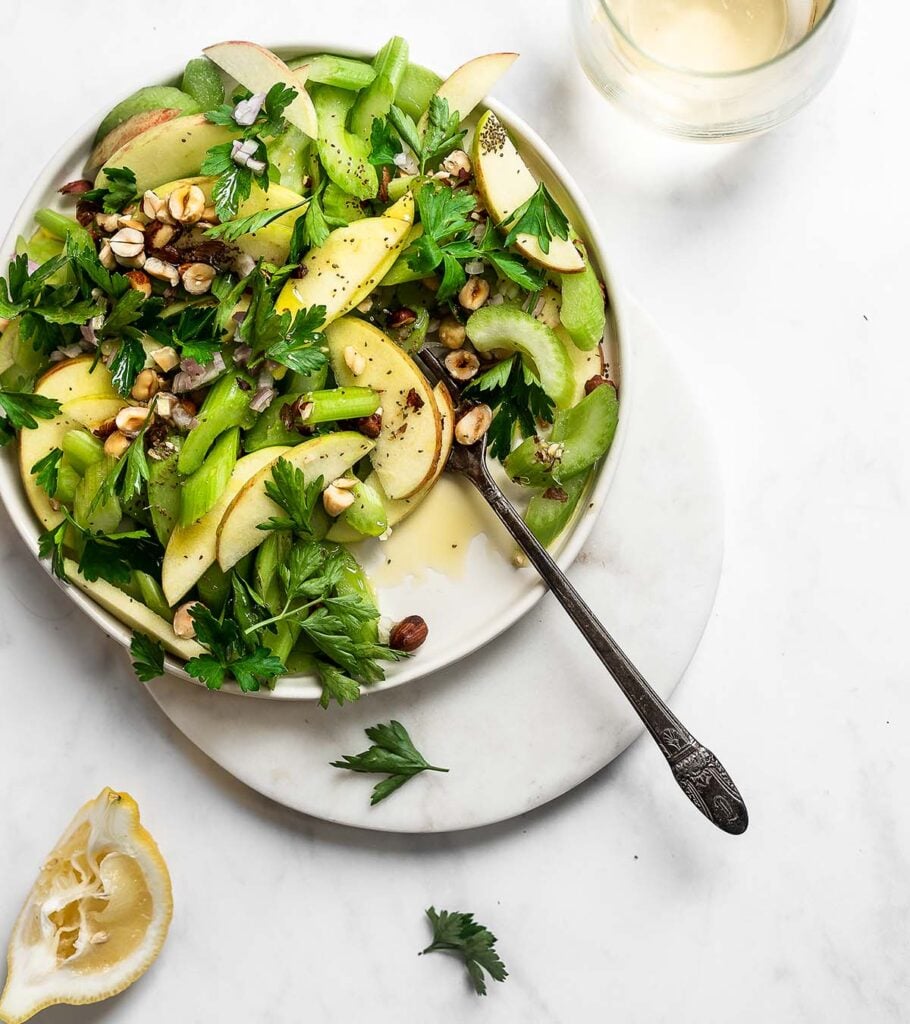
Swap the sugar. While your water kefir needs a caloric sweetener in order to culture properly, you can swap the sugar called for in the recipe with honey, maple syrup, coconut sugar, or similar ingredients.
Try lemons instead of limes. I love the floral acidity of fresh limes, but lemons are also a popular choice.
Drop the figs. Dried fruit such as figs nourish the good bacteria in your brew, but you can leave them out if you prefer. Or, consider swapping another dried fruit, such as a few raisins.
If you prefer a still rather than a fizzy brew, skip the secondary fermentation.
Sweetened herbal tea is a nice substitute for fruit juice if you prefer a botanically-inspired brew.
Recipe Questions
Like all fermented beverages, water kefir contains a small amount of alcohol - around 0.5% to 0.75%. It's a natural byproduct of the process of fermentation. To clarify, that's about the same amount that you'd find in over-ripe fruit or in kombucha.
If you're concerned about alcohol content in the brew, you can test it with a hydrometer, often used by homebrewers.
Water kefir isn't as popular as kombucha, and it's hard to find in grocery stores. You may be able to find regional brands stocked at your local natural grocers. However, your best bet is to make your own.
If you're new to fermented drinks, start slowly. The influx of beneficial bacteria in this probiotic beverage can cause a little digestive discomfort to people who are unaccustomed to it. A quarter cup (4 oz) is perfect to start out.
If you drink or eat fermented foods regularly, enjoy drinking as much as you please. Keep in mind that even though water kefir is a fermented drink, it still retains some sugar content (that's why it tastes sweet), and drinking sweetened beverages regularly isn't good for either your teeth or your metabolism.
While you should brew water kefir about once a week to keep your grains healthy, they're resilient and can last a long time in the fridge.
The best way to see if your grains are alive or dead is to brew a new batch of water kefir. If you see signs of fermentation, such as bubbles, it's a good sign that your grains are still alive.
If your water kefir begins to taste tart and pleasantly sour, then the grains are fine. However, if there are no signs of fermentation or the liquid remains sweet after 24 hours, discard the grains and start over.
No. The beneficial bacteria in water kefir depend on sugar. Without it, the kefir will not ferment, so you need to use a caloric sweetener.
If you don't wish to use sugar, you can also use honey. Boil ¼ cup honey in 1 quart of water, and then let it cool to room temperature. Use this honey water in place of both the sweetener and the water portion in the recipe above.
You can also place the grains directly in coconut water which has enough sugar to promote their growth.
As you continue to brew water kefir, the grains will proliferate, and you will have more than you started with. You can use these grains to brew larger batches or consider giving them away to friends. You can also compost them.
If you need to take a break, store the water kefir grains in a jar of sugar water in the fridge. To make the sugar water, dissolve 1 tablespoon of sugar into 1 cup of water, let it cool, add the grains, and then transfer to the fridge for up to 6 months.
You can store your prepared water kefir in the fridge for up to 1 month. Store the grains in sugar water in the fridge for up to 6 months.
Yes, water kefir grains can be used indefinitely. With proper care and brewing, they'll stay good for years.
Your water kefir is ready to drink when it tastes slightly sweet and pleasantly tart. The first ferment typically takes 24 hours; however, it may take up to 48 hours if your kitchen is cold.
Adding a few raisins or other pieces of dried fruit can help you judge when your brew is ready. When the raisins float to the surface and have a plump, balloon-like appearance, it's done. They provide a good guide for judging when your water kefir is ready.
In order to make fizzy water kefir, you'll need to ferment your kefir twice. The primary fermentation happens in a large jar, which allows the carbon dioxide that builds up during fermentation to escape.
For the second ferment, stir your water kefir (after removing the grains), add a source of sweetener such as fruit juice, and then pour it into swing-top bottles. Seal the bottle, and let it ferment a second time. The water kefir should become fizzy because the carbon dioxide is trapped in the bottle.
If your water kefir doesn't become fizzy even after the second ferment, it's possible that the grains are damaged or dead.
Water kefir should have a clean, clear texture. But, occasionally, it develops a slimy or viscous quality. This is caused by imbalanced flora and is usually attributed to inconsistent routine or contamination by other bacteria or wild yeast. Discard the grains and start over.
Sometimes the grains, which should be healthy and gelatinous, will begin to disintegrate, forming a sludge at the bottom of your jar. This is often due to inconsistent brewing techniques, brewing at too high a temperature or for too long, or inadequate nutrition.
For the healthiest grains, brew consistently once a week at a steady room temperature. Using a liquid mineral supplement may help to provide nutrients for your grains.
Like kombucha, water kefir benefits from both a primary and secondary fermentation period. The primary fermentation takes 24 to 48 hours. The secondary fermentation takes an additional 24 hours, followed by about 72 hours in the fridge, which allows the bubbles to set.
There are a few ways to tell if your water kefir has gone bad. First, you may see no signs of fermentation, such as tiny bubbles appearing at the surface or an increased sour flavor.
If your water kefir takes on a slimy texture or takes on a strange color (pink, green, black), then it should be discarded. Note that using brown, unrefined sugars will cause your grains to turn a translucent brown, and this is normal.
Additionally, if you see any signs of mold formation, such as fuzzy white or black patches on the surface of the jar or on the grains themselves, it's a good idea to discard them.
While they share a common name, milk kefir and water kefir are very different from one another. Milk kefir grains tend to be opaque and clumpy, while water kefir grains are more gelatinous and crystal-like.
Milk kefir tends to have a wider variety of beneficial bacteria than water kefir and is a richer source of probiotics overall. They also contain different strains of bacteria.
Both fresh and dehydrated grains work fine. Fresh grains are easier to get started, and dehydrated grains may need a few brew cycles to revive effectively.
Minimally processed, natural sugars that retain their mineral content work best. Rapadura, muscovado and turbinado sugars are good choices. Brown sugar can work in a pinch, too.
Granulated white sugar gives the cleanest flavor and clearest appearance but may not have enough minerals to support healthy grains. If you use white sugar, consider adding a mineral supplement to keep your grains healthy.
You can also use honey, maple syrup, or even coconut water.
Try these fermented drinks next

References
- Katz, S. 2012. The Art of Fermentation. Chelsea Green Publishing.
- Lutz, M.L., 1899. Recherches biologiques sur la constitution du Tibi. Bulletin de la Societe Mycologique de France 15, 68-72.
- Gulitz, A., et al. The Microbial Diversity of Water Kefir. 2011 Apr.
- Zamberi, N. R., et al. (2016). The Antimetastatic and Antiangiogenesis Effects of Kefir Water on Murine Breast Cancer Cells. Integrative cancer therapies, 15(4), NP53-NP66.
- Chatterjee, A., et al. (2011). Probiotics in periodontal health and disease. Journal of Indian Society of Periodontology, 15(1)
- Laureys, D., De Vuyst, L. Water kefir as a promising low-sugar probiotic fermented beverage. Arch Public Health 72 (Suppl 1), P1 (2014).
- Shahbazi, Roghayeh et al. "Anti-Inflammatory and Immunomodulatory Properties of Fermented Plant Foods." Nutrients vol. 13,5 1516. 30 Apr. 2021

Diane says
I’m happy to find detailed instructions, thank you! One question, do I just drop 1/2 lime into the brew or squeeze out the juice?
Mary B says
We loved it. My 4 year old thought it was super good, and is asking for more. I skipped the fig (because I didn't have any), and it still worked fine. I think next time, I'll add it to some juice?
Diana Louise Park says
Can I drink the stored water kefir water or do I have to separate?
Angie says
So this was probably the easiest recipe I tried. The lime was a nice twist, but we drank it plain without the second ferment.
Rachael says
Thank you so much for this! Very helpful. One batch fermented a second time and one not. So very excited to try as I've discovered my guy health could be to cause for a number or ailments I've currently got, despite a clean and balanced diet 🙂
Amanda R. says
Have been making water kefir for about a year and a half now, pretty much exactly this recipe. It's wonderful. It's great plain when you just want to balance your belly or aren't feeling well/right, and kefir soda is delicious. I like fruit juice-based soda the best, but herb-based are nice and light.
Kristina says
So...I brought home kefir crystas, did the recipe...drank it up and made more. Life happened and I found my jar while cleaning my cupboard (MONTHS later). Are the kefir crystals stil good if rinsed?
Michelle @ Find Your Balance says
I've been loving my water kefir! Thanks for helping me get started. So far our favorite is made with white sugar and a drop of blackstrap molasses, with fresh pineapple added. Yum! But I have to say...it's never fizzy, even when I use Sucanat. Thoughts?