realfoodfermentation

Real Food Fermentation: Preserving Whole Fresh Food with Live Cultures in Your Home Kitchen

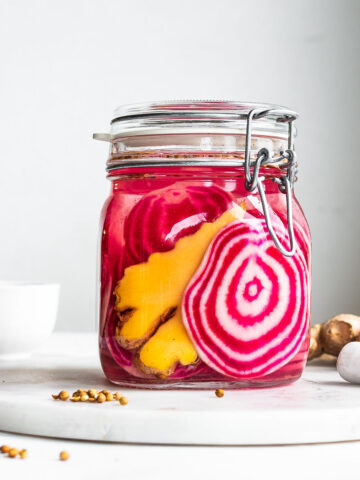
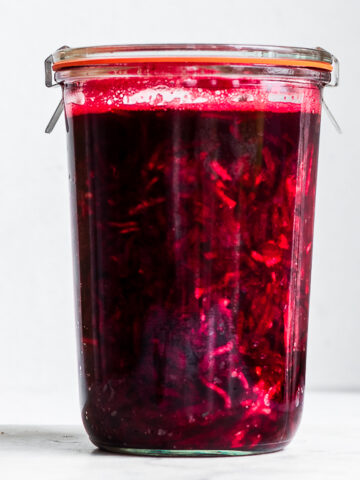
beet kvass

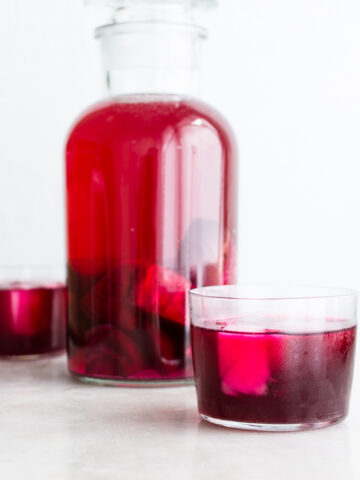
Beet Kvass – a naturally fermented tonic. Get the recipe

There’s something a bit mystical, a bit magical about fermented foods.  Of all the aspects of the traditional foods movement that I love – healthy fats, good meat, fresh cream and bone broth – I’ve fallen hardest for fermentation which is why I teach classes on fermentation and focus so many of my energies on this simple, fresh art.

There is, indeed, a bit of otherworldly magic to the transformative process undertaken by thousands (millions? billions? gazillions?) of tiny microbial minions who eat away at a foods sugars and produce a food or drink that is positively resilient with nourishment and complex, unmasked flavor.  It’s a lovely process.

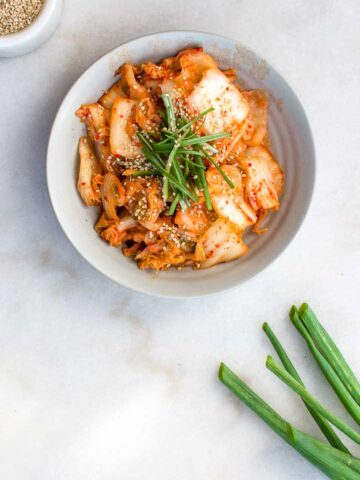
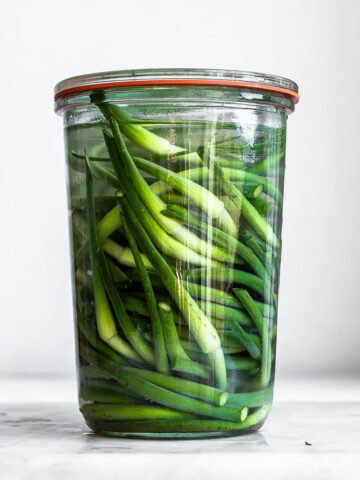
Yesterday, as I put up a quart of pickled garlic scapes and a half gallon of white kimchi (that recipe is yet to come, but you can check out my recipe for traditional hot kimchi), I thumbed through my friend Alex Lewin’s newest book: Real Food Fermentation.

Real Food Fermentation

Real Food Fermentation is a fermenter’s manifesto of sorts – one that truly celebrates real food as it not only covers the basics behind fermentation, but also addresses the why: why eat real food, why avoid GMOs, why we need microbes and enzymes from fermented foods.

From here, Real Food Fermentation delves into simple questions on equipment, technique and tools venturing beyond the recipes in the book – coupling the science of fermentation with the art.

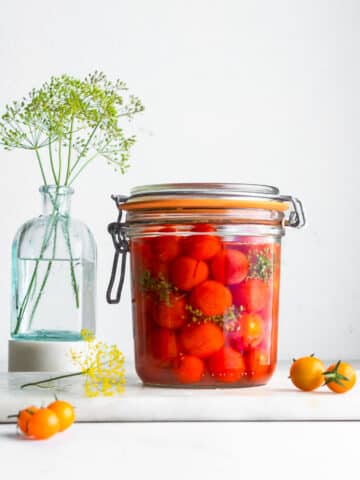
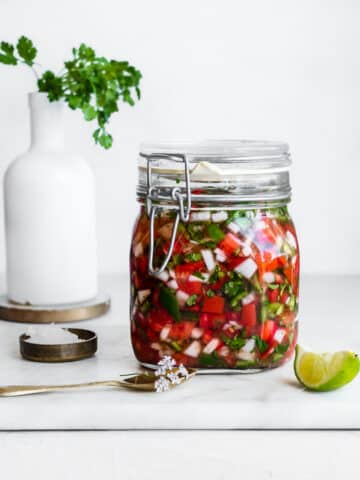
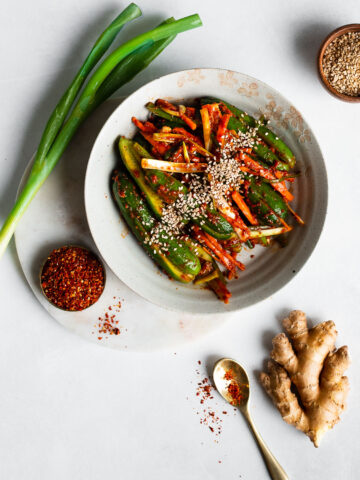
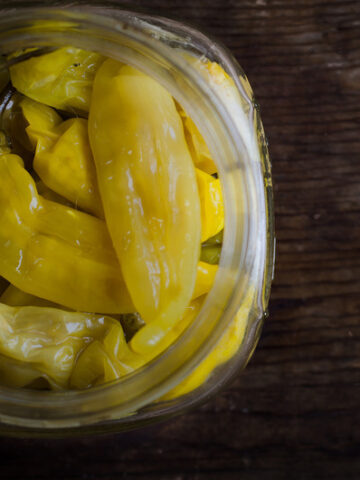
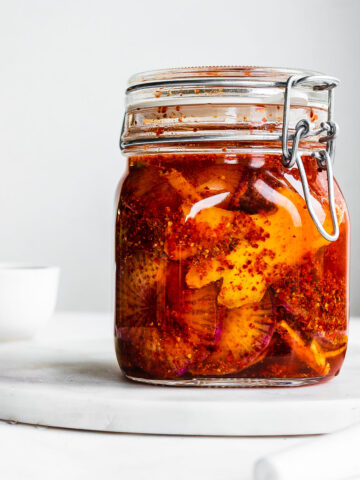
Real Food Fermentation also provides simple, but beautifully photographed, recipes for fermented foods: sauerkraut, pickles and cultured vegetables, yogurts and kefir, simple meat and fish ferments and fermented fruits and chutneys.  In this way, it’s a beautiful companion to Get Cultured! – the online fermentation workshops hosted here at Nourished Kitchen.

How Real Food Fermentation is Different

The past two years has seen an exponential rise of interest in fermented foods and a handful of books have been published to meet this growing interest (and I’ve read each of them), but Real Food Fermentation is, in many ways, different – simpler, more practical and with information that can appeal to fermentation enthusiasts who are new or who are long-time fermenters like my family.

Perhaps the most helpful aspect of the book is the detailed, step-by-step photographs which guide the reader through each step of the fermentation process – so you know you’re doing it right, properly, and safely.

Where to find Real Food Fermentation

Real Food Fermentation was just released today!  Right now you can order it through Amazon on sale for $15.83 – saving about $9 off the retail price of $24.99.  Also, check your local independent book store.

Inspired Real Food Recipes Delivered to Your Inbox

facebook twitter pinterest google+

What people are saying

  1. Is it possible to get this in ebook form, easier for me to buy to avoid all the extra shipping charges and thanks.

    • Dodie,
      It doesn’t look like there is an e-book option–at least not on Kindle. Amazon will always list the available formats. They do offer free shipping on any order of $25 or more though. There are only very few items that don’t qualify and Amazon’s great about clearly labeling those. Hope that helps! :)

    • I don’t think his publisher has released it on Kindle/e-book format yet/

  2. Could you offer? Are Water kefirs and kombucha in the book? It appears to be delightful!

  3. I would have considered purchasing the book but with the masons jars on the front cover, it tells me that the method being used to ferment is all wrong. So, said that so many people believe that mason jars are a good method of fermentation the truth is you can end up with liver damage.

    • Heather says:

      I’d love some widely credible information to substantiate this, if it is true and indeed a significant risk as there are many experienced people who advocate the mason jar method.

    • Alcohol causes liver damage. How does a glass jar?

    • You are listening to inaccurate (but deeply compelling) information.

    • Maryann says:

      Maybe this book is geared for those of us who cannot afford $60-$100 food crocks to make life-sustaining fermented foods for our family.

      • Oh goodness, yes! I don’t know how many times I’ve said: but you absolutely DON’T need to buy special equipment to ferment properly. It does help, but it’s far from a necessity.

      • I have actually had far better luck with mason jars than with Harsch crocks…

    • Gi, I don’t think there’s a need to worry about liver damage from Mason jars when used for fermentation purposes. Where did you get this information? I’m curious. Most of the problems that I’ve read regarding Mason jars stem from the fact that they don’t always create a perfect seal which allows some air to enter the jar. Fermentation requires an anaerobic environment. The worst that could happen is that you end up having to scrape off some mold. I’ve never had mold form, perhaps because I make sure that the contents are well covered by brine. Anyway, my impression has been that the main concern with Mason jars is actually with the metal lid that contains BPA. Having said that, I’d like to know where you’ve heard about the relationship between Mason jars and liver damage.

    • Would be *very* curious to hear specifics about your concern over liver damage from Mason jars.
      Is it the BPA in the lids you’re worried about? I don’t think that’s a big issue, since the lids are not in contact with the food (assuming you leave an inch of space above your food), and you aren’t heating it.
      If you really don’t like the idea of using mason jars, you can use a Pickl-It or a Le Parfait. These have rubber (or silicone?) gaskets that are likely to be even less reactive than the mason jar lids.
      You can also put a whole cabbage leaf over the top of everything, and discard the leaf before you eat the ferment.

  4. Sara Peterson says:

    We live on a boat so I can’t order ‘real’ books. I have to have mine in email(ebook) format. Please let them know : )
    Thanks,

    Sara Peterson
    currently in Solomons, Md

    • It will be available in ebook format at some point. I’m not actually sure when–they haven’t given me a date! To be honest, they might want to wait until the initial sales spike falls off a bit. Although I’m pretty sure they make more money on ebooks than on physical books–ebooks are pure profit.

  5. Natalie says:

    Can you tell me more about the book before purchasing. What is he fermenting with?…whey…etc.? Do you need special crocks for his recipes? Is this similar to Sally Fallon’s method of fermenting? I trust your opinion Jenny. I just need the very best, smartest way to have probiotics in my family’s tummy. Thank you so much for your help. Just didn’t want to make a bad purchase.

    • The book covers both wild fermentation and starter fermentation, he uses both the Pickl-it and mason jars and takes a well-rounded approach. He offers options for starters (which are mostly optional anyway and he explains how/why) including whey, purchased starter and sauerkraut juice etc. It’s a good book – especially for beginners. Amazon has a pretty good return policy if you find it doesn’t work for you.

  6. I have been interested in learning more about fermentation and this sounds like a good book to start with, however, I have just learned through an elimination diet that I am allergic to anything and everything related to dairy. I have noticed that whey is used often as well as starter cultures containing lactic acid. Can you ferment and avoid all types of dairy?

    • You absolutely DON’T need whey or dairy products for fermenting; further, most fermented foods don’t even required a starter.

  7. Does this new book om fermentation have recipes and/or suggestions to ferment dairy free. lots of other books use whey for most fermentation and I need dairy free. Thank you for your time and comments.

  8. Hi Jenny. i truly enjoy reading your blog. It is pretty, informational and easy to read. Thank you and thank you for telling us about “Real Food Fermentation”. I’m wondering if the book also gives ideas on how to serve the fermented food in other recipes for example? I was looking at the book “The Preservation Kitchen” by Chef, Paul Virant ( from my neck of the woods, the Chicago-land area!) and was wondering if you were familiar with the book too?

    I look forward to your reply,

    Gigi

    Thanks,

  9. Jenny,
    Have you ever made black garlic at home? I was interested in trying black garlic and wanted to know your thoughts on it.
    Thanks,
    Magda

  10. Nancy Feldtkeller says:

    I started four days ago with 1 1/2 C of my delicious, slightly carbonated last batch of beet kvass (second time for the beets), in a 1 gal fermentation jar, adding 2tsp salt and filling to within an inch with filtered water, and nothing is happening even though it’s been 4 days. There are no bubbles, nor are the beet pieces rising. Could it be temperature? Our nights have been in the 50s. Would appreciate any input. Thanks, Nancy

  11. Question:

    Does anyone have a ipad and downloaded the kindle version (with app)?

    If so, did it work?

    I really want to get this for my ipad but have never downloaded kindle onto it.

    I already have the kindle app.

    Have a Joyful Day :~D
    Charlie

Post Your Comment

Got a question? Want to provide a tip or other input? We love comments! Post them here, but remember to adhere to the comment policy. In short: keep it respectful, upbeat and don't spam us.

Before you ask about substitutions, please consider that if I recommend a substitution, it will be included as a note in the recipe.

*

Latest Real Food Recipes

grass-fed cows
beef stew finished (2 of 3)
Farm Cheese
Vanilla Mint Ice Cream
Ginger Bug
Google+