
Fermenting garlic is a cinch. You only need four ingredients, a jar, and about 10 minutes in the kitchen. Beneficial bacteria do the rest of the work. After a week or two bubbling away on your counter, they'll be ready.
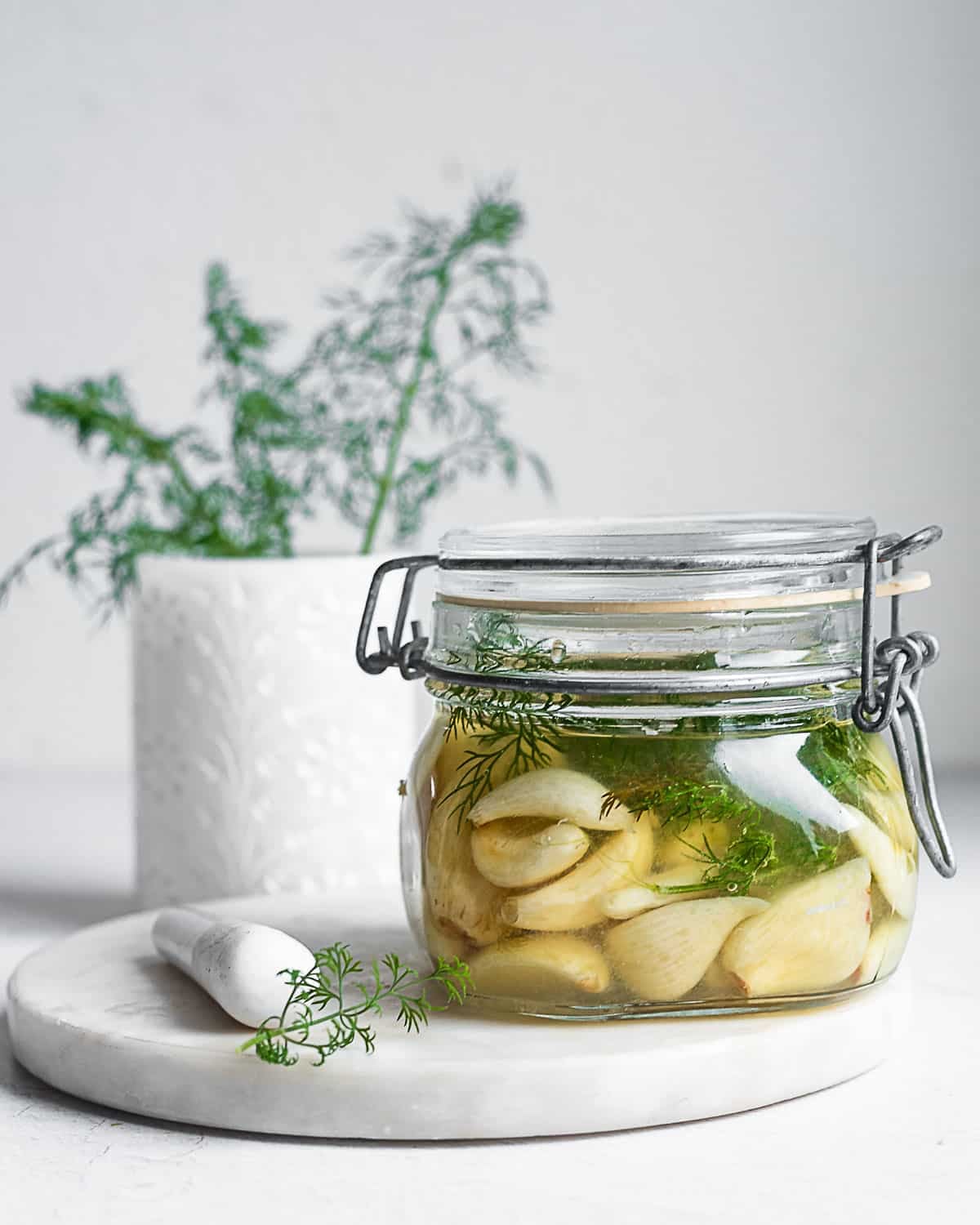
Garlic is one of the easiest vegetables you can ferment. You start by slipping the cloves from their papery skins. Then you tuck them into a jar, cover them with brine, and add a few herbs if you like.
Set the jar aside for a week or two while beneficial bacteria get to work - transforming the garlic into a mellower, salty-sour version of itself. It's the same method we use when fermenting garlic scapes or even carrots: pack a jar, cover with brine, and wait.
As an added bonus, fermented garlic is rich in beneficial bacteria that help support gut health. It's also packed with antioxidants, including allicin, the compound responsible for garlic's bold flavor and many of its health benefits.
Ingredients + Substitutions
Garlic turns salty and sour when you ferment it, just like a pickle. You can ferment any variety, but we prefer the heirloom varieties like Georgian Crystal which has a crisp texture, deep flavor and large cloves that are easy to peel.
Brine keeps the garlic fermenting safely by encouraging the proliferation of beneficial bacteria. Its salt content also keeps the garlic crisp. I generally use additive-free fine sea salt when I ferment, but iodized salt also works although some people complain of a metallic finish.
Dill gives the garlic a pleasant flavor reminiscent of fermented pickles. Dill is my favorite pairing for garlic, but any fresh herb (and most spices) will work.
Fermentation Tips
The most important rule of vegetable fermentation is simple: keep everything submerged beneath the brine.
You can do this by using a glass fermentation weight or tucking a cabbage leaf over the top to hold the cloves down.
During the first few days of fermentation, beneficial bacteria release carbon dioxide. If you're using a mason jar or clip-top jar, open it briefly once a day to release pressure.
If you're using an airlock or fermentation seal, excess gas will release automatically.
It's also helpful to set the jar in a bowl during the first few days, since active fermentation can cause a little brine to bubble out.
How to Serve It
Fermented garlic is intensely garlicky, so you probably won't eat it by the forkful the way you might sauerkraut or kimchi. Instead, think of it as a punchy accent: a few cloves tucked onto a charcuterie board, or sliced thin and slipped onto a burger in place of pickles.
Blue Garlic?
One more note: Garlic contains allicin, a potent antioxidant that can react in acidic conditions (like those created by fermentation) and turn the cloves blue. If that happens, don't worry. It's perfectly normal and still safe to eat.
Love this recipe? There's more.
Join Nourished Kitchen+ for ad-free browsing, nourishing monthly meal plans, live workshops, and access to all our premium downloads.
Amy says
Nice and shap and salty. Would have loved to see it turn blue though.