
It takes a bit of forthrightness, a bit of ruggedness, and unwavering determination to prepare homemade horseradish. It's a painful process - literally.
Fresh horseradish is rich in volatile oils, after all, that's what makes the root so darn tasty, but it's these volatile oils that fill the air with an eye-burning intensity that only the most steadfast fermentation lovers can withstand in their quest for that perfect, probiotic condiment.
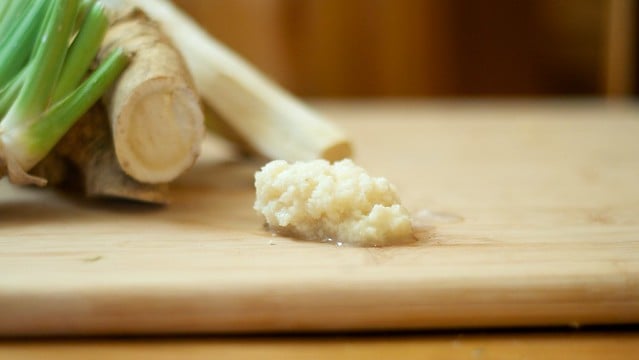
Horseradish is a member of the brassica family - the same family of plants that gives us broccoli, cabbage, turnips, and radishes - each with their characteristic biting, if mild, mustard-like flavor. That biting flavor found in brassicas and, most potently, in mustard and horseradish is due to the content of allyl isothiocynanate which is stored in an inactive form in plants and released once that plant is cut, grated, or chewed as a deterrent to animals. Of course, I find it appealing especially as an accompaniment to a good beef pot roast.
Laura says
Hi,
The original recipe was AMAZING. However, I just revisited your horseradish recipe having not made it for years and am disappointed that you got rid of the whey component. I think it's one of the things that sets this recipe apart and helps it come alive. Would you consider editing to make "The short form" and "The long form" version? Also, can you post your favorite way of making whey? I've seen a few different recipes out there. Thanks!
Laura
Alison Godlewski says
To avoid the extreme burning of your eyes and near incineration of your nasal passages, hold a wet cloth in your mouth. Seriously, it works! Also, horseradish is so easy to grow, at least where I live in the Rocky Mountains. It's a hardy perennial. Watch out, it spreads!
Sam says
I've always loved horseradish but always used store bought jars - I never would have thought it was this easy to make (besides the tears)! Thank you so much for sharing!
Anna says
Just processed my plundered horseradish (it grows neglected in back alleys here). Did a few with vinegar and a bunch to ferment - we shall see how it does in a few days!
Lauren Bomhof says
hi there, this looks great! One quick question. Using the whey will it keep it for months in the fridge but will it retain the heat? I love really hot horseradish!
Misty says
I haven't tasted it yet, but it's in the pantry fermenting. I went out on the patio with the food processor, cutting board, roots, knife, etc... No tears ... Process outdoors and you can avoid the pain. Just make sure you can't smell it. If you can move your face out of the scent, you want a gentle breezy day.
Bev says
That works wonders!! I didn’t have one burning eye!! But a taste went right to my sinuses and brain!!
Matt N says
Hi there. I'm brand new to the whole fermenting process. I got a hoseradish root last time I was at the co-op and I have a brisket in the freezer, so I'd really like to try making this recipe soon as well as your corned beef recipe. As far as the starter goes, I don't have any whey right now, but I did make a ginger bug and a turmuric bug. Can I use liquid from one of those in these recipes in place of whey?
Thanks so much!
Matt
Karin says
I would love to make this. My daughter-in-law is allergic to whey. If I used whey to ferment, would that be a problem for her or does the fermentation process eliminate that?
Oscar says
I found a raw honey ferment that sounds interesting. I'll be trying it tomorrow.
Use 1 teaspoon raw honey to 1/8th cup filtered water.
Cover with cheese cloth and let stand 3 to 4 weeks.
Seal the jars and refrigerate.
Hope that takes the fears of allergies away.
Rod Hancock says
Where can I acquire the aforementioned starter culture for fresh vegetables.
Everyone I ask around here just gives me a blank stare.
Vancouver Island, Canada
ana says
Hi!
Thank you for the recipe.
I read a lot of recipes that say to cover the jars tightly, but you say loosely. Why is that? Shouldn't the content be protected?
Rod H says
Don't want to make anyone envious but in my part of the world (Vancouver Island, BC, Canada) the darn stuff grows wild and I have no problem getting all I can dig.
My father got me started on horseradish about half a century ago and I am still enjoying it.
Rod H says
So can I use the clear juice from kefir?
Ann says
Yummmmmm...horseradish. I have asthma so I have to have windows open and fans going. The tearing of the eyes I can handle, the wheezing more difficult. I don't get an asthma attack, but I definitely feel it my lungs! It's worth every bit of the agony to make horseradish from scratch!
Oscar says
Ann, I've been thinking of using a medical mask along with the swimming goggles. (that would be an interesting picture-lol)
Gdaiva says
Thank you for the recipe!
It was the most delicious horseradish sauce i ever tasted. I made with whey, and after fermenting i mixed with sour cream, super yummy with steak.
Cindy says
instead of draining the whey thru cheesecloth i just pour it off in the jar.. of course bits of yogurt got into it. is that ok? or should i dump it and
start over with just whey?
Dave says
When i buy fresh horseradish,what do i look for? i have noticed,some of the roots are greenish,& other ones are browner. Which one is best?
Adam says
Hi Guys, we LOVE this recipe as we love horseradish bur are never seemingly able to find one thats hot enough. Quick question , We have been fermenting for six days now and our jar smells amazing but we havent gotten any bubbles on top of our water? Should we see some? Maybe our starter was bunk. Thanks!!!
Oscar says
Adam, Let the ground horseradish sit open to the air for 3 minutes or so. The volatile oils oxidizing in the air is where the heat comes from. The whey or vinegar and salt or sugar tend to stop the warming of the flavors. I've read that up to 1/2 hour sit time but haven't tried it.
I like using a champagne vinegar and sugar (no salt) Just trying the ferment recipes for the first time.
Phyllis says
Adam, did you ever figure out the no bubbling thing? I have the same thing right now. Thanks
Rocky says
I'm wondering if whey from non-dairy yogurt will work in the homemade horseradish recipe. I make my own yogurt from soy milk or coconut milk or rice milk. If it is active cultures that we're looking for to do the work in fermenting, why can't I use the starter culture for my non-dairy yogurt and bypass the whey? Or how about tempeh starter soy culture? These starters, indirectly or directly, are fermenting vegetables.
Henrietta Lala (Granny Lala) says
I should have read your article before I made my horseradish since I always have made it with vinegar. However, I will go get some more roots and do your fermentation method next. I eat a lot of horeradish and crave it. Your reader who finds it too hot could just calm it down with some yogurt first before serving.
olivia says
do you think I could substitute the whey for a capsule of bio-kult?? I can't get the veg starters and prefer not to use whey as on Gaps.
sarah says
Hey there! I am so glad I found your site so many great recipes to try!! I got some real un-waxed cucumbers the other day, and now I've got the fermenting bug again. But a little off topic, I was wondering if you know or have heard about people using horseradish leaves in salads or larger leaves as cooked greens..? I've got some growing, and wild amaranth, green onion, and scorzoneria, and that's about all that's grown up enough to make salads out of right now. Have put smallish horseradish leaves in salads and it was terrific, but I'm wondering if it has too much oxalic acid like some things do...? Is it something that should be fermented or atleast cooked before consumption, like radishes and cabbages?
Thanks so much for putting all this glorious good food info here for everyone.
lisa says
could one use more salt to assist in the fermentation process rather then whey?
Jenny says
You could use more salt, but your horseradish may be very hot. I'd recommend a starter culture of some sort in this recipe. You can even use the brine from a previous batch of fermented vegetables (also a source of lactic acid) if you're dairy allergic or don't have whey or access to a purchased vegetable starter like Caldwell's.
- Jenny
Nellie Bond says
We canned horse radish today. I followed the recipes, but my question is ( it turned a tan color ). Does it mean I did something wrong??
I wanted to hand them out for Christmas, but scared they are no good.
I hope you are still on here to answer my question
Jenny says
Hi Nellie, I don't believe you followed this recipe as it doesn't require canning, therefore I cannot troubleshoot it for you.
jmfreedly says
ONION GOGGLES! Those were the wierdest, best looking, and most useful Christmas present I got last year 😀 Long live homemade, tear-free horseradish...
Drina Fried says
I just ground the horseradish trying this recipe for the first time – using cultured vegetable starter. Your note 7 years ago reminded me that I too have stashed onion goggles in my pantry. I will get them out right now before I take this horse radish out of my vita mix. Thanks!
Sheryl at Providence Acres Farm says
Horseradish is just too hot for us! I wish it weren't so, its so good for you!
sgeddings says
How fortuitous, I just bought a horseradish root! I hadn't decided what recipe to use yet. And I have some yogurt on the counter draining to make labneh right now. So I've got fresh whey. How perfect! This sounds much better than the recipes calling for vinegar that I've been reading. Oh I can't wait to try this. Thanks Jenny! : )