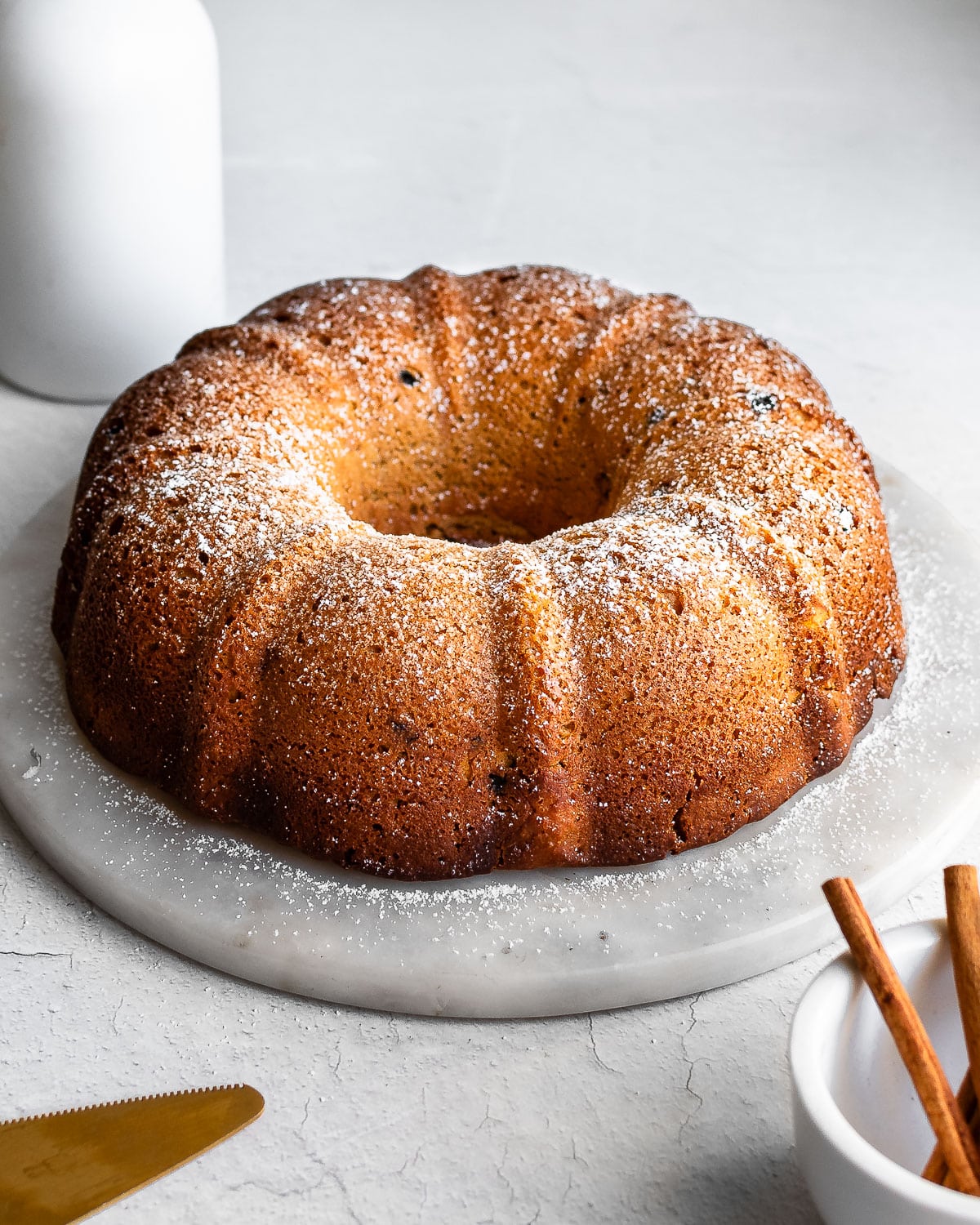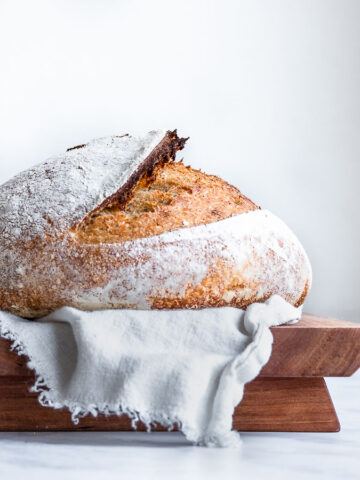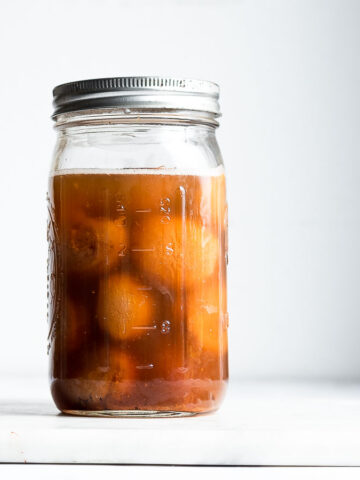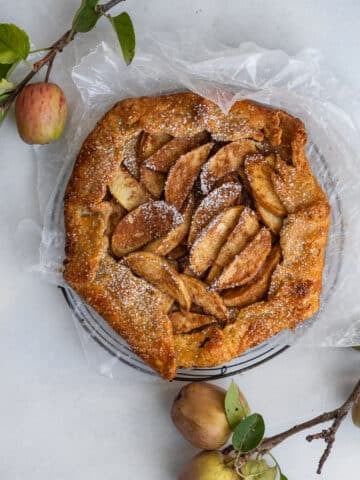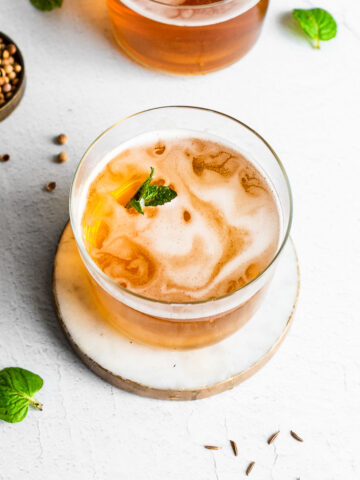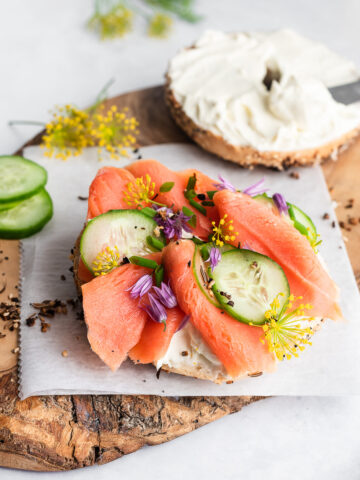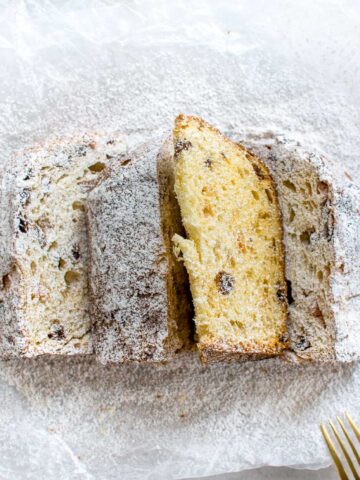
Election cake , like a bite from American history, makes its rounds every November. I make it every year, but only once a year – the first Monday of November. Preparing Election Cake is a celebration of love, of patriotism, of politics and of history. And for those of you who’ve read Nourished Kitchen for some time, you know that I keep my politics to myself (and think you should too), but share my love of vintage and historic recipes like staititai, buttermilk biscuits or cream of chicken soup. We’ve even hosted whole dinner parties based on historic cuisine. Among all the historic cookery I’ve sampled in my kitchen, this Election Cake recipe is one of our favorites.
In early America, the electoral process brought communities together in festivity and revelry. Families traveled from the far reaches of their region to town centers where they enjoyed a holiday – visiting neighbors homes, dancing at balls, drinking, carousing and mustering for the local militia1. Indeed, for a time before America revolted and became a nation in her own right, these celebratory spiced cakes were called muster cakes. After the revolution, mustering for the occupying forces no longer proved a necessity, but festivities still surrounded the electoral process and these spiced and fruit-studded cakes were renamed for the annual elections. Election cakes commissioned by local government could often command several hundred dollars by today’s standards, as they were massive – intended to feed an entire community of voters. By the middle of the 19th century, states and municipalities no longer commissioned the cakes and what was first a symbol of conviviality and festivity began to take on an ulterior motive: slices of election cake were provided as an incentive to vote a straight ticket or for a particular candidate.
![]() | ![]() | ![]() |
A charming old-world recipe, preparing an election cake is a slow process – a process that fell from favor once by the late 19th century when cakes leavened by baking powder became all the rage. Now, it’s all but forgotten. Cakes of the 16th, 17th and 18th centuries were typically produced through soaking or sour leavening, while those cakes that weren’t prepared in this manner, such as Portugal cake, excluded wheat flour in favor of blanched almond meal. Interestingly, it’s these traditional methods – soaking flour in sour milk, leavening dough with sourdough starter or blanching nutmeats and removing their papery skins – that optimized nourishment received from these foods. The simple, traditional acts of soaking and souring grains and flours degrades antinutrients such as food phytate which would otherwise bind up minerals, particularly iron and zinc, preventing your body from best absorbing these vital micronutrients2. Despite what ill-informed detractors have stated, the processes of soaking and souring cereal grains is so effective that researchers in human nutrition suggest that a return to traditional methods of grain preparation such as soaking, fermenting or sprouting result in improved nutrient status, increased lean-body mass and increase in resistance to infection – particularly among those populations who adhere to a largely plant-based diet either from necessity or from choice3,4. (Learn more about the value of soaking grains). Traditional foods nourish.
Not only were election cakes prepared through a long soak in fresh or sour milk coupled with sour leavening, but they were filled with wholesome fats – raw butter, farm eggs, and served with a heavy seasoning of wine and brandy or molasses, allspice, cinnamon, nutmeg and coriander. Cooks studded the spiced cakes with dried fruit – mostly prunes, raisins and currants. A special occasion food, cakes were prepared in magnificent quantities – enough to make a modern cook blush. In one of the first recorded recipes for election cake, Amelia Simmons calls for more than three dozen eggs, a quart of brandy and fourteen pounds of sugar. Incidentally, both sugar and flour available in early America would have remained whole and unrefined – refined foods were a luxury few colonialists could afford.
Election Cake: Thirty quarts of flour, 10 pound butter, 14 pound sugar, 12 pound raisins, 3 doz eggs, one pint wine, one quart brandy, 4 ounces cinnamon, 4 ounces fine colander seed, 3 ounces ground alspice; wet flour with milk to the consistence of bread over night, adding one quart yeast; the next morning work the butter and sugar together for half an hour, which will render the cake much lighter and whiter; when it has rise light work in every other ingredient except the plumbs, which work in when going into the oven. - Simmons, American Cookery, 1796.
Now that elections are upon us again, go vote and while you’re add it, soak some flour in milk, stir it with spice and brandy and take a bite of American culinary history.
Election Cake Recipe
An historic American recipe, Election Cake played a role in the festivities of post-colonial America. Like a cross between bread and cake, Election Cake is spicy and fragrant with molasses and brandy. This recipe is adapted from American Cookery by Amelia Simmons, first published in 1796.
Ingredients for Election Cake
- 4 1/2 cups spelt or soft white wheat flour (see sources)
- 1 1/4 cups buttermilk or sour milk, not ultrapasteurized
- 1/4 cup proofed and bubbly sourdough starter (see sources)
- 1/2 lb butter (see sources)
- 1 1/4 cups whole unrefined cane sugar
- 1/4 cup blackstrap molasses
- 1 tablespoon white wine
- 2 tablespoons brandy
- 2 eggs, beaten
- 1 tablespoon ground cinnamon
- 1 tablespoon ground coriander
- 1/2 teaspoon ground allspice
- 1/2 teaspoon ground or freshly grated nutmeg
- 1/2 teaspoon unrefined sea salt
- 2 cups dried fruit (prunes, raisins, currants etc.)
Equipment for Election Cake
- stand mixer equipped with a dough hook (buy it online) OR a mixing bowl and wooden spoon
- spring-form pan (buy it online)
Method for Election Cake
- Combine four and one-half cups spelt or soft white wheat flour together with one and one-quarter cups sour milk and one-quarter cup bubbly sourdough starter until a thick dough resembling the texture and consistency of bread dough is formed. Form the dough into a round ball, place it in a bowl and allow it to rest, covered, at room temperature for eight to twelve hours.
- After the dough has rested for eight to twelve hours, beat one-half pound butter, one and one-quarters cup unrefined cane sugar, one-quarter cup blackstrap molasses together with one tablespoons white wine and two tablespoons brandy. Once the mixture of butter, sugar, molasses and liquor is thoroughly combined and fluffy, stir in two beaten eggs.
- Beat butter, sugar and egg mixture with dough, adding one tablespoon ground cinnamon, one tablespoon ground coriander, one-half teaspoon ground allspice, one-half teaspoon ground nutmeg and one-half teaspoon unrefined sea salt to the mixture, until the batter resembles a that of a thick cake then fold in dried fruit.
- Preheat the oven to 375 degrees Fahrenheit, allowing the dough to rise until doubled in bulk while the oven preheats.
- Bake the cake in an oven preheated to 375 degrees Fahrenheit for about forty-five minutes to one hour, or until a toothpick inserted into the cake’s center comes out clean. Serve with plenty of butter and a pint of hard cider.
YIELD: about 8 servings.
TIME: 8 to 12 hours (soaking), 10 to 20 minutes (active time), 1 to 2 hours (rising time), 45 minutes to 1 hour (baking time)
SUBSTITUTIONS: If you do not keep an active sourdough starter, you can also substitute two teaspoons bakers yeast dissolved in one-quarter cup water.
This recipe was originally published on November 2nd, 2008 and was revised on November 1st, 2010.
1. Ross. Election Cake. Hearth to Heart. October 2003. 2. Gibson, et al. Improving the bioavailability of nutrients in plant foods at the household level. Proceedings of the Nutrition Society. May 2006. 3. Hotz, et al. Traditional food-processing and preparation practices to enhance the bioavailability of micronutrients in plant-based diets. Journal of Nutrition. April 2007. 4. Gibson et al. Dietary diversification/modification strategies to enhance micronutrient content and bioavailability of diets in developing countries. British Journal of Nutrition. May 2001.


When do you add the sourdough starter? I assume in step 1.
Yep – in step one at the same time you mix in the milk
I LOVE this post. I appreciate all of your research. BTW, this post makes up the text of the kind of books I read and enjoy. I am wondering about the yeast in the original recipe. Was all leavening called “yeast” originally? When I read over old recipes I’m surprised they have yeast but now I believe from reading this post that yeast was sourdough starter then and became (or at least was called) commercial yeast sometime in the late 1800′s.
Thank you for this gem,
-Judy
I’m glad you like it, Judy! Granulated bakers yeast wasn’t widely available until the 20th century, prior to that bakers customarily used a slurry of flour and water or malt and water to attract and keep wild yeasts. Sometimes, home bakers would use barm (the yeast-rich scum that’s a byproduct of brewing), or the yeasty slurry they’d cultivated for brewing or a sourdough starter. When looking at old recipes, you can rest assured that they call for one (or any) of the above I typically use sourdough starter because I have enough bubbling jars lurking in my cupboards as it stands!
Gosh Jenny, you made me feel as if I were back in history class only really enjoying it ths time around. You have outdone yourself with this post. It is beautifully written and so very appealing in its content. Thank you once again. Darcy
Thank you so much, Darcy! I always enjoy your comments.
This recipe looks delicious. I will try to make it next year at the appropriate time!
I nearly forgot about the recipe, until someone emailed me a few questions about it – and it revived my passion again!
Oh .. thank you for sharing the modern day version!
I love reading the old American cookbooks .. it’s great to have them online and read from cover to cover. I will not have time to make this cake on this election day, but may make it for Thanksgiving this year. Next election day .. I’ll have to start a day earlier to make it in time for voting day.
Thanks!
Have you seen the historic American cookbook project? (http://digital.lib.msu.edu/projects/cookbooks/) It’s VERY cool. Perfect for history/cooking buffs.
I love the idea of making a “modern cook blush” with recipes calling for poundages of butter and such. Great post, I’m off to vote. . .
Right? Any recipe that calls for pounds of butter reaches me on some base level. Can’t peel my eyes away.
What purpose does the alcohol serve? What could I substitute? Thanks.
Alcohol provides flavoring and was used in every colonial American confection recipe I’ve read. If you omit it, substitute an equal amount of plain water.
What a lovely tradition Jenny! I think I shall start it next year – looks way yummy!
Jenny, I love this post! What a great story – imagine making anything with 30 quarts of flour and 3 dozen eggs! And in a wood-stoked oven too, I imagine. Thanks for writing this and thanks for the 21st century version as well. I’m figuring how I can try this out myself – must run to the store!
It takes an enormous amount of devotion to beat three dozen eggs and pounds of sugar for a half hour – by hand no less! I can’t imagine what it must have been like to prepare for these festivals with so few resources. Amazing.
Hrm. I don’t eat grains…. I’m pondering an experiment with a grain-free flour.
You might look into Portugal cake – it uses blanched almond meal, butter, sherry, currants and unrefined sugar. It’s wonderful.
I love this post! So informative and the cake sounds fantastic. I will make it soon, and then likely repeat it in a couple of years – love the idea of baking it around the Election, of course!
this is fun–thanks! i’m wondering if you could change it to work for lactofermentation instead. so, instead of sourdough starter, add 1.5 cups yoghurt or buttermilk and let it soak at least 20 hours for good rising. then at the very end add baking soda–i’ll probably try that, which is how i deal with the phytate problem usually. have you tried it? any suggestions?
Actually, Katy, the dough is lacto-fermented. Lactofermentation refers the presence of lactic-acid producing bacteria (prevalent in sourdough starter), since the dough traditionally combines both a starter and buttermilk or sour milk which are also rich in lactic acid producing bacteria, the dough is fermented. You could, conceivably, omit the sourdough starter and allow for a longer soak period.
It’s always amazing to me how descriptions of food and historic recipes bring history to life. Thanks for sharing this great recipe. I want to create more food traditions for my family. I think it’s so nice to measure the passage of time with special dishes served at that one time of year. I’ll have to put Election Cake on the calendar for next year.
Wow, what an interesting history. I think will also try this next election cycle. I will be definitely be reading up on this before then. Thanks for the reference.
This recipe looks fun to try–except I’ve never done anything with sourdough starter, so I might pass on this one for now— I’d love to see more tasty whole wheat/spelt recipes on here!! I’m baking w/ fresh-ground grain, and am always looking for more ways to use whole wheat outside of my regular breads, muffins, pancakes & waffles. I love your site. I wish I could see you at the Wise Traditions conference, but we can’t make it there. Cheers.
Hey thanks for the reference and its real interesting…Especially when I don’t have to do the research part
Great post!! I’m wondering if you have substituted yogurt for the buttermilk? I usually culture buttermilk, but let my old culture lapse when I got busy… I have a steady stream of yogurt however. (I use a Bulgarian strain that isn’t too thick.) Thanks in advance!! I can’t wait to try this, election time or no…
Wonderful piece of history! Loved it:)
Wow you go deep into your history isn’t it…..Even when it comes to food
What an amazing recipe and history. Even though it’s well past our election I think I might make this in honor of Haiti’s election. Thank you so much for your inspiration.
i feel so ignorant, how could i not know about election cake? thanks for enlightening me. i’ve been an election official at my precinct’s polls for 6 or 7 years now and one of the traditions we have is brining a potluck for we poll workers to eat as the day progresses–that way we don’t have to take the hour-long sorta-mandated break the election office mentions at orientation. so, what could be more perfect than to bake and take an election cake to the next election i work, to share with my civic-devoted co-corkers? this is number one on my list for upcoming local elections next year.