
Want an easy homemade yogurt? It doesn't get easier than matsoni or the many other traditional yogurts that culture best at room temperature. Even if you're so clumsy in the kitchen that you manage to burn water, you can make this simple, easy yogurt. Just whisk starter culture with milk, set it on a warm spot in your kitchen, come back in one to two days, and it's done. You've made matsoni.
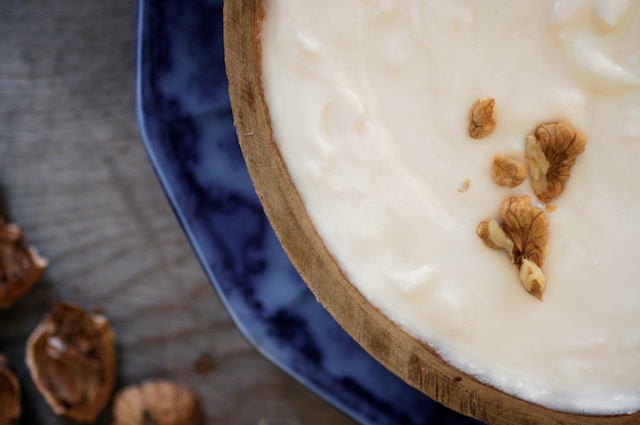
Easy Homemade Yogurt Basics
room temperature for easy yogurt
Matsoni is a cultured dairy product like traditional Greek and Bulgarian yogurts. Unlike Greek and Bulgarian yogurts, matsoni's unique complement of beneficial bacteria (which include lactobacillus delbruekii, streptococcus thermophilus, acetobacter orientalis and other friendly microorganisms) culture best at room temperature - about 68 to 80 degrees Fahrenheit (20 to 26 degrees celsius). Greek and Bulgarian yogurts, by contrast, culture best at an elevated temperature of 108 to 112 degrees Fahrenheit (42 to 44 degrees celsius).
long and slow fermentation for easy yogurt
Matsoni and other easy, room temperature yogurts require a longer period of fermentation. Where Greek, Bulgarian and other thermophilic yogurts require only eight to twelve hours to culture properly (you can culture them up to 24 hours, if you like), matsoni should be cultured for about 24 hours and up to 48 hours. After 24 to 48 hours, the beneficial bacteria present in the matsoni starter will cause the milk to transform from liquid to a syrupy, semisolid mass and that, dearest real food lovers, is the easiest yogurt you'll ever make.
what?!? you expect me to leave milk on my counter for two days?
Well, yes, I do. In a time when everything is pasteurized, purified and chilled to preserve freshness, it's easy to forget that, yes, there was a time before refrigeration. And it wasn't that long ago. Simple techniques like culturing milk into yogurt helped to preserve foods for long-term storage.
The bacteria naturally present in matsoni will prevent spoilage as they do their magic turning milk into yogurt. Remember, these are lactic acid bacteria; that is, they turn sugar into acid. That acidic environment preserves the milk, is responsible for yogurt's characteristic tartness, and that prevents spoilage by opportunistic or pathogenic microorganisms.
Have a little faith in tradition.




Renee says
For heirloom cultures like Viili, Piima and Matsoni, is the 24-48 hour culturing time linked to the size of the recipe (1 quart of milk). I have all three cultures and want to downsize to culturing 1 cup of each. I've seen recipes that say to culture these yogurts 12-18 hours when making a batch of this size. Is this correct? Or should I culture 1-cup batches 24-48 hours before chilling?
Jenny says
Hi Renee, I've never made any yogurt in such small quantities. So my recommendation would be to monitor it, keep notes and find the timing that works best for you.
Sharon says
Is Matsoni yogurt drinkable or spoonable? Compared to villi yogurt, is it thinner? Thanks.
Jenny says
It's spoonable, kinda like bulgarian yogurt.
Joann says
I'd to make this. Which culter starter do you recommend?
Jenny says
Hi Joann,
In order to make matsoni, you'll need to order a matsoni starter culture.
Layla at Real Food Real Health UK says
Hi Jenny,
I got myself a matsoni starter after reading this article a while back and love the simplicity of it. I've been culturing it with cream which makes a lovely thick yoghurt that is similar to Greek yogurt! Nom. But lately I've been trying going dairy free and have seen some improvements in my health. But I miss my matsoni! I was wondering if there's any way to use it as a starter for non-dairy milks? Do you have any experience with that? (I'm too lazy to use thermophilic starter). Thanks!
Jenny says
Hi Layla, No, you should use your starter for real milk. If you need to eat dairy-free, pick up a dairy-free starter.
Cali says
Hi! Ive had matsoni ordered from CFH for about 2 wks now. With the intial starter, i would let it sit out for 36 hrs but forgot to refresh the starter in the fridge and treated it like kefir and just added milk and left on the counter for another 2 days. To my dismay, the yogurt overcultured and never recovered. I had to toss.
Im now on my back up culture. I learned my lesson after countless chats and exchanges of photos with the nice folks at CFH. They told me that you really shouldnt culture the matsoni for more than 17 hrs or you can risk starving the bacteria and overculturing. For the past week, ive been culturing it 12 to 17 hrs max, putting it in fridge and restarting the process within a week. The yogurt smells and tastes fine but it doesnt look as thick as yours, moreso a little lumpy. What are your thoughts? Do you still have your yogurt?
Sarah H says
Dear Jenny,
Love learning about the different types of yogurt!
My mother-in-law in India makes yogurt everyday from water buffalo milk. She simply heats the milk, maybe scalds it not sure, then when cool adds a tbsp or so of yesterday's yogurt. This makes a thin but very delicious yogurt. I thought I would just do what she did. I warmed raw milk and then added a couple tbsps of a store-bought yogurt. About once a week I repeat the process but using the yogurt I've cultured. Is this not a recommend method? Would you recommend I buy a starter and then preserve it separate from my batch of yogurt?
Jenny says
That's a fine method if you are using pasteurized milk or scalding the milk beforehand, if you're using straight raw milk, it's natuve bacteria will,overtake your starter and you will see a change (not necessarily positive) to the flavor and texture of the yogurt over time.
Sarah H says
Thank you! I've learned so much from your blog/cookbook.
rusudan says
Dear Jennie,
Matsoni is Georgian word and is georgian product you are right it is very popular in Caucasus, but it is a gerogian product.
For centuries Georgians have used matsoni as substitute for baby food, medication for digestive issues, as diet food, in baking and simply as a tasty snack.
In Georgia matsoni is made at home or delivered fresh from the farmers. I make it weekly here in US.
Thank you
Rusudan
Kelley says
I'm making my matsoni starter today (activating the powder with raw milk). Once I get my culture ready, I use 1/4 of the starter to make my 1st batch of raw milk yogurt. My "seed" is 2 cups. Is there a way to continuously maintain the seed without buying the powder starters all the time? These starters are not cheap. I've researched everywhere online and cannot find an answer.
laura says
Hi Jenny, I was wondering if I might be able to use coconut milk as a substitute for the milk or maybe even almond milk instead of the cows milk?
Jenny says
Hi Laura, no. It needs to be actual milk (goat, cow, or any mammal milk.)
Angelique says
I make water kefir, milk kefir and Villi yogurt. How does the Matsoni compare (taste, probiotics, etc?) to the Villi?
Sarah says
Just posting my experience with Matsoni -- we made ours with organic pasteurized cow's milk (from the store) and usually cultured it between 18-24 hours during warmer months. The consistency was thick and gelled on the first day, and then much thinner (pourable) afterwards. My son and I enjoyed the taste, but it tasted reminiscent of cream cheese. Definitely not sour like some store yogurt can be, but I think that the the cheesy taste got stronger over time (kept culture going for a few months, culturing 2-3 times a week). We have just gone back to store yogurt recently but enjoyed Matsoni and may go back.
Liz says
Hi, I just finished culturing my initial batch of matsoni. I used organic, pasteurized (not ultra), whole milk. Our kitchen temp is quite cool (68) and it took 72hrs to pull together. It seemed to have quite a bit of separation but not a defined line of solid to liquid, and I noted some bubbles on the top. It didn't smell bad to me, so I threw it in the fridge and will try a second culture to see if it is alive.
What do you think? Did it go too long? I'm a little concerned. Thanks!
Aidan says
Hello, I have a question! I live in Wisconsin and in the dead of winter, our house rarely gets above 68F ...
Is it still possible for me to culture my own yogurt when my house is so cold? Someone, please respond. Thanks.
Heather says
Some ideas: get your culture to the upper part of the correct temp range and then let it keep warm in a cooler during fermentation. Ferment in the oven with pilot light or oven light on. Make a spot in a warm corner of the house, even if it's not a place you would usually put food. Pick a high shelf--heat rises, so your high cabinets might be 68, even if it isn't in the house in general. (I'm in MT, so have the same issue)
Annemiek says
Thanks for all the great information on your website. I hadn't come across this type of yoghurt before, and am intrigued! Ons question though: our home does not have a steady warm temperature like the one 68-80 degrees. At the warmest times of the day, it will be 66 degrees, and only for a couple of hours. Will this fermentation still work?
Zo @ Two Spoons says
Thanks for this! Going to make yogurt for the first time ever... am not in the US but just googled matsoni to find a local supplier. Hope they turn out alright!
faith says
we only buy raw local milk; can i make matsoni with raw milk?
Cindy Mac says
LOVE your site, love learning about Fermented Foods!
Re: FREEZING of Yoghurt Culture--I've been doing that successfully for over 20 years.
Back in those days, the only starter culture we knew of was from Germany (Vogel-Bioforce) We would take a spoon of the old batch to make a new, but found that after several cycles the yoghurt would become slimy, or 'draw', as they say.
To use a new starter packet each time was impossible, so found it practical just to bag up a bunch every so often -- (setting them first on a tray to freeze, so the baggies don't clump together, before storing away in the deep freezer) --
a teaspoon or so in each one. Simple! Just defrost thoroughly before use.
BTW: it was educative (and not a little amusing) to read all posts--in the West African city where I live, the only milk available is powdered, but it works! I mix it a little richer than the usual 1-3 ratio with (warm) boiled/filtered water right in the jar, wrap it in a towel, put it in a box, and 7 hours later it's done.
Sabi says
Thanks for the tip! Does the starter last perpetually from one batch to another, or do you eventually have to refresh your supply with new RL starter? Would be great if you didn't. Also, do you know what the life span is? As in, how long can it stay refrigerated? Say when you're traveling for an extended period of time? Thanks for the info.
andrea says
i've made some experiments with the yogurt starter and different milks, like lactose free milk, super light milk, evaporated milk, etc. With the technic of leaving the milk and starter at room temperature for 2-3 days (i live in a warm climate).
It looks, and taste really really good, but i'm affraid if i eat more, like a regular serving cup, i'll get stomach ache because it was out of the fridge for 2-3 days.
is it safe for everyone? children, elders and people with sensitive digestive system?
zoe says
i am lactose free and soy free so can i use this with coconut or almond milk?
Slow Panic says
I apologize if this question has already been answered - I skimmed through the comments quickly....
How do you store/keep the starter for the next batch? If I make this once a week -- or less -- do I just store it on the counter? Or in the fridge and then pull it out and bring to room temp?
Have been lurking on your site for ages and just love it..
Thanks so much.
george milton says
Kefir is clearly the superior pro-biotic but if you don't like kefir but love yogurt then this may be your cup of curdled milk. I have developed a taste for fizzy kefir - having it in a sealed mayonaise jar with a (non-metalic) tight but not quite pressure proof lid will result after a couple of days in a fizzy curdled fermented milk that is still creamy and smooth but has a slight tiny bit of alcohol (maybe 0.5%) and you have to be careful it doesn't fizz all over the counter when you release the stored pressure.
Daniel says
I love Fage Total full fat yogurt but became interested in Matsoni when I discovered it has a tart taste and can be easily made. What I like about the Fage Total is the protein/sugar/fat ratio of 20/9/11 per cup because I'm on a very high protein/moderate healthy fat/low carb diet. Is it possible to make Matsoni that possesses identical macronutrient values per cup?
Annie says
I believe "Fage" is just a brand name for a Greek-style yogurt which is, basically just yogurt drained of its whey. The longer you let a yogert drain the thicker or more like a cheese (cream cheese) it gets. Yes, a drained yogurt (or yogurt cheese) will naturally have those different ratios.
Also, different types of cultured dairy products use different types of bacteria cultures. Unless a person is really up on the long list of different kinds of cultures that are found in all the many kinds of fermented dairy products these differences aren't going to influence a person's choice. My personal preference is to get several types of cultures into my body so eating a variety of cultured products is what I go after. I make my own kefir from kefir grains and matsoni from a well fed "mother" culture from which I make raw milk matsoni. I also eat organic goat's milk kefir and yogurt from reputable sources along with other fermented foods and kombucha. And just enjoying a glass of raw, grass-fed cow's milk is health promoting; even healing, for many people.
By the way, for those of you who don't know, you can't use your raw milk matsoni as a starter culture for subsequent batches as the enzymes in the raw milk will overpower those poor little matsoni bacteria. But a tablespoon of the "mother" into 1 cup of raw milk will give you raw milk matsoni. Just don't use up your "mother"; leave a tablespoon. Yes, you have to scald your raw milk to make the starter. I would never recommend using ultra pasteurized milk for anything. But store-bought plain pasteurized milk will work fine too.
jennifer says
hi- i bought the matsoni and have been using it, along with my kefir. Now am trying to find the best ways to flavor it for the hubby and kids 🙂
My question: does freezing the culture kill it?
Jenny says
Bacteria can survive freezing, but usually only under some conditions (really fast, really cold freezing) so your culture may be damaged by freezing to some extent.
Karen says
Hi there! I have soon to sour raw milk and St. Benoit yogurt. Can I make yogurt without heating it using these ingredients? and your method of combining and sitting on the counter till ready?
I've been on the gaps diet and milk has not been consumed as quickly in our family, but I don't want to see it go to waste. I need to make yogurt, I can't afford the recommended brand for much longer ;o)
Sandra says
I love making slow cooker yogurt, but have mixed results. I may try this. Does it work with ultra-pasteurized milk? I'm finding it increasingly hard to find milk that is NOT ultra-pasteurized!
athena g penson says
I am just writing to make my choices clear..
#1 What starter do I exactly order ? the "regular" one for yogurt ? So, the same starter that is used for heated yogurt is also used for matsuni ?
#2 can i use organic pasteurized milk from the store ?
#3 I am a bit confused about the raw milk... can I use that as is? or do i need to heat to 180 ?
THANKS LOVE Your POSTS!! and YOU books !!! (hug) agp
Jenny says
#1: Order the matsoni starter culture.
#2: Yep! You definitely can use organic pasteurized milk. Sometimes UHT milk has trouble setting up though.
#3: I don't heat my raw milk to 180 - I use it as it is (room temp).
Mireya @myhealthyeatinghabits says
Interesting article. I wasn't aware that there were so many types of yogurt.
Gillian says
Wow this challenge is so inspirational - I am learning so mcuh. I am not sure I could get this culture here. I make regular yoghurt using skin milk powder in my eziyo thermos. If I ever see this type I might give it a go though.
Karla says
I have been making Viili for a few weeks but my husband doesn't like the thin texture. I already make kefir. What is the texture of Matsoni like? I like room temp culturing but I may have to go to a different culture so that it is thicker.
Sunpine says
The yogurt my Georgian relatives grew healthy on! Thanks so much for posting this. I can't wait to make this with REAL milk.
Joanne Richards says
I clicked through the links to buy the starter but there is nothing under yoghurt or fermented food starters? Can you please post a working link to the actual place you buy your starter from or update the links page? Thank you.
Rebekah says
This is so interesting! I've always just made "regular" yogurt, and don't really know anything about the specific cultures out there. My boyfriend remembers eating villi while working at an organic farm in Hawaii, but until now, I haven't really seen these other cultures mentioned before. Thanks for the post! I'll definitely look into this; I love the idea of a longer fermentation time....
Jen @ Eating My Vegetables says
What is the least time consuming way to maintain a pure starter? I've had a little success keeping a back-up starter in the freezer, but it only keeps for a short while. The idea of having to make a "pure" starter once a week just makes it hard for me to jump on to these alternative yogurts - though they sound so yummy!
Mom24boys says
for regular yogurt I have kept a good starter for months without a problem. I just check it each week and pour off any whey that has separated out. The whey is acidic and very tart and, according to the very old Lebanese lady who taught me, is what 'kills' the starter.
I keep all my cultures on one shelf in the fridge and check them each Saturday. If they need feeding, stirring or draining, I do that and put them back. If I have time and inclination, I make new batches. I have at present kefir, yogurt and sourdough.
Diane@LongabergerLifestyle says
Hi Jenny! I'm new to all of this and a little bit lost. The recipe you gave seemed ridiculously easy. And you suggested raw milk in small letters. I would have done just as you had written, except for a comment made, to which you responded, "For raw milk users, you will have to maintain a pure seed starter – so scald your milk, culture it and then use the scalded milk yogurt to culture raw matsoni."
I'm wondering. Do I not negate the purpose of using raw milk if I have to scald it before using it? Scalding is quite a high temperature too, correct? Wouldn't it destroy the beneficials in the milk?
If I use the scalding method, then do I cool the milk to room temperature before adding the starter?
Thanks!!
Diane@LongabergerLifestyle says
I guess the key here is that raw milk is preferred, regardless if some of its goodness is destroyed when the milk is scalded. I did a little "Googling" and it seems that this isn't an exact science...experience and common sense seem to be the trick.
Mom24boys says
Yes, when raw milk is scalded (almost to boiling but not quite - just heated until the milk appears to "lift"), it does lose some of the 'good' properties. However, as Jenny suggests above, you would just be using this scalded milk to maintain your starter, not make the matsoni you are going to consume on a regular basis. The 1/4 cup of scalded milk matsoni starter is not going to kill the 'good' properties of raw milk when you make a batch of matsoni for consumption.
Let me encourage folks here to keep a reasonable view of nutrition and healthful eating: there are exceptions to every rule; pasteurizing isn't ALWAYS bad and store-bought isn't ALWAYS poison. We all have to live in the real world and must deal with nature's helpful and hindering little bugs. As well, some folks can't afford or find raw milk and other optimal foods. We must each work with what we have and within the bounds of kitchen science.
Jenny says
I just want to say THANK GOODNESS for your comment. I fully agree - pasteurized isn't always bad. Milk doesn't turn to poison when scalded, you lose *some* goodness, not all, and much of it's added back during fermentation. Storebought isn't always bad, either! It's about choices, common sense and doing the best you can with what you've got.
Karen says
I'm reading this with interest and am very glad that common sense has a toehold here! While kefir thrives on raw milk, the other mesophilic yogurt products contain bacteria that aren't as robust and it really is better to just suck it up and use pasteurized whole milk for them rather than having to deal with scalding your precious raw milk and, in effect, pasteurizing it. This is one of those rare instances where raw isn't optimal. I'm going to get back into mesophilic yogurts in the spring and since I have access to "thermized" whole milk from Jerseys, I'm certain that it will be a wonderful fit. Thanks for an enjoyable and intelligent blog!
Lori says
What a perfectly timed post - I just bought filmjolk, viili, and matsoni three days ago! Have you ever a had a problem (or heard of) a problem with cross-contamination? I have milk and water kefir going too...
Blair says
Will this work with coconut milk? I have been using coconut milk for quite a long time. Unless the cows milk is organic and raw, and therefore free of Genetically modified organisms, I wont use it. But, I sure would love to be able to make yogurt with my coconut milk!
Marg says
I made yogurt once with coconut milk. I don't remember exactly how it turned out, but I did like it. I used the whole coconut milk. I read that it doesn't work with almond or rice milk but plan to try it anyhow.
Recently I was advised by a good naturopath to give up my beloved raw milk and all dairy. I'm hoping to find substitutes.
Once I tried soy yogurt from the health food store, but didn't like it. If I can find a source of organic soy milk without sugars added, I will try it myself. Sometimes homemade is better.
Rachelle says
Just curious if this would be SCD safe? Curious to try! Thanks.
Marilyn says
If speaking of the Specific Carbohydrate Diet, the bacteria used are not the SCD-permitted ones of s. thermophilus, l. bulgaricus, l. acidolphilus, and/or l. casei. This might, however, be permitted when one is ready to add non-SCD foods, IF it can be made lactose-free.
Rachelle says
Thank you for the very specific info. This helps.
Carrie Smyth says
Thanks for sharing this! I've been making Villi yogurt, but no one in the family likes the jelly-like texture, so it just gets mixed into smoothies. We all love the strained Greek yogurt I've been making, but I've been looking for something a bit easier to make with that same creamy texture. Would you say Matsoni is more like the creamy texture of Greek yogurt or the jelly-like texture of Villi yogurt?
Susan says
It is really easy even with "normal" yogurt. You just pour the warm, infused milk into a thermos bottle and wait a couple of hours. Or just pour it into a normal bottle and put it into your bed with warm covers. You don't even need a starter culture for this, you just need a very good yogurt, eat it, leave 2 tablespoons to make new one - that's how indians make their yogurt.
Jenny says
But yogurt is the starter culture in the method you outlined. You do need a starter culture to make any cultured dairy, except bonny claber which is a wild ferment.
marge loch-wouters says
Thanks for the tip on matsoni. I have been making mjolk for the last 5-6 years and loving it. Got it from a farmer on the other side of the state when we lived there. Always freaked when I lose the culture although friends have shared theirs with me. I appreciate the link to buy cultures on line if this happens again.
Jo Anne says
I read somewhere (can't find it now) that if you use regular storebought whole milk to make yogurt, you need to heat it to 180 first, then cool before adding starter. Is that true for just yogurt cultured from storebought plain yogurt or for this type, too? (I assume that it's in case the milk isn't pure?)
Dawn says
Actually, 180 is a bit high, much over that and you can damage the milk proteins. 30 minutes at 145F, or 15 seconds at 165F are the numbers I have been told, and have had good success with. I pasteurize my own goat milk for my kids at those temps.
Marilyn says
I am extremely lactose-intolerant, so normally ferment my standard yogurt at 108F for 24-28 hours. How long would matsoni have to be fermented to achieve a lactose-free yogurt?
megan says
I recenlty started culturing Villi (another counter top culture). It tends to be runny and I don't love the flavor. How does this compare? (if you've tried Villi before). Thanks!
jenny says
I think you'll prefer the taste and texture of matsoni over viili (I do). MANY people love vilii because of its texture which is jelly-like over time, but pretty runny in the beginning.
jenny says
I'm also a big fan of filmjolk which is, perhaps, closest to regular yogurt. My son loves piima, but it's super thin and cheesy. We use it in place of buttermilk.
Holly says
What will happen if I try this with regular yogurt as a starter? I have made the heated kind, but I am really nervous about getting the milk too hot. I want to make some today (I have milk that is nice and fresh) and don't want to wait to order a starter...
jenny says
If you use regular yogurt as a starter, you'll want to culture it in a place that maintains a constant temperature of 108 to 112 (preferably 110) - so think of a thermos, a dehydrator or a yogurt maker.
angela says
Can this be made with pasteurized goat milk? I have a little one that is sensitive to cow's dairy. Thank you!
jenny says
Yes! Any mammal milk should work. UHT milk is unpredictable.
beth says
the cultures for health website said that "Customers wishing to use raw milk to make homemade yogurt will need to take additional steps to ensure a pure starter is maintained." Did you have to do anything special or is it simple to maintain your starter?
jenny says
For raw milk users, you will have to maintain a pure seed starter - so scald your milk, culture it and then use the scalded milk yogurt to culture raw matsoni (which will be runny due to the enzyme content). If you use raw matsoni to culture matsoni, the bacteria present in raw milk will overtake the bacteria in your starter culture and you'll end up making bonny clabber (which has its own value, but it isn't matsoni).
Soccy says
As I understand it,when you use Raw Milk, first you have to scald your milk, culture it then use that scalded cultured milk to make your yogurt. So what do you do when you run out of the original scalded cultured milk? Do you have to keep buying matsoni starter?
Michele H says
So each time I want to make a fresh batch of matsoni, will I need to scald the raw milk, let it cool then add the 1/4 cup from the last batch?
Rachel @ My Naturally Frugal Family says
Oh my goodness this is just what I need as I haven't successfully been able to make yogurt.
Very much looking forward to the arrival of my starter.
Thanks Jenny, have a great weekend!
jenny says
You'll love it. It's SO easy!
Sally says
can you make more yogurt indefinitely from this culture?
Jenny says
Yes. With proper culturing, you can reuse your starter indefinitely.
Linda says
Do I save 1/4 cup of the yogurt each time to use as starter for the next batch?
jenny says
Yes. Definitely.
Michele says
When you save a starter, do you leave it on the counter or refrigerate? How long can you keep it for?
Brian Stokes says
Yes, I'm curious about the texture also...thanks!
jenny says
Texture is very similar to regular yogurt, just slightly more syrupy. I strain mine.
Celina Green says
Can you tell me how thick Matsoni tends to be? I'm assuming if it is thinner than my family prefers then I can strain whey out to make it thicker? Thanks!
Lauren says
Yes, I also prefer thick, greek style yogurt, so I would love to be able to use this method to make it!
Meagan says
Hey Jenny - I am so glad to see this post. I bought the matsoni culture at the conference this year, and haven't gotten around to using it. Can I really just mix the culture with raw milk and let it sit out? Isn't there something you have to do to the starter before?
jenny says
I would encourage you to follow CFH's instructions in reviving the powdered starter and once you have ACTUAL matsoni, follow my instructions.
Meagan says
Thanks 🙂 That's what I FIGURED but your method seemed more simple. I also think that you don't have to use the whole packet of powder for the culture?
Peggy says
I LOVE room temp fermentation. I can burn water, but I can make matsoni in my sleep. And do!
Trezlen says
I have this culture! It helps to know that 24 hours is not too long to let this one sit. I worried just a little bit, but it seemed to work out fine.
jenny says
With the room-temperature yogurts, they can typically go longer than the thermophilic (warm) yogurts. Up to 48 hours.
Leah says
So if I let it sit for 48 hours, will it be thicker?
Monique says
I strain mine since I find it too thin
Nicole Rice says
Ok- so for those that are in the know- how does this compare to milk kefir? We already do milk kefir.....trying to decide if I should add this to the rotation- or if it's too similar to bother.
jenny says
I culture both a yogurt and milk kefir. I wouldn't, personally, recommend doing two kinds of yogurt (they're fairly similar). But culturing matsoni instead of another yogurt and in addition to kefir is nice. I use them for different purposes.
Anita says
What a coincidence, I just ordered a starter online. It will be a while before I can make some, but well worth the wait!
Anita
jenny says
You'll love it.
Carol Adler says
Hello! Thanks for the great site! I am curious about the probiotic benefit of matsoni. I understand that kefir is more effective than traditional yogurt. How does matsoni compare?
Thanks!
jenny says
I'm not one to say one food is necessarily better than another. But matsoni typically has more cultures than yogurt at the grocery store, but fewer than kefir. I culture them both.