
Brimming with winter squash, ribbons of hardy kale, tender chickpeas, and sturdy whole grains, this winter minestrone is the kind of soup that'll carry you through the darkest, coldest days of the season.
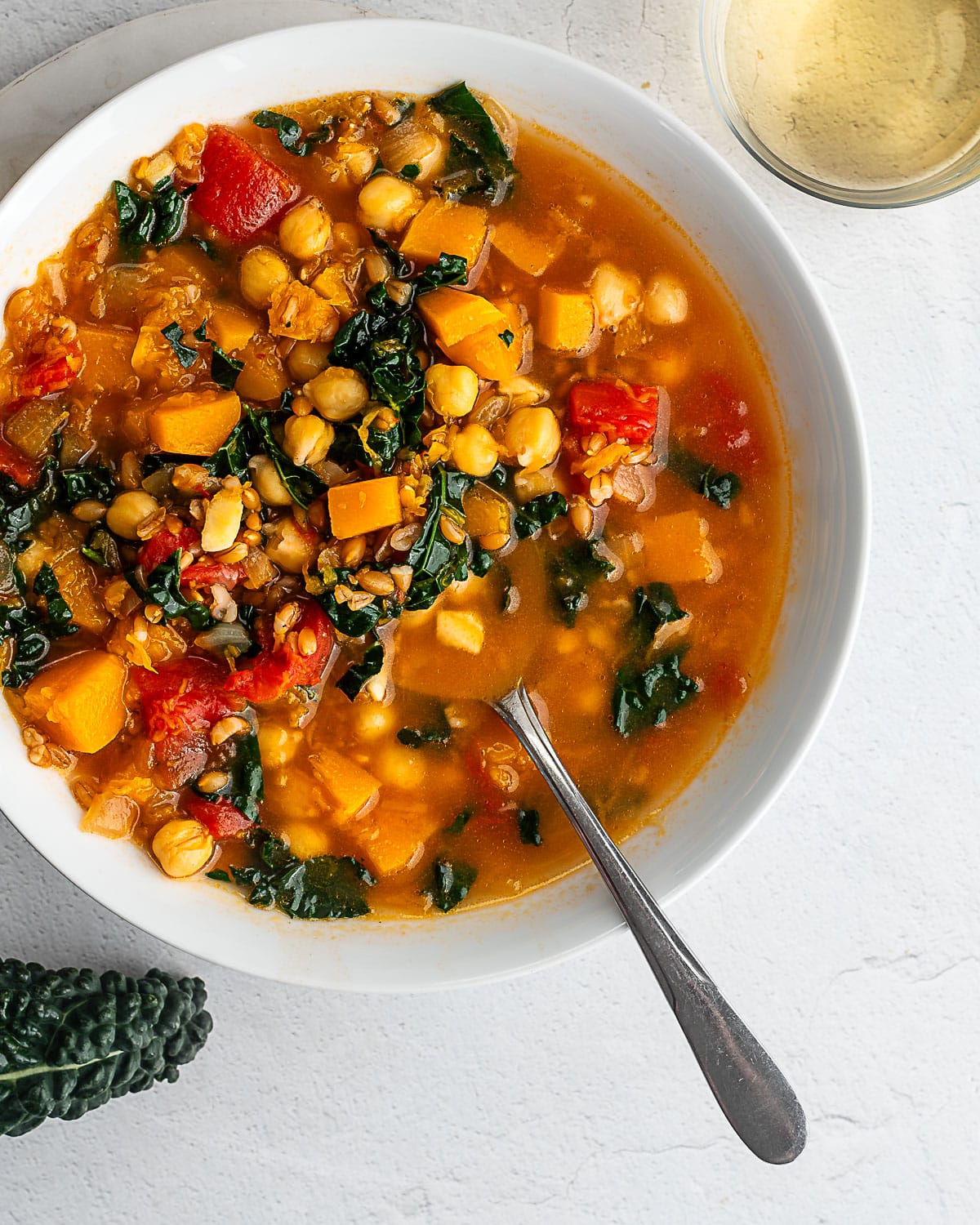
This is one of those recipes that's endlessly adaptable. It's more of an idea tossed together in a pot than a proper recipe. A riff on what's available in your pantry an at the farmers market. Some homemade bone broth. A can of tomatoes. Beans and grains. The last of the winter veg tucked away in your crisper drawer - it all works here.
Cannellini beans can stand in for the chickpeas. Whole wheat orzo or another small, tiny pasta can substitute for emmer. Swiss chard or even spinach can find a place instead of kale. And, any which way, it seems to turn out just right.
It comes together without a fuss and is mercifully light on your budget. Warming, wholesome, packed with fiber, it's a soup that we return to again and again.
Key Ingredients + Substitutions
Aromatic vegetables include onion, garlic, celery and carrots. They give the soup a richness, and you'll find them as the base in most minestrone recipes.
Dried herbs include thyme, basil, oregano and crushed red pepper. You can swap in fresh herbs if you have them, but add less since dried herbs are more concentrated.
Butternut squash forms the bulk of the veg in the soup. If you don't have butternut squash, you can swap in another winter squash option - kabocha, red kuri, and pie pumpkins will work, too.
Kale added right at the very end adds color, flavor and a good dose of fiber. You can also substitute most other hardy winter greens (mustard greens, spinach, chard).
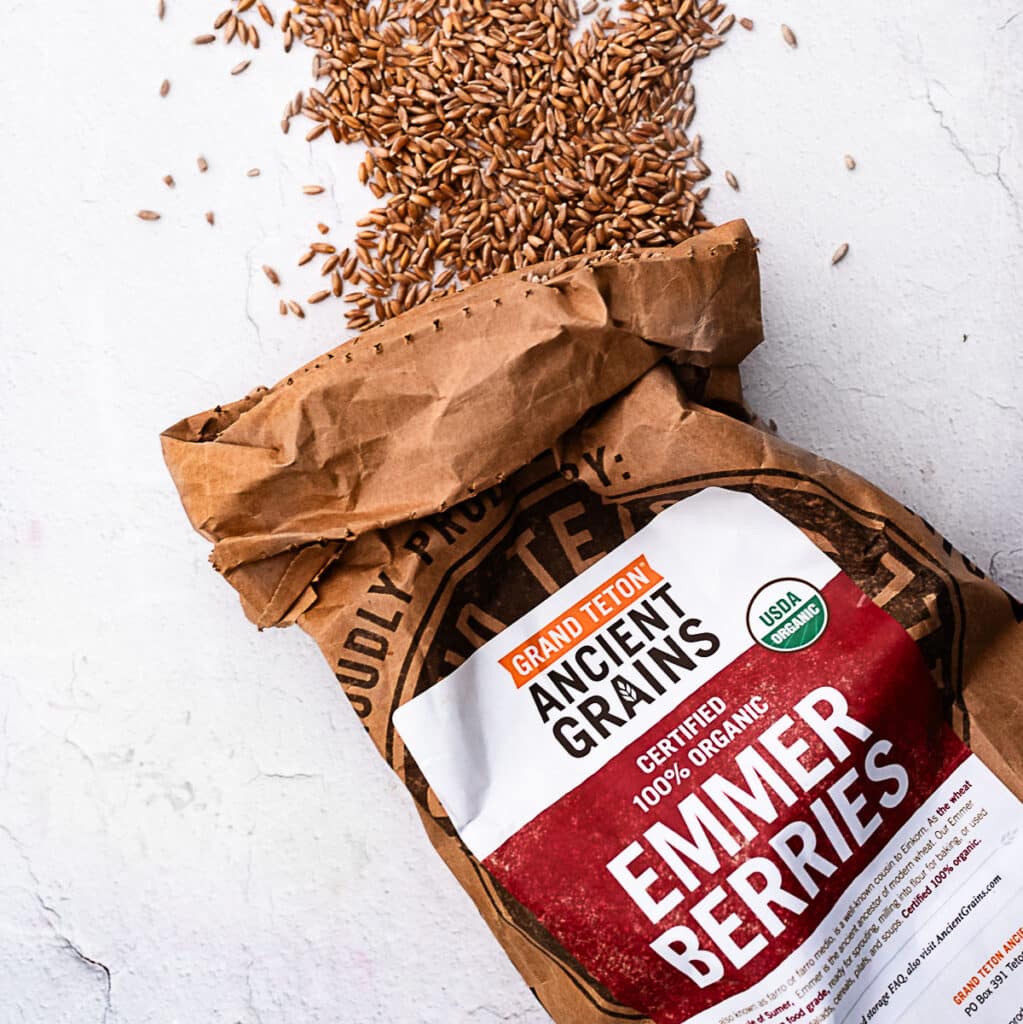
Emmer is an ancient grain related to einkorn and spelt. It tastes deliciously nutty with a chewy texture. You can swap in small whole-wheat pasta, such as orzo or ditalini.
Chickpeas add bulk and give the soup plenty of fiber and a protein. Other options include cannellini beans, cranberry beans, or even kidney beans.
Chicken broth and diced tomatoes pull the soup together. Just about any broth recipe will work here,
sponsored
Where to Find Emmer
Grand Teton Ancient Grains is our favorite source for organic and regeneratively grown grains.
Their emmer has a beautiful texture, sweet nutty flavor and you can mill it into flour for baking or use it in salads like this one.
Tip on Cooking Emmer + Chickpeas
Emmer and chickpeas both benefit from soaking overnight before cooking. Soaking grains (and pulses) improves their cook time and digestibility.
To prepare the emmer, dump it into a bowl, cover it with warm water and let it soak for up to 8 hours. Drain. Then pressure cook for 20 minutes or cook on the stove until tender.
To prepare the chickpeas, dump them into a bowl, cover it with warm water and let it soak up to 8 hours. Drain. Then pressure cook for 7 minutes or cook on the stove until tender.
Other Bean + Greens Soups You'll Love

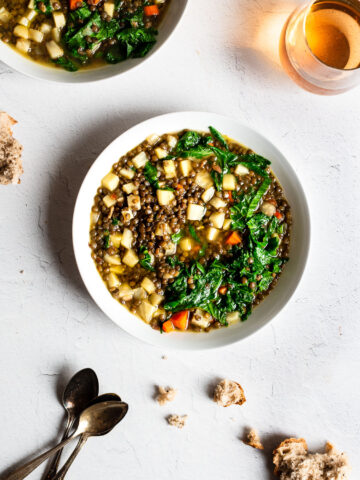
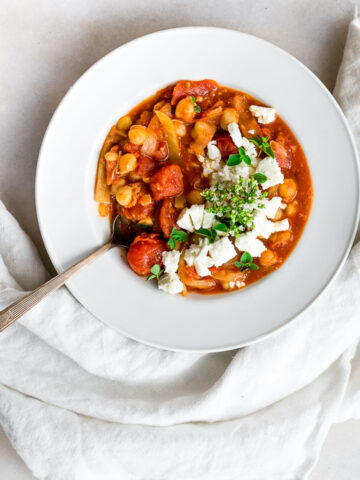
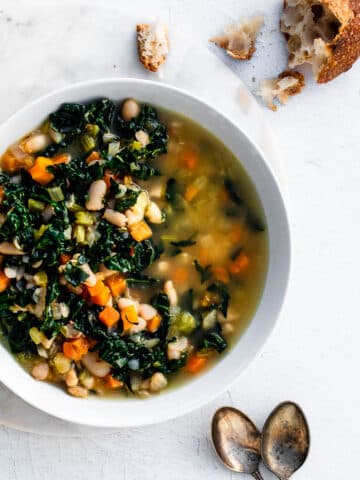
Love this recipe? There's more.
Join Nourished Kitchen+ for ad-free browsing, nourishing monthly meal plans, live workshops, and access to all our premium downloads.
Recipe Questions
Yes, minestrone freezes well. Pour leftover soup into a freezer-safe container, allowing at least ½-inch of headspace. Freeze for up to 6 months.
To serve, thaw overnight in the fridge and warm on the stove.
Store the soup in an airtight container in the fridge for up to 5 days or in the freezer for up to 6 months.

Kc says
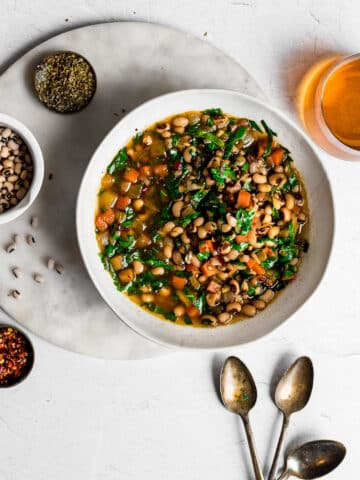
Healthy and Yummy! Thanks for this recipe. Used extra chickpeas instead of the grain and turkey broth. Loved all the veggies and high fiber. Loved the slight kick of heat from the red pepper flakes. Made it 2x in 3 days.
Jenny says
I am so pleased you liked this one! Extra chickpeas sounds like a win!
Amber says
I had an old bag of farro in my pantry, and made this. It was so good. Very easy.