• Skip to primary navigation
  • Skip to main content
  • Skip to primary sidebar
Nourished Kitchen
  • Philosophy
  • Recipes
  • Cookbooks
  • Shop
menu icon
go to homepage
  • Start Here
  • Recipes
  • Cookbooks
  • Deals
  • Subscribe
    • Facebook
    • Instagram
    • Pinterest
  • subscribe
    search icon
    Homepage link
    • Start Here
    • Recipes
    • Cookbooks
    • Deals
    • Subscribe
    • Facebook
    • Instagram
    • Pinterest
  • ×
    » Home » Recipes » Fall Vegetables » wild mushroom butter

    wild mushroom butter

    Posted: Aug 8, 2010 · Updated: Jan 3, 2023 by Jenny McGruther · This site earns income from ads, affiliate links, and sponsorships.

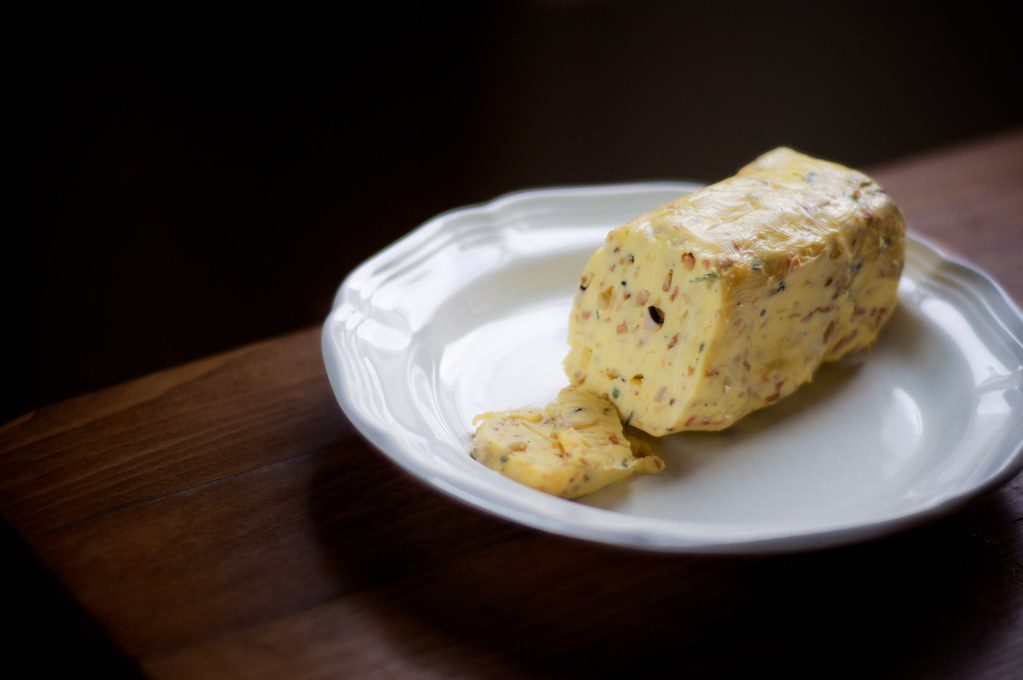
    Wild mushroom butter on a white dish

    It’s a disquieting food, like raw milk, and it takes a certain amount of culinary fortitude to walk into the woods, scratch your way through the pine needles, the brush and slowly rotting logs to find these little treasures before returning home to cook them up for your family.  And when you tell your friends that you’ve gone mushrooming, they’ll warn you: But, how do you know they’re not poisonous?  I mean you could die or go on a really crazy trip, man.  With fair reason, too, I mean you could get sick from wild mushrooms just as you could get sick from fresh milk or any other food, really.  (Have you seen the industrial beef recalls lately? Yow!)  But here’s the crux of the issue, if you know your food, really know your food, the likelihood of becoming sick is greatly minimized and virtually non-existent.

    So, on Saturday morning, as many of you who’ve fanned Nourished Kitchen on Facebookalready know, I took my son mushrooming.  It’s a good year for mushrooms, I’d heard.  The rumor mill from mushroom lovers town-wide sounded promising: Dawne got thirty pounds already this year, and all king boletes! Valerie got twenty pounds! There’s so many, no one knows what to do with them all. So I packed a flask of water into my basket, donned my sun hat and walked across town (it’s only about eight blocks, end-to-end) before heading up the hillside, past the expensive and nearly always empty vacation homes and into the deep, dark woods. (If this is getting too long, just skip to the recipe or check out the foraged foods threadon the Nourished Kitchen forums, or just continue reading more of our story.)

    When you enter the woods, the first thing you notice is the air – slightly cool and damp and, in a way, perfumed.  The perfume of the woods is remarkable, not at all overtly pine-like as you might think, but deeper and more complex.   Sweet and floral top notes from the wildflowers hit you first, and then the distinctive clean fragrance of the trees follows and its then that you notice the forest’s most long-lasting and memorable fragrance: that of dank earth all musty and dark from the decomposing matter on the forest floor.  It’s that, the forest’s deep and dank decomposition, that makes the mushrooms thrive. You have to search hard and mindfully for hints of wild mushrooms. We watch for little areas, no more than an inch across, where the earth is pushed up slightly or for stray speck of golden yellow which might house a bevy of chanterelles beneath the rotting pine needles.

    Hand-in-hand, my son and I walked up the trail spotting plenty of non-edible mushrooms along the path, but not many of our edible favorites.  And every few moments he’d call out another spotting followed closely by Can we eat them? And I’d say “no” for either I knewthey were poisonous or didn’t know enough about the mushroom to feel comfortable eating it.

    My son wanted mushroom stew for supper and desperately so, but after hearing stories of Dawne’s thirty pounds and Valerie’s twenty, we got skunked.  Now it could be that my son with his little legs and constant stopping along the trail meant we didn’t get far and it could be that we didn’t veer too far off the trail (he was concerned about bears), or that everyone had already gotten their thirty pounds, but, whatever the reason, we landed exactly two boletus edulis (porcini) and one suillus brevipes dashing his dreams of a stew thick and brimming with wild mushrooms.  Instead, I took our meager bounty and decided I’d make a compound wild mushroom butter. On our way home, a fellow mushroomer and good friend took pity on us or, more likely, simply because grace and kindness exude from her very being, and shared her findings with us – dropping a handful of choice chanterelles into his little basket.  So in the end, we had a beautiful set of mushrooms including those prizes everyone loves: porcini with its pretty cinnamon-colored cap and earthy flavor and chanterelles with their brilliant golden color and a fragrance reminiscent of apricots or peaches.  And it’s these mushrooms that we minced, combined with shallots, and made into wild mushroom butter.

    Wild mushroom butter will keep for several months as fat, even butterfat, acts as a natural preservative.  It also allows us to keep and extend our meager findings of wild mushrooms by simply acting as a flavor enhancer rather than a main course like mushroom stew.  So we minced the mushrooms, combining them with local shallots and fresh thyme and whipped them into fresh, raw grass-fed butter.  My intention was to serve this butter on pan-seared grass-fed ribeye steaks, which I eventually did, but first I smeared some on a piece of whole grain sourdough herb bread.  I’ll also served wild mushroom butter melted over braised leeks or to top a bowl of creamy mushroom soup.

    And, I’m not done with the season yet.  Monday evening, Valerie (of the twenty pounds) is taking us out again.  Maybe my little guy will get his wild mushroom stew after all.  (Click here to view all the pictures of from our mushrooming trip on Flickr.)
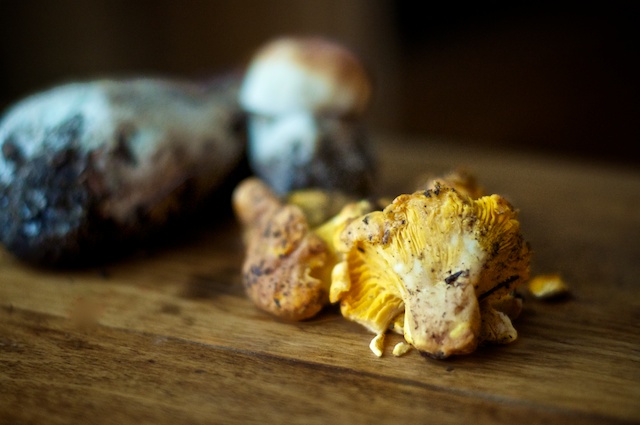
    chanterelles and bolete mushrooms on wooden surface
    Rate this Recipe
    8 servings (1 cup)

    Wild Mushroom Butter

    Wild mushroom butter is richly complex with the earthiness of porcini and the sweet fruity flavor of chanterelles. If you don’t have fresh, wild-harvested porcini or chanterelles, use whatever mushrooms you can forage: hawk’s wing, morels, hen of the woods, oysters.
    If mushroom season has come and gone, or if you live in the city and foraging for mushrooms means plucking the shaggy manes from your lawn (they’re quite good, actually), you can always substitute domestic mushrooms in this recipe. If possible, choose a combination of domestic mushrooms. Shiitake, cremini and even plain, old button mushrooms all do nicely in this recipe for mushroom butter. Trust me: you won’t be disappointed, whatever you include.
    You can serve the butter over steak or roasted vegetables, or even slathered onto portobello mushroom burgers for an extra hit of umami goodness.
    Prep Time5 minutes mins
    Cook Time20 hours hrs
    Total Time25 minutes mins
    Print Save RecipeSaved! Click to Remove Ads

    Ingredients

    • 1 cup salted butter softened
    • 1 medium shallot minced
    • ½ cup wild mushrooms
    • 1 teaspoon fresh thyme leaves
    • ½ teaspoon ground white pepper
    • ½ teaspoon fine sea salt

    Instructions

    • Melt about three tablespoons of your 1 cup of butter in a cast iron skillet over a medium flame until it begins to foam. Immediately reduce the heat to medium-low and add 1 minced shallot to the hot fat.
    • When the minced shallots have released their fragrance, have turned translucent and their edges begin to caramelize, empty your bowl of minced wild mushrooms into skillet quickly and all at once so that the mushrooms sizzle in the pan and their earthy perfume fills your kitchen.
    • Stir the mushrooms with a wooden spoon to promote even cooking, scraping any bits that happen to adhere to the bottom of your skillet.
    • Sprinkle about 1 teaspoon fresh thyme leaves over your mushrooms and continue to cook for a minute or two.
    • Turn off the heat, and allow the seasoned butter, mushrooms, shallots and thyme to cool for about ten minutes.
    • While the mushrooms rest and cool, beat the remaining butter until soft, smooth and easily manageable.
    • Spoon the seasoned fat, mushrooms, shallots and thyme into the remaining butter and fold them together until the seasonings are well-incorporated into the fat. Use a stand mixer with a paddle attachment for greatest efficiency, but if you don’t have one, a mixing bowl and rubber spatula should suffice.
    • Stir the white pepper and sea salt into the butter as you gently fold the ingredients together.
    • Mold the compound butter gently over waxed paper, rolling it into a log if doing so suits you. If you’re lucky enough to find a good butter mold, use that instead.
    • Place it in the fridge and use it within a month or two. Fat is an excellent preservative.

    Primary Sidebar

    Black and white image of jennifer mcgruther

    Hi, I'm Jenny. I'm a nutritional therapist, herbalist, and author of three cookbooks. I specialize in heritage cooking techniques, and you'll find loads of recipes for fermented foods, slow-simmered broths, sourdough bread, and seasonal vegetables on Nourished Kitchen.

    More about me →

    Popular Recipes

    • Bone Broth in a white bowl garnished with bay leaf
      Bone Broth
    • Homemade sauerkraut
      Homemade Sauerkraut Recipe
    • fermented hot sauce
      Easy Fermented Hot Sauce
    • bottles of real root beer
      Homemade Root Beer

    Thanksgiving Favorites

    • Fresh cranberries and sliced fresh ginger in a honey-filled fido jar on a marble surface
      Honey-Fermented Cranberries
    • spiced cider with cinnamon and orange
      Mulled Cider
    • cranberry compote with ginger
      Cranberry Compote
    • turkey bone broth garnished with herbs and lemon
      Turkey Bone Broth

    In Season Now

    • Cauliflower tabbouleh in a white bowl, garnished with mint, lemon and parsley
      Cauliflower Tabbouleh
    • Brussels Sprout Slaw in White Bowl Garnished with Pomegranates
      Brussels Sprout Slaw
    • Wild mushroom risotto made with thyme, chanterelles and pine mushrooms
      Wild Mushroom Risotto
    • Celery salad with apples, shallots, parsley and walnuts on a flat plate
      Celery Salad with Apples
    • Einkorn apple cake
      Einkorn Apple Cake
    • Pomegranate Spritzer
    • pear applesauce with cinnamon on a white background
      Pear Applesauce
    • wassail with apple and star anise
      Wassail

    Footer

    ↑ back to top

    Cooking Club

    • Join the Club
    • Bonuses
    • Sign-in/Sign-out

    Connect

    • Facebook
    • Pinterest
    • Instagram

    About

    • About
    • Start Here
    • FAQ
    • Contact

    Privacy Policy + Disclaimer + Terms and Conditions + Affiliate Disclosure + Copyright Notice + Accessibility

    Copyright © 2023 Nourished Media LLC. All rights reserved.