

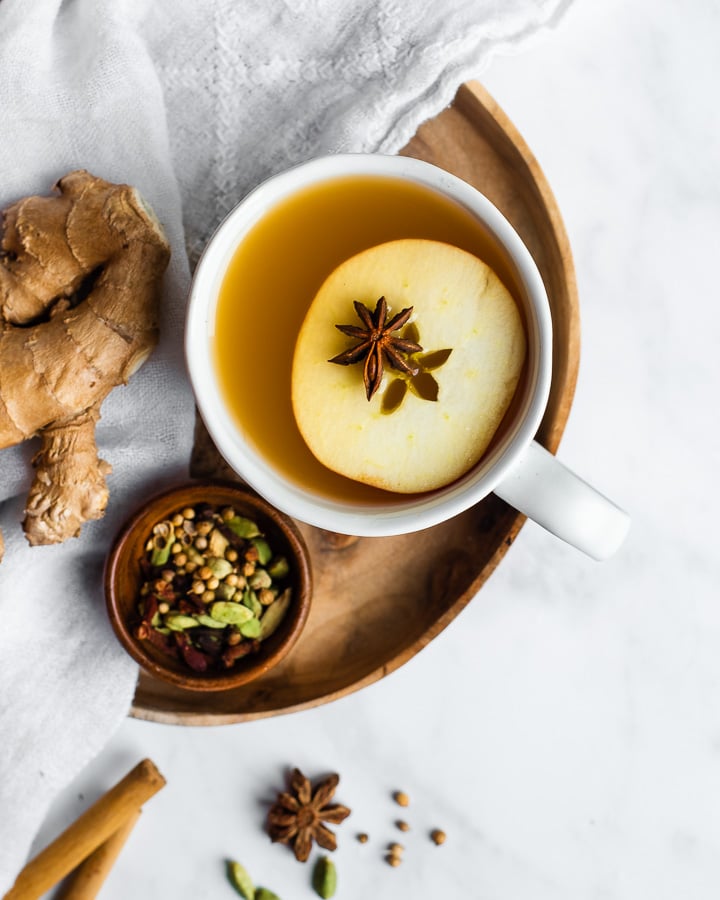
Delightfully boozy and infused with aromatic spices, this wassail recipe is both delicious and easy to make. Notes of ginger, cinnamon, and cloves blend with sweet apples for a simple and warming wintertime drink.
What is it?
Wassail is a sweet, spiced alcoholic drink made from hot apple cider. The earliest recipes included a mix of hot mead or ale, spices, and crab apples. Later recipes include citrus, apple juice, and hard alcohol such as brandy or rum. The drink is associated with winter holidays and festivals.
So, what's the history?
Alongside sugar plums and gingerbread, there are few recipes so intrinsically linked to Christmas as wassail.
The word wassail first started as a greeting and didn't refer to the drink at all. "Waes hael," revelers might say, holding up a mug of mulled cider. Eventually, as things go, wassail referred less often to the greeting and more often to the drink.
Owing to its warming nature, wassail was traditionally served in wintertime, specifically during the yuletide season that spans from Christmas Eve through Twelfth Night. Wassailers traveled from house to house, singing carols and demanding drinks. Others ventured out of the home with a trimmed bowl of spiced cider, offering it in the street for a few pennies.
In deeper nature-based traditions, revelers offered wassail as an ancient honor to the trees. In wintertime, celebrants prepared traditional wassail - soaking pieces of bread, cake, or toast in it. Then, they visited apple orchards to bless the trees in hopes of a good harvest for the next year. They'd then bury the pieces of soaked bread at the trees' roots or hang them among the branches to appease the tree spirits and feed them well until the next harvest.
Tips for making good wassail
To make wassail, you simply warm apple cider together with aromatic spices, and then you strain and serve. But there are a few tricks to keep in mind.
- Use sweet apple cider instead of apple juice. Sweet (also called soft) cider is made from unfiltered apple juice and has a deeper and more complex flavor than regular apple juice.
- A mix of hard and sweet cider gives the wassail its complexity, but you can omit hard cider and brandy if you're serving the drink to small children or guests who avoid alcohol.
- Experiment with the spices you enjoy most. This version of wassail includes a wide array of aromatic mulling spices, but use what you have on hand. A stick of cinnamon and a few cloves are delicious, too.
- Heat wassail gently. Since wassail contains hard cider and brandy, warm the drink over low heat to prevent the alcohol from burning off.
- Strain before serving to remove the spices. The longer you allow the spices to sit in the wassail, the more fragrant and delicious it becomes, but you'll want to strain it before serving.
Variations
Alcohol-free wassail. For an alcohol-free version, try making mulled cider or cranberry cider instead.
Add sugar-baked apples. Traditional wassail often includes sugar-baked apples. Core 4 small apples and sprinkle them with brown sugar or a minimally processed sugar, such as jaggery. Bake at 350 F until softened, and then drop the apples into the bowl of wassail.
Add citrus. For a more modern interpretation, try adding sliced oranges or lemons to the ciders.
Swap out the hard cider for mead or ale. Some of the earliest versions of this drink are made with spiced mead and crab apples.
Switch the spices. Sweet and aromatic spices give wassail deep, pleasant flavor and a warming energy. While this recipe calls for ginger, cinnamon, coriander, cloves, allspice, and star anise, you can use whichever mulling spices you prefer. Bay leaf, black peppercorns, nutmeg, and anise seed are delicious additions, too.
Use a slow cooker. For a simple, hands-off version, add all the ingredients to a slow cooker and set the temperature to low, allowing the ingredients to warm for at least 30 minutes before serving.



Suzy says
Sounds delicious!!
MJNola says
Mellow and delicious. It’s like an apple pie in a glass! I am adding this recipe to my permanent collection and will definitely be making it again.
S says
Sweet nostalgia... this reminded me of one of my favorite “traditions” my woman’s college had. It was founded in 1884, though I’m not sure how far back the “wassaling & hanging of the greens” tradition went. All the girls would carol going hall to hall, & main building, to library etc hanging live green wreaths on each. Then finally down the streets of the town to the presidents where she would invite us in for wassail. It was the first I had heard of it. Delicious! Its one of those few memories that “glows” of holiday spirit in my mind. Cant wait to try it this year!
Coryann says
This is amazing! Me and the hubs just made this, however we are only two people! Can we refirgerate this and warm it up in the next couple days? Thank you for giving us a new tradition!
Cal says
Made this for a work party. Turned out amazing. Thanks for the recipe - the authenticity adds to its charm.