Fermented Food: Benefits of Lactic Acid Fermentation
Fermented food, enjoyed across the globe, conveys health benefits through lactic acid fermentation. The fermentation process can transform the flavor of food from the plain and mundane to a mouth-puckering sourness enlivened by colonies of beneficial bacteria and enhanced micronutrients. While fermented food like yogurt, sauerkraut and kefir are well-known many other lesser-known foods also benefit from the lactic acid fermentation process. Indeed, virtually every food with a complex or simple sugar content can be successfully fermented.
Born of both necessity and practicality, lactic acid fermentation proved to be not only an efficient method of preserving food for our ancestors, but also a critical one. Indeed, fermented food like sauerkraut, cheese, wine, kvass, soured grain porridge and breads often sustained tribes and villages during harsh winters when fresh food simply wasn’t available let alone plentiful.
In many societies including our own where yogurt has been heralded as a health food since the 19th century, fermented food has gained a reputation for its beneficial effects on immunity, intestinal health and general well-being. Modern researchers are just beginning to understand what the sages of old were tuned in to: fermented food conveys clear and calculable health benefits to the human diet. Lactic acid fermentation in and of itself enhances the micronutrient profile of several foods.
For example, milk that undergoes lactic acid fermentation either in the wild as in the case of clabbered milk or inoculated by a starter culture as in the case of yogurt, piima, matsoni and other fermented dairy products conveys more vitamins to the eater in comparison to raw milk and, particularly, pasteurized and ultra-high-temperature pasteurized milk. Fermented dairy products consistently reveal an increased level of folic acid which is critical to producing healthy babies as well as pyroxidine, B vitamins, riboflavin and biotin depending on the strains of bacteria present. [1. Vitamin Profiles of Kefirs Made from Milk of Different Species. International Journal of Food Science & Technology. 1991. Kneifel et al]
The increases in the micronutrient profiles of fermented food aren’t just limited to yogurt, bonny clabber and kefir. Vegetables, fruits, legumes and grains subjected to lactic acid fermentation also see increases in both their macro- and micronutrient profiles. The bioavailability of amino acids – particularly lysine with its antiviral effects and methionine – increases with lactic acid fermentation. [2. Evaluation of lysine and methionine production in some Lactobacilli and yeasts. International Journal of Food Microbiology. Odunfa et al.]For grains, sprouting prior to souring can increase the availability of protein even further. Vegetables that have undergone lactic acid fermentation as in the case of sauerkraut and kimchi, often see an increase in the activity of vitamin C and vitamin A.
While lactic acid fermentation does not usually increase the level of minerals present in fermented foods unless unusual circumstances are present (as in fermenting food in a metal or earthen container), it does decrease the activity of phytic acid content naturally present in grains. Phytic acid is an antinutrient that binds up minerals – preventing full absorption of minerals in the gut. Since souring grains reduces the phytic acid content, the lactic acid fermentation process actually enables your body to absorb more minerals from the grain than you would be able to otherwise absorb. The end result is that you get more bang for your nutritional buck by souring the grains you eat.
So now that you’ve eliminated modern sweeteners and learned to use mineral-rich bone broth, your next step on the traditional foods journey is to better incorporate fermented food into your diet. Take advantage of all the health benefits that lactic acid fermentation offers. Next week the Traditional Foods primer will build upon our knowledge of fermented food by examining just how they can improve our health.
In the meantime, check out these recipes which takes advantage of lactic acid fermentation:
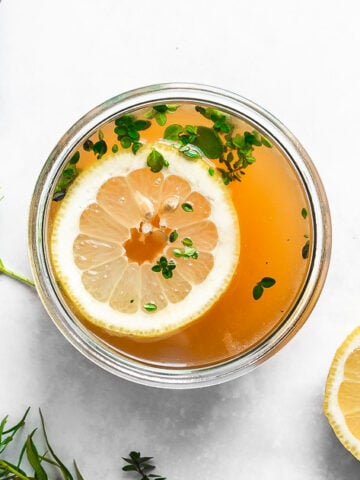
- Moroccan Preserved Lemons
- Rustic Sourdough Noodles
- Real Sauerkraut
- Sourdough Peach Pancakes
- Find Sources of Lactic-acid Fermented Food Online
Shop Real Food
Learn to cook traditional foods:
Free email updates featuring wholesome recipes and proven techniques to maximize nutrient density.


Thank you so much for blogging! It’s hard to find good, nourishing food blogs. I’m changing the way we eat and I’m venturing out into unknown territory;none of my family eats this way! Thanks for all your great posts and info; keep up the good work!
Laryssa @ Heaven In The Home´s last post: Use What You Have Spring Decor.
This was a very thorough post! Thanks for sharing. Tomorrow I’ll be posting a video on how to make sauerkraut, so this is perfect timing.
Looking forward to it!
Erica´s last post: Bacon, Egg, and Cheese Muffins.
My grandpa would make his own sauerkraut and pickles. I love sauerkraut, but hated seeing him skim the crud off of the top of his crock. Although it was a definite yuck moment, it was still absolutely delicious!
Red Icculus´s last post: Canna Aqua Hydroponic Nutrient Line.
My favorite ferment is salsa. We are on our last jar of what we fermented last fall. By this time it gets a great “tang” to it that we love! I tend to use cilantro instead of parsley though. We just like the taste better. Beets are also a tasty ferment.
Deanne´s last post: ADVENTURES IN DADDYHOOD! (Potty).
This is a wonderful blog. I love the way you are stepping people through making these changes to their eating lifestyle!
We just did a lacto-fermentation workshop last weekend and had 60 people come out for it. I was amazed at how engaged they were, and how many questions they had. Look for a post on my blog later this week about it!
Kimberly
HartkeIsOnline.com
another realfoodmedia.com blogger
Kimberly Hartke´s last post: Knee Pain Treatment Protocol Relies on Food, Supplements, Exercise.
I have just ventured into fermentation with some sauerkraut. It’s not quite ready yet, but we have more cabbages from our csa so I need to get some more going.
Thanks for all the helpful info. It’s such a good source of concise info.
Noelle´s last post: soaked kefir spice muffins.
[...] Jenny over at The Nourished Kitchen spells out the health benefits of fermented foods, which I thought segueyed rather well into my post on how to make [...]
Thank you for the well presented facts, I think its important to know what nutritional aspects fermented foods can bring to the table.
I also appreciate the “each one teach one” attitude. Lets inoculate our communities with soured foods and see if where it takes us
Thanks again,
Rowan
Check out rowan’s last post: Who Needs a Fancy Dehydrator?….. You..
Great article. As a culture we sure do need a new mindset regarding cultured foods before everyone has an immune system related disease/malady.
Check out Rowan’s last post: Butt Shelf, You are on Notice….
I FULLY agree! Fermented food – with all its wee beasties – is critical to health and, especially, to the immune system. If we ate real food including real fermented food, we’d be so much more healthy than we are today.
[...] Interestingly, food reasearchers are examining ways to capture antimicrobial metabolites created by lactic-acif producing bacterial for use as food preservatives. I think, however, that you should just eat real food. Read this post for more information on the benefits of lactic acid fermentation. [...]
[...] sauerkraut, real kimchi and other vegetable ferments. If you don’t check out these posts: fermented food and the benefits of lactic acid fermentation and Real Pickles. Simply put, they are an essential aspect of a healthy diet. You need to eat [...]
[...] doubt I agree that intestinal flora are critical to health (please check my post about the Benefits of Fermented Food) and I urge everyone to make pro- and pre-biotic foods a cornerstone of their diets; however the [...]
[...] Sources: Fermentation (Food) (Wikipedia), “Getting Cultured with Fermented Foods” (Minneapolis-St. Paul Star Tribune), “Health Benefits of Raw & Fermented Foods” (Food Renegade blog), “Fermented Food: Benefits of Lactic Acid Fermentation” (Nourished Kitchen blog) [...]
[...] I wanted to love it very badly. I had been doing some research on fermented foods and it seems they are great for keeping your intestines happy and your digestive system will rev [...]
[...] Nurished Kitchen states: Modern researchers are just beginning to understand what the sages of old were tuned in to: fermented food conveys clear and calculable health benefits to the human diet. Lactic acid fermentation in and of itself enhances the micronutrient profile of several foods. [...]
Your comments feed me!
While you're here, why don't you learn more about Jenny and the Nourished Kitchen and get involved in the Nourished Kitchen community.
Keep up to date on the latest from Nourished Kitchen: Recipes, Activism Alerts, Real Food News.
Shop Real Food
Your Comments Feed Me
Posts by Subject
Posts by Date
Cultures & Starters Exchange
Most Commented
Most Emailed Posts
Contact | Disclaimer | Privacy Policy | Advertise | Credits| Site Map
Copyright © 2007 - 2010 The Nourished Kitchen. All Rights Reserved.