

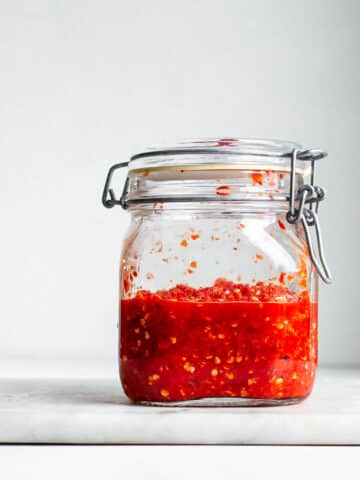
Kimchi and gochujang give this fermented ketchup recipe a deep, savory heat, while honey and vinegar lend a bright, sharp finish. Spoon it over burgers and hot dogs-or give your fries something better to dip into.
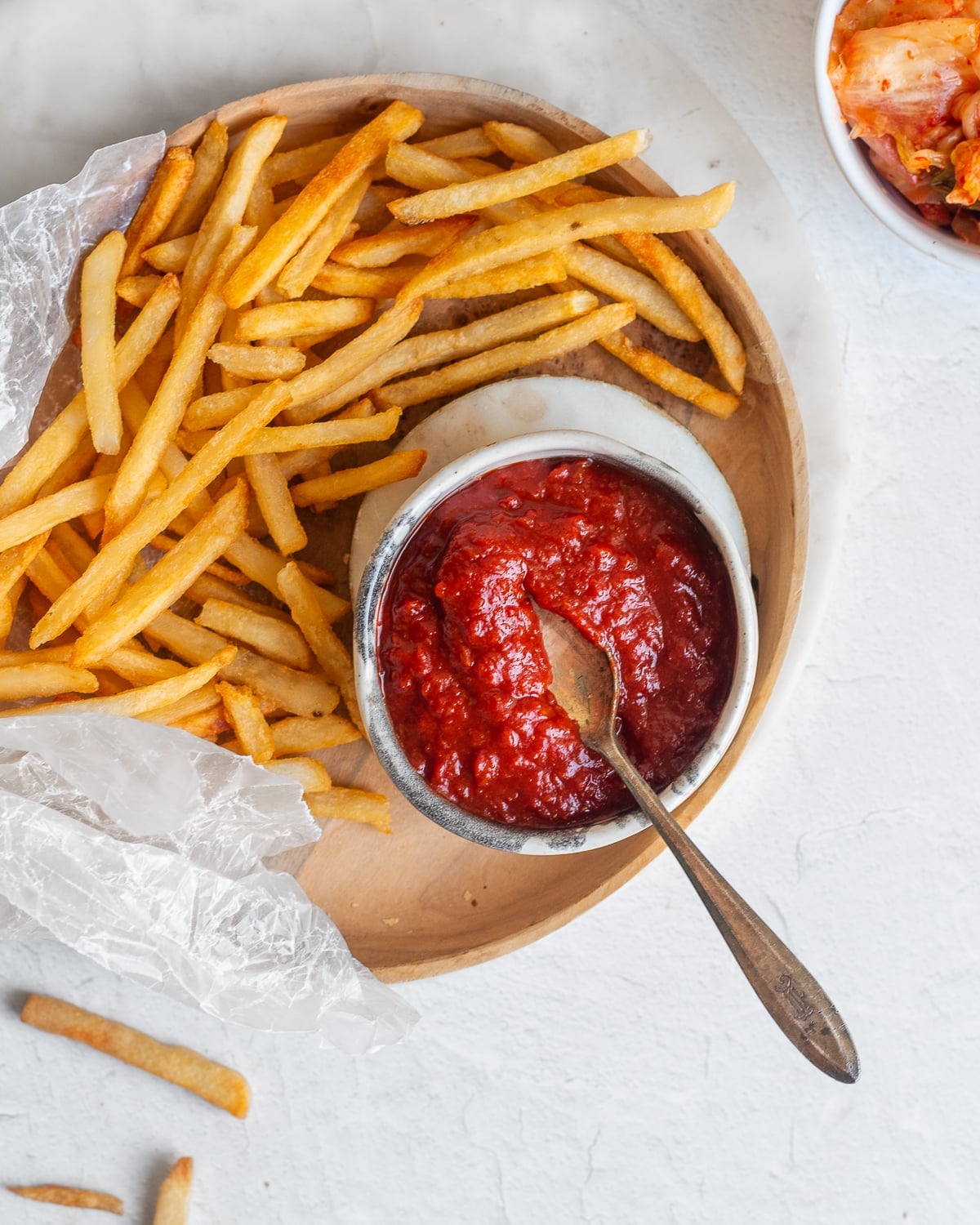
Years ago, when I first started making fermented foods, I discovered the easiest way to serve them was to ferment foods my family already knew and loved.
Making our own ranch dressing with kefir was the first place we started. Fermented ketchup came next. It's easy to make. Kids love it.
And while this recipe has gone through many permutations over the years, we've recently landed on a favorite. This version uses kimchi -- not only to kick up the ketchup's flavor, but also to deliver a solid source of live cultures that help speed up the fermentation process.
Key Ingredients
Tomato paste gives ketchup its bulk and, from there, everything else just adds flavor. I buy the tomato paste in glass jars from Bionaturae. It has good flavor, the jars are resealable and it's organic.
Kimchi and kimchi brine perform a double function. First, they add flavor: a rich salty-funky-piquant deliciousness. Second, they inoculate the tomato paste with live cultures so that it ferments properly -- an important step considering the other ingredients are precooked (like the tomato paste).
Any kimchi works, but I typically use traditional napa cabbage kimchi when making this ketchup.
Gochujang is a thick, fermented red chili paste from Korea. It has a rich savory flavor balanced with a little sweetness and heat. You can typically find it in the Asian foods section of well-stocked grocery stores or in shops dedicated to Korean specialty foods.
Honey adds sweetness. You can also substitute any liquid sweetener for honey. Maple syrup works well.
Apple cider vinegar loosens the ketchup, making it more spoonable and spreadable. It also adds a pleasant acidity. You could use another vinegar such as white wine or rice wine vinegar. Or, consider increasing the amount of kimchi brine.
Spices include onion and garlic powders, smoked paprika and allspice. They add depth and flavor. You can easily increase or change these spices depending on what you like. Gochugaru, Korean sun-dried chili flakes, would be a nice addition and so would black pepper or a little citrus peel.
Fermentation
Like other fermented foods that require a starter culture, this kimchi ketchup recipe ferments quickly. It only takes a few days on the countertop.
You want a quick fermentation because ketchup is essentially a thick paste, so it's impossible to keep submerged in brine, as you do with fermented vegetables. As a result, it's slightly more prone to contamination by mold or other stray microbes. A short fermentation period keeps it (and you!) safe.
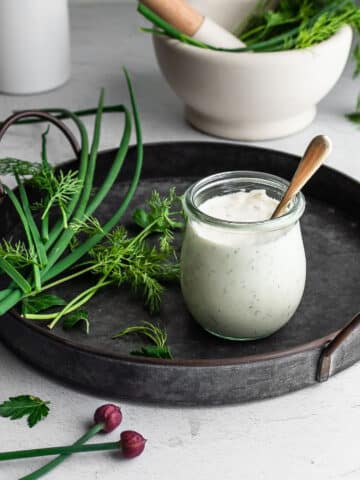
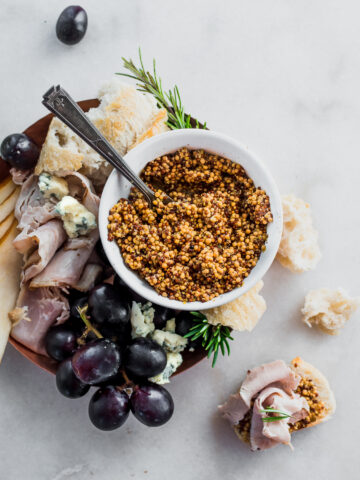
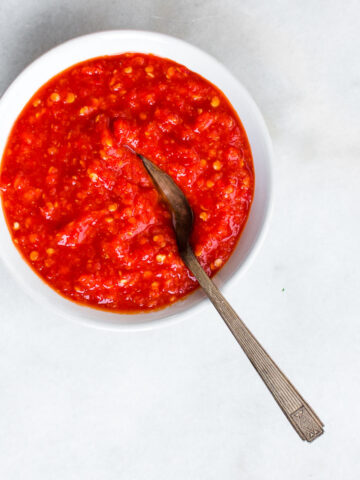
Other fermented condiments you'll love
Common Questions
The sweet spot for this recipe is between 48 and 72 hours. Keep in mind that it will ferment faster in a hot kitchen and slower in a cold one. Avoid letting it ferment longer than 4 days.
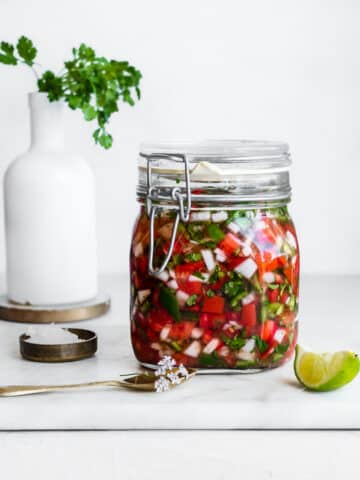
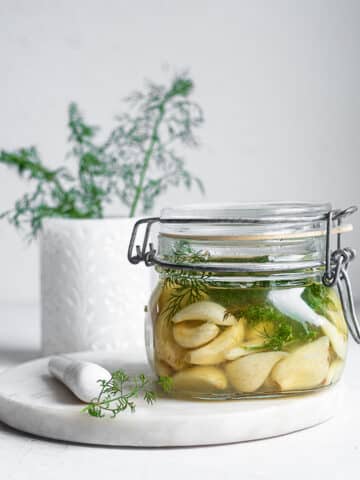
While I'm partial to using airlocks and fermentation seals for most of my fermentation recipes, this quick ferment needs only a glass jar. I like to use small clip-top jars such as those produced by Fido and Le Parfait for this recipe.
After allowing it to ferment for 48 to 72 hours, transfer the jar to the fridge. Store in the fridge for up to 3 months.
Mary Lynn says
Thanks for the recipe. Could this ketchup be water-bath or pressure canned to keep for later use?
Jenny says
Hi Mary Lynn!
I wouldn’t can it (you’ll lose all the probiotics!). But if you’re interested in canning homemade ketchup, I’d ask for guidance at your local extension office.
Alexandra says
I love this recipe (and the accompanying photo)! I did change a few things and had great success. I was feeling a little wary about allspice (just my personal taste), so I left it out. And I replaced the honey with maple syrup. It turned out super-delicious and I have found myself making excuses for why I need to put ketchup on x, y, and z. Haha! Thanks for the great recipe!