
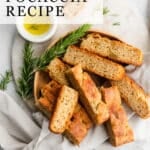
Rich with olive oil, this einkorn focaccia has a tender, airy crumb and a crisp, golden crust. A blend of all-purpose and whole-grain einkorn flour gives it a deep flavor. Best of all? From mixing to baking, it's ready to share in just a few hours.
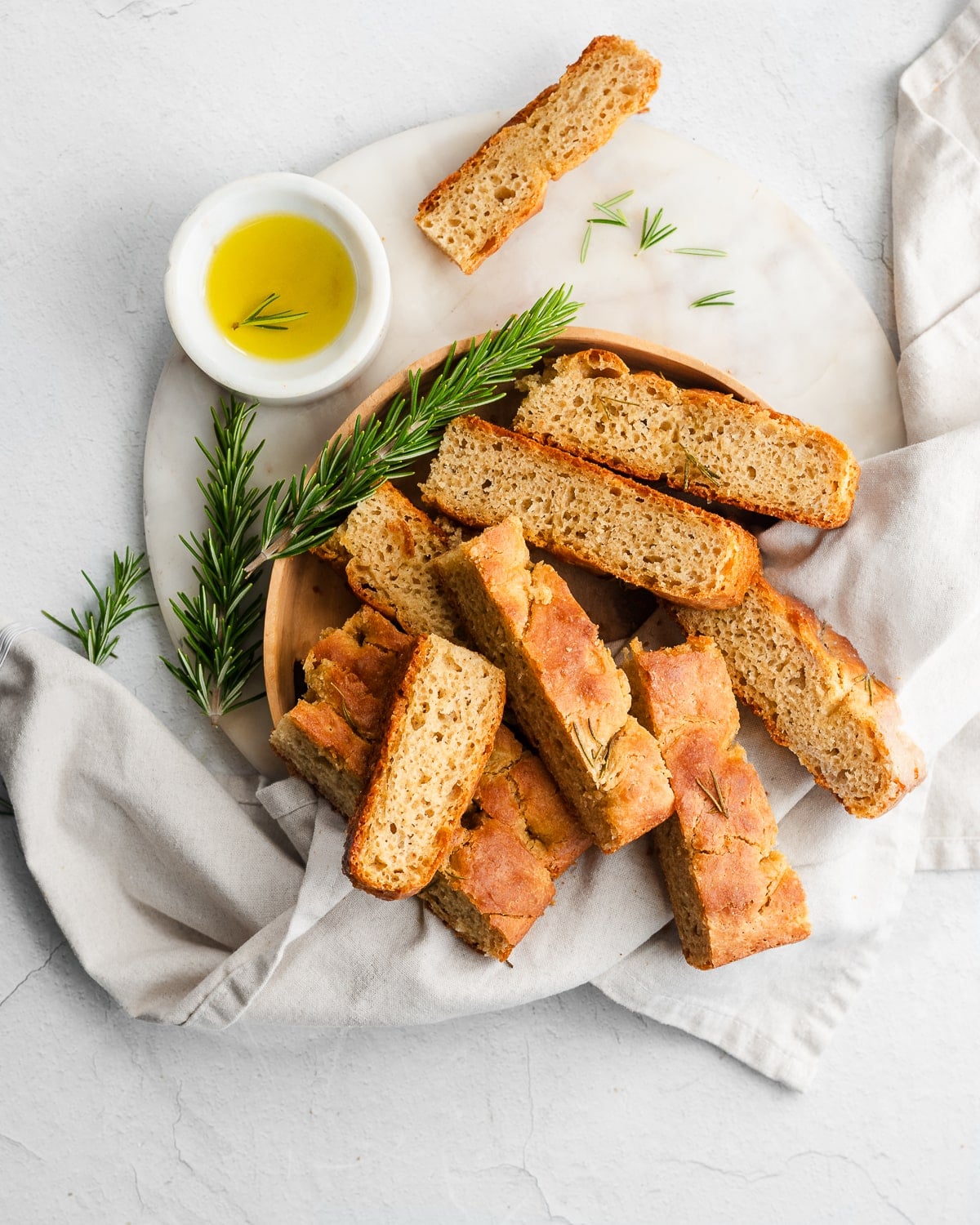
The first thing to know about making einkorn focaccia? The dough is sticky. Really sticky. That's expected. Stickiness is in einkorn's nature.
But don't worry. You won't need to knead it or wrestle it into shape. Your mixer does the mixing; then, with an oiled spatula, you simply coax the dough from bowl to baking dish. Give it time to puff up, drizzle it with so much olive oil that it borders on too much, dimple it with your fingertips, and then finish it with flaky salt and herbs.
The second thing you need to know? It tastes amazing. Ever so slightly sweet, pleasantly salty and with a beautiful golden-hued crumb.
And, once you get the hang of making it, you can use this oh-so-basic recipe as a springboard for new versions. Olive and sun-dried tomato? Sure. Parmesan and garlic. Why not? It's endlessly versatile.
Key Ingredients
Einkorn is an ancient wheat in the farro family and it's similar to both spelt and emmer in texture and flavor. It produces soft, tender breads with a rich flavor that hovers somewhere between wheaty and nutty.
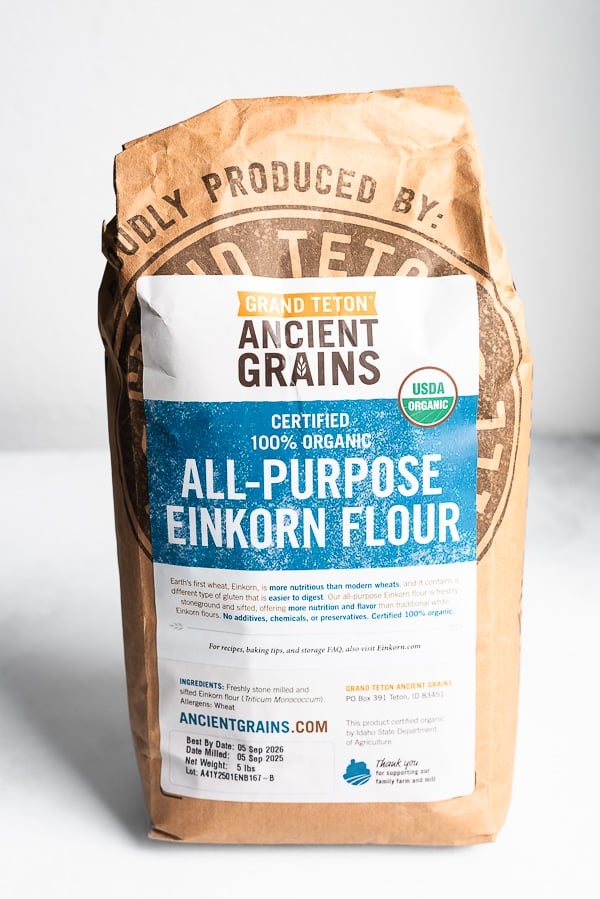
In this recipe, we use both all-purpose einkorn flour and whole-grain einkorn flour. The all-purpose provides a soft texture and improved rise while the whole-grain flour gives the focaccia its robust wheaten flavor. You can also make this recipe with 100% all-purpose einkorn flour, but exercise caution when increasing the whole-grain flour as it tends to produce a dense, rather than airy crumb.
Extra virgin olive oil gives the bread its deep flavor. It takes a generous touch of olive oil to pull the focaccia off.
While the dough itself only uses about 30 grams of olive oil, you'll need to have close to 90 grams on hand. A good amount (about 30 grams or a little over 2 tablespoons) in the bottom of the baking dish gives the bread a crispy-almost-fried crust. While olive oil drizzled on top just before the focaccia heads into the oven permeates the bread's crumb and improves browning.
Honey lends the lightest touch of sweetness and amplifies einkorn's natural sweetness. A runny honey works best because it's easier to mix into the liquid ingredients than one that has crystallized.
Instant yeast gives the bread its rise, and also means it's a relatively fast bread. It's ready to eat within a few hours, so you can mix the dough in the morning and have it ready for lunch. Active dry yeast works, too, but you'll want to bloom it first before adding it to the einkorn flour. Ultimately, we had better results in testing with instant yeast.
Where to Buy Einkorn Flour
Buying groceries is a chance to support the food system you believe in. That's why I love Grand Teton Ancient Grains, a sixth-generation American farm growing regenerative grains. They're one of my favorite sources for einkorn, whether I need flour or whole grains.
Serving Suggestions
I typically serve einkorn focaccia slathered in homemade pesto. Garlic scape and carrot top pesto are two of our favorites. We often also serve it with soup, such as this lentil stew, especially during the cold months.
Recipe Questions
You can mix the dough by hand using a large mixing bowl and a wooden spoon. You'll need to work it with the spoon for 8 to 10 minutes, making sure no dry pockets of flour remain in the final dough.
I bake the focaccia in a 9-inch by 13-inch ceramic nonstick baking dish. You can also use a glass, stoneware or enameled cast iron baking dish of the same size.
Keep in mind that you may need to adjust baking times slightly depending on the material of your dish. So, pay particular attention to the color of your dough as it bakes and take its internal temperature as it nears the end of baking. It should read about 210℉ when baked through.

Comments
No Comments