Cultured dairy foods enjoy a long and vibrant history. In every society that historically consumed dairy foods, cultured yogurt and other probiotic dairy foods earned a much-loved and much-respected place in the indigenous diets. That place was rightly deserved, too. While culturing milk and cream inevitably offered the practical benefit of enabling dairy foods to last longer; it also enhanced their nutrient profile. Cultured dairy products like yogurt and kefir offer the same probiotic benefits that you’ll find in real pickles or real sauerkraut coupled with the beneficial nutrients found in animal foods like preformed vitamin A (did you know about the connection between maternal vitamin A intake and cleft palate?), beta carotene, vitamin K and CLA - particularly if the animals were pasture- or grass-fed.
There’s life beyond yogurt and kefir, though. Cultured dairy foods are as diverse as the societies that cherished them. Here’s a look at ten cultured dairy foods – some might be new to you! Here’s a little thing I love about cultured milk products: they all seem to offer double vowels – blaand, piimä, chaas, viili.
1. Bonny Clabber
Bonny clabber is a traditional cultured dairy food in both the Southern United States and in Scotland. In the United States, it was customarily eaten with molasses, cinnamon and nutmeg for breakfast. Bonny clabber is a wild-cultured dairy food in that it requires no starter; rather, it’s probiotic properties stem directly from the natural flora in the milk and in your home. In that respect, it’s similar to a wild sourdough. Preparing bonny clabber is simple: take raw whole milk (and, yes, it absolutely must be raw) and leave it on your counter until the milk solids naturally separate from the whey – developing a thick and yogurt-like consistency. You’ve made bonny clabber as simple as that.
2. Filmjölk
Filmjölk is a Swedish cultured dairy food that is mildly sour in flavor and remarkably versatile. Filmjölk, like most of the tastiest cultured dairy foods, is cultured at room temperature without the need for a heat source or yogurt maker. This makes it particularly easy to work with. Filmjölk earns its tangy taste from lactococcus lactis and leuconostoc mesenteroides. These bacteria, like other involved in fermentation, render the milk slightly acid and that acidic environment coagulates the milk’s natural proteins turning the milk into sour, thick Filmjölk. To prepare Filmjölk, you’ll need to obtain a starter culture from a reliable source.
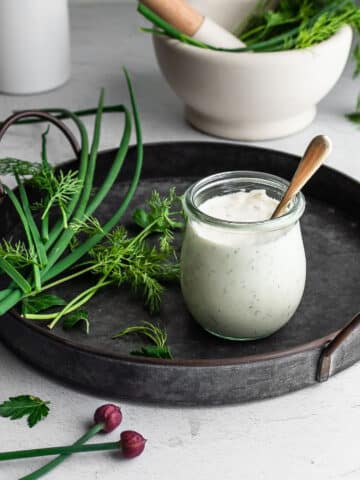
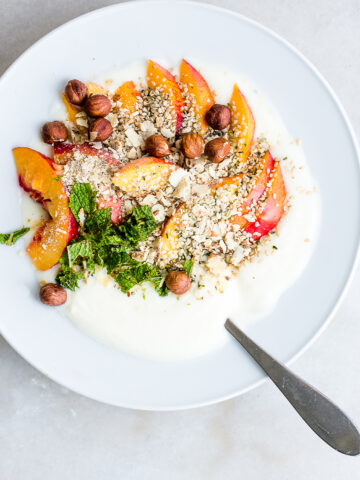
Check out the Nourished Kitchen Resources Page to find a starter. Have some Filmjölk starter culture to share, consider posting it on the Cultures & Starters Exchange. I serve my Filmjölk over fruit in the morning or, from time to time, make homemade Filmjölk Ranch Dressing.
3. Viili
Viili is also a cultured dairy food of Scandinavian origin. Viili originally hails from Sweden but is now found in Finland where it is largely considered a national treasure. Viili’s ropy, unctuous and gelatinous texture is produced by a combination of yeast and lactic acid bacteria. I’ve read that a good viili can reach lenghty ropes of up to 1 foot or longer without breaking, but I’ve yet to see it. The flavor of viili is mildly sour in comparison to other cultured dairy products which makes it a good option for children or folks who are just wetting their feet in the territory of naturally sour probiotic foods. Viili is traditionally served with a touch of sweetener or gooseberry jam and is quite good served as a parfait with layers of all-fruit jam sandwiched between the viili. Viili is cultured at room temperature so you do not need a yogurt maker, only a starter culture.
Check out the Nourished Kitchen Resources Page.
4. Piimä
Piimä, like many of the other cultured dairy foods described here, is of Scandinavian origin. It has a sour flavor coupled with the subtle nuances of a mild cheese. This combination of flavors makes piimä particularly well suited to savory dishes (check out my pan-fried brussels sprouts with piima cream) and it is, according to my three year-old, the best and most delicious of the cultured milk products. Unlike other cultured dairy foods, piimä is thin in consistency and is traditionally used as a beverage similarly to buttermilk. Piimä is easy to prepare because it, like many cultured dairy foods, is mesophillic meaning that it cultures at room temperature instead of through added heat. All you need is a starter culture with which you can innoculate your milk with the strains of beneficial microbiota that make piimä particularly unique.
Check out the Nourished Kitchen Resources Page.
5. Matsoni
Matsoni is an Eastern European cultured dairy food with a heritage attributed to Bulgaria, Georgia, Armenia or Russia depending on who you talk to. Lore promises that matsoni will prolong life and there may be something to that as we’re just now beginning to understand the mechanisms surrounding how fermented and cultured foods benefit our long-term health. Matsoni is produced through unique strains of lactic acid bacteria which produce this mildly sour yogurt with a syrupy consistency. Children are particularly fond of it. Matsoni is particularly good for breakfast, but I also like it poured over fruit for dessert. Matsoni is also mesophillic so it requires very minimal effort to prepare. Just mix a starter culture with fresh milk and leave it on your counter to culture for a day or two depending on the temperature of your home.
Check out the Nourished Kitchen Resources Page.
6. Buttermilk (Cultured)
When I think of buttermilk, I invariably think of the scene in Some Like it Hot when Spats announces he’s drinking buttermilk to a visibly disappointed police chief. I don’t know why, it just always pops into my head. Buttermilk is traditionally made from the thin milk reserved from making cultured butter; however, many traditional food lovers are now using a starter culture and making whole-milk buttermilk. Buttermilk’s sour flavor is the result of lactic acid bacteria – particularly streptococcus lactis or lactobacillus bulgaricus. It can be enjoyed in a variety of ways, but it is particularly well suited to baking – granted, that destroys the beneficial bacteria – but it makes a killer bread or cake (check out my soaked flour gingerbread). Or, like Spats, you can drink it plain as was popular until the middle of the 20th century. Take care not ot purchase or use most store-bought buttermilks as even the organic versions often contain fillers instead of pure, cultured milk. Instead, make your own using a starter culture which you can find on the Nourished Kitchen resources page.
7. Chaas (Traditional Buttermilk)
Traditionally buttermilk was not cultured as buttermilk in and of itself; rather, it was simply the thin liquid leftover from making butter. This traditional buttermilk is versatile and rich in the natural beneficial bacteria found in the raw milk itself. Alternatively, it may be rich in the bacteria that was introduced into the whole milk prior to culturing it for buttermaking as in the case of cultured butter. Now, aside from a few home kitchens, traditional buttermilk is only really used in India where it is called chaas. In India, chaas is often flavored with salt, cumin, chilies and other spices much in the same way that bonny clabber is flavored with nutmeg and molasses in the west. You can prepare chaas by first making butter (check out this post on how to make butter at Food Renegade) then straining the resultant liquid. Now you have chaas or traditional buttermilk.
8. Blaand
Blaand is a traditional Scottish drink made from fermented whey with quite an alcoholic kick. While it’s been made for centuries in Scotland, it has largely fallen out of favor perhaps, in part, to the decline of home cheesemaking and the increased availability of other alcoholic beverages. First, whey is reserved from cheesemaking or, I imagine, you could use the whey leftover from Bonny Clabber or strained yogurt as well. But, if you’re adventerous enough to attempt to make blaand, you’re probably adventerous enough to make cheese too. That whey is then traditionally poured into an oak cask similarly to wine, and allowed to sit until the desired flavor and alcohol content are acheived. When the fermentation is complete, blaand should have an alcohol content similar to wine. Take care, because if you allow it to ferment too long you’ll end up with whey vinegar instead of blaand.
9. Kefir
Kefir is a cutlured milk product that, unlike the others mentioned here, results from the introduction of kefir grains into raw milk instead of through wild, spontaneous fermentation as in the case of bonny clabber or via starter culture as in the case of viili. Kefir grains are small, spongy, symbiotic colonies of beneficial yeast and bacteria with an appearance that resembles cottage cheese. Kefir is a strikingly tart cultured dairy beverage with a slight effervescence that takes some getting used to. Kefir originally comes from the Caucasus region where, legend has it, the grains were guarded for their life-prolonging properties. That may, indeed, have some merit as kefir is rich in nutrients including folic acid and the kefiran in it has been linked the supression of high blood pressure. Traditionally, raw milk was mixed with kefir grains and placed in animal skin pouches to ferment. Don’t have an animal skin pouch or don’t want to use one? You can culture kefir in a glass container like a mason jar by mixing the kefir grains with fresh raw milk and allowing it to culture 1 day or longer (a longer ferment produces more nutrients, but renders a sourer beverage).
You can purchase powdered kefir starter at health food stores and online, but I wouldn’t recommend it. To make a true kefir you need kefir grains which you can purchase online from one of the stores listed on the Nourished Kitchen resources page.
10. Yogurt
What would a post about cultured dairy products be without a mention of yogurt? When used broadly, yogurt can describe any of the fermented dairy foods listed above with the exception of blaand, kefir and possibly chaas; however, yogurt is unique in and of itself. Yogurt is the only fermented dairy food on this list that is thermophillic – meaning that it requires a heat source in order to culture properly. In that respect, yogurt is relatively unique. Yogurt is made by culturing milk with a variety of lactic acid producing, thermophillic bacteria. The most common and well known strain of bacteria in yogurt is lactobacillus bulgaricus, though many other strains of bacteria are used as well. To make yogurt, you’ll need a constant, but mild heat source and a starter culture. I recommend purchasing a yogurt maker – they’re reasonably affordable and make culturing yogurt fool-proof. You’ll also need to acquire a starter culture – you can purchase powdered yogurt starter or, more simply, use a few tablespoons of store-bought plain yogurt to start your batch. If you use a store-bought yogurt to start, make sure it has several varieties of bacteria and contains no sugar, fillers or other strange things.
Maintaing a Pure Starter for Raw Milk Yogurts
Just one last note before you begin: if you’re planning to produce raw milk yogurts and cultured dairy products (with the exception of bonny clabber, chaas, blaand and kefir), it’s important to maintain a pure starter with which you can reculture the milk. If you fail to maintain a pure starter, the natural bacteria in your raw milk will eventually overtake the bacterial strains in the starter and you’ll no longer make viili, piimä etc.; rather, you’ll simply be making clabbered milk. To keep a pure starter, boil and cool milk to eliminate its natural bacteria and culture that milk with your starter on a weekly basis, then use a few tablespoons of the boiled milk starter in raw milk to culture raw milk yogurt.
Kefir Grains, originally uploaded by muckster.


How interesting! I had no idea these existed
It’s funny, as talking to my father who grew up with cows, they ate traditional buttermilk and raw milk growing up. it’s so sad that these practices have fallen away to the Big Farming industry.
Thank you for this info!
Check out EcoYogini’s last post: Cornicopia and Us..
Great info! Cultured dairy is so important from a nutritional standpoint and in some cases, people who are not able to drink milk may be able to tolerate cultured dairy products.
Check out Julie’s last post: How to Make Cultured Butter.
Danish tykmælk( thick milk) basically a sour milk
What the farmers had all summer.
1 liter wholefat milk
heat and add
100 ml whipping cream.
let it cool to body temperature and add
100 ml real old fashioned buttermilk( the type that come from cultured butter making)
pour into 4- 5 bowls and place a plate over each bowl so no flies or dust can enter milk.
Let it stand in a hot kitchen 12-18 hours and transfer to the fridge and let it get very cold.
You´ll have a thick layer of cream and a bottom of mild tart fermented milk.
In Denmark we eat it with roasted crumbled ryebread and molasses sugar
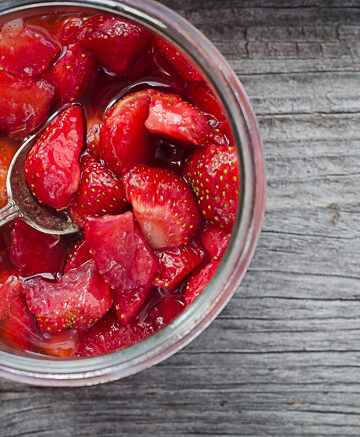
or strawberries and honey.
Check out henriette’s last post: Asparges.
Henriette – that sounds delicious! I bet it’s over the top with strawberries and honey.
Great post! I’ve been meaning to make piima and creme fraiche at home, but now see there is a whole world of cultured dairy to try!
When my grandmother was a baby, her mother couldn’t nurse her after a few months . . . they tried lots of different milks but she couldn’t stomach any of them. Except buttermilk (the original kind, not cultured.) Now that we know more about the makeup of human milk (i.e. it’s lower fat content in comparison to cows, etc.) it makes sense to me! These days they’d probably pump her up with soy formula . . . yuck.
Thanks again for the post!
Best,
Sarah
Very interesting. I hadn’t heard of matsoni or blaand before. Cultured raw dairy is a healthy food if you don’t add any sweetener. It may be an acquired taste, especially if you haven’t managed to get rid of that sweet tooth yet
If you just have to make it sweeter, adding a little fresh fruit is the healthiest way. Most commercial cultured milk is loaded with sugar or artificial sweeteners and should be avoided.
I make my own kefir once or twice a week and always drink it plain.
Check out Bryan – oz4caster’s last post: Flu Factories.
Wonderful post! It just made me wish I could still have dairy.
Check out Kimi @ The Nourishing Gourmet’s last post: Share Your Favorite Food Blogs!.
WOW – this is such an impressive post. Your knowledge and understanding of food is remarkable – I learn something every time I visit and I get inspired to try something new. Thank you!
Check out Annie – Hip Organic Mama’s last post: Why Choose Organic?.
You guys are so thoughtful! It really is amazing when it comes to cultured dairy foods. And there’s A LOT more than the ten I listed here – of course, most of them are a alternate form of bonny clabber. I might have to make some this weekend and do a tutorial.
Jenny this is so cool. And I just noticed your starter exchange. Way to go woman! This is good stuff. My husband has made yogurt but we haven’t tried any of the others. Bonny Clabber? That sounds made up!
Check out Michelle @ Find Your Balance’s last post: Easter egg radishes, from tips to tops.
I have a question . . . In NT, Fallon states that viili is similiar to piima milk and suitable for using to make baby formula (ie thin enough to pass through the nipple of a bottle). Is this true? I need to travel with my son and unable to nurse; I’m looking for a substitute for the raw milk with which I ususal make his formula and that viili would be a good alternative because the flavor is supposed to be less tart.
Thanks!
Tiffany – That’s one area of NT where I think Fallon is absolutely wrong. Viili and Piima aren’t really all that similar. Their flavors are different, and so is the texture. I really couldn’t see viili fitting through the the nipple of a bottle due to its viscous and ropy nature. You might try matsoni which is mildly tart and not as viscous as viili. Piima is thin, but cheesy in flavor. Is it at all possible for you to pump and bottlefeed expressed milk or find milk donated from a mother you trust? I’m not too familiar with NT-style infant formulas.
Thank you for posting this.
.
I knew about some of them (I make my own filmjolk and matsoni…Used to make viili too) but never heard about a few others.
The Bonny Clabber sounds like fun to make & taste
Check out Alchemille’s last post: Nourishing & Gluten Free Meal Planning.
I have one question about the bonny clabber now that I am re-reading everything…Once the milk solids separate from the whey, you can collect the whey and keep it in the fridge for later use, right?
Check out Alchemille’s last post: Nourishing & Gluten Free Meal Planning.
Alchemille – Yes, exactly! Isn’t the simplicity of waste-not-want-not attitude of traditional foods so beautiful. Nothing is wasted.
It has always been my understanding that Chaas was yogurt and water, like a very thin salt lassi.
Check out Zeke’s last post: Eat your weed.
Cultured dairy products are my favorite.I love them – love eating them, and love working with them. They are magical!
I always have kefir and viili going in my house, but want to add Filmjölk and Piimä to it, but am having trouble thinking how I will be able to manage to eat enough, so I can re-culture within the week. Any thoughts on that?
I really want to try Henriette’s tykmjelk too! Sounds like heaven!
Jenny,
Thank you for the tip on keeping a pure starter. Years ago I used to culture my own raw milk yogurt from our farm-fresh goats milk. I never understood why it would eventually stop working. I know now why! I can’t wait to try it again!
Thank you so much…
Peace,
Dana